Hacking COVID-19 — Course 3: Unraveling COVID-19's Origins (Coursera)

Hacking COVID-19 — Course 3: Unraveling COVID-19's Origins (Coursera)

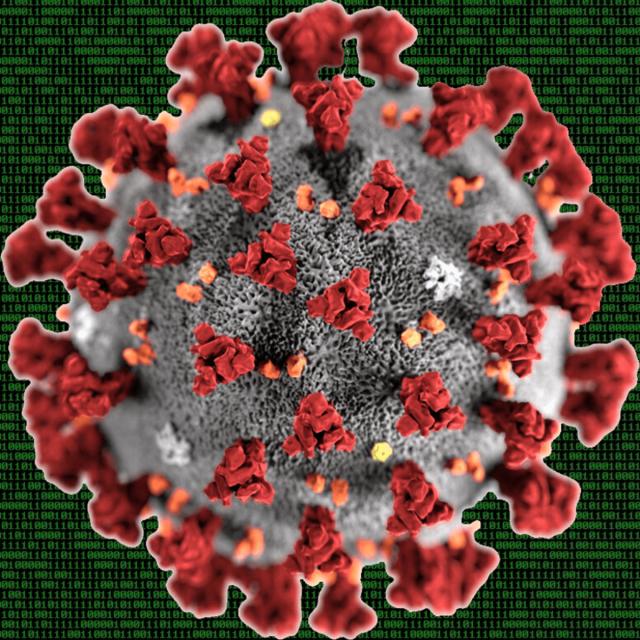
In this course, you will follow in the footsteps of the bioinformaticians investigating the COVID-19 outbreak by investigating the origins of SARS-CoV-2. Whether you’re new to the world of computational biology, or you’re a bioinformatics expert seeking to learn about its applications in the COVID-19 pandemic, or somewhere in between, this course is for you!

Class Deals by MOOC List - Click here and see Coursera's Active Discounts, Deals, and Promo Codes.

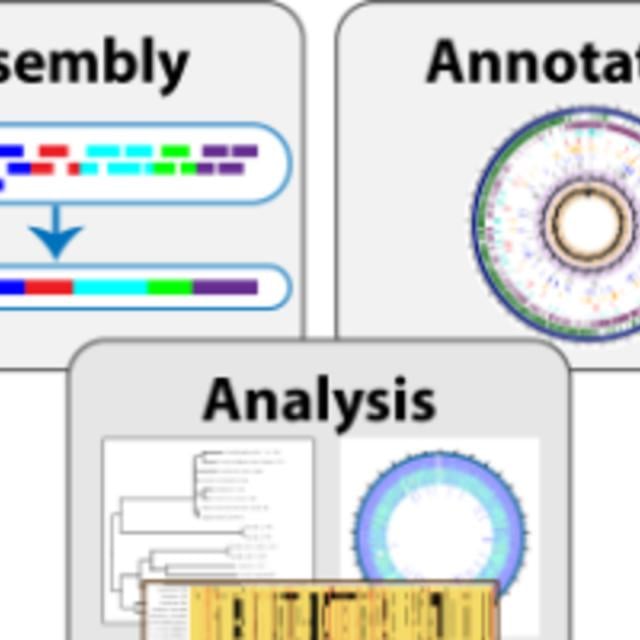
As you go through this journey, we will introduce and explain genomic concepts and give you many opportunities to practice your skills, and we will provide a series of problems with gradually increasing complexity. This third course will only discuss the multiple sequence alignment and maximum-likelihood phylogenetic inference of SARS-CoV-2 genomes, but future courses in this series will explore follow-up bioinformatics analyses used in the COVID-19 pandemic.
Go to Class
MOOC List is learner-supported. When you buy through links on our site, we may earn an affiliate commission.

Related Courses

Health, Society, and Wellness in COVID-19 Times (Coursera) Coursera
University of Colorado Boulder

Health, Society, and Wellness in COVID-19 Times (Coursera)

You may be encountering a world unlike any other generation. The public health crisis of the COVID-19 pandemic has created a context of pervasive uncertainty, heightened anxiety, and social isolation that overlaps with a critical time of your own learning and development. The COVID-19 pandemic also has exacerbated long-standing inequalities and disparities, and recent events in the United States have laid bare historical and current realities of racism and systemic oppression.

Jun 8th 2026
4 Weeks
Bioinformatic Methods II (Coursera) Coursera
University of Toronto

Bioinformatic Methods II (Coursera)

Large-scale biology projects such as the sequencing of the human genome and gene expression surveys using RNA-seq, microarrays and other technologies have created a wealth of data for biologists. However, the challenge facing scientists is analyzing and even accessing these data to extract useful information pertaining to the system being studied. This course focuses on employing existing bioinformatic resources – mainly web-based programs and databases – to access the wealth of data to answer questions relevant to the average biologist, and is highly hands-on.

Jun 8th 2026
5-12 Weeks
The City and You: Find Your Best Place (Coursera) Coursera
University of Toronto

The City and You: Find Your Best Place (Coursera)

Welcome to The City and You: Find Your Best Place. I'm excited to have you in the class and look forward to your contributions to the other learners in our community. This free course will provide the knowledge and the tools needed to understand what cities do, why they matter, the forces shaping the greatest wave of urbanization in history, and how to pick the right place for you.

Jun 8th 2026
5-12 Weeks
Genome Assembly Programming Challenge (Coursera) Coursera
University of California, San Diego,Higher School of Economics - HSE University

Genome Assembly Programming Challenge (Coursera)

In Spring 2011, thousands of people in Germany were hospitalized with a deadly disease that started as food poisoning with bloody diarrhea and often led to kidney failure. It was the beginning of the deadliest outbreak in recent history, caused by a mysterious bacterial strain that we will refer to as E. coli X. Soon, German officials linked the outbreak to a restaurant in Lübeck, where nearly 20% of the patrons had developed bloody diarrhea in a single week. At this point, biologists knew that they were facing a previously unknown pathogen and that traditional methods would not suffice – computational biologists would be needed to assemble and analyze the genome of the newly emerged pathogen.

Jun 1st 2026
3 Weeks
Rastreamento de contato da COVID-19 (Coursera) Coursera
Johns Hopkins University

Rastreamento de contato da COVID-19 (Coursera)

A crise da COVID-19 criou uma necessidade sem precedentes de rastreamento de contato em todo o país, exigindo que milhares de pessoas aprendessem rapidamente as principais habilidades. As qualificações para os cargos de rastreamento de contato diferem em todo o país e no mundo, com alguns novos cargos abertos a indivíduos com diploma de ensino médio ou equivalente.

Jun 1st 2026
1 Week
Plant Bioinformatics (Coursera) Coursera
University of Toronto

Plant Bioinformatics (Coursera)

The past 15 years have been exciting ones in plant biology. Hundreds of plant genomes have been sequenced, RNA-seq has enabled transcriptome-wide expression profiling, and a proliferation of "-seq"-based methods has permitted protein-protein and protein-DNA interactions to be determined cheaply and in a high-throughput manner. These data sets in turn allow us to generate hypotheses at the click of a mouse.

Jun 1st 2026
5-12 Weeks
Genomics: Decoding the Universal Language of Life (Coursera) Coursera
University of Illinois at Urbana-Champaign

Genomics: Decoding the Universal Language of Life (Coursera)

What is a genome? A genome contains all of the information that a cell needs to develop, function, and reproduce itself, and all the information needed for those cells to come together to form a person, plant, or animal. Genomes contain an organism’s complete set of genes, and also the even tinier genetic structures that help regulate when and how those genes are used. The ability to regrow a torn ligament, the clues that might predict the onset of mental illness, the nutritional potential of crops, and even the history of life itself, are all encoded in genomes. By taking this course, you will discover how scientists are deciphering the language of genomes to learn how to develop sustainable food and fuel supplies, improve disease treatment and prevention, and protect our environment.

Jun 8th 2026
5-12 Weeks
Genome Sequencing (Bioinformatics II) (Coursera) Coursera
University of California, San Diego

Genome Sequencing (Bioinformatics II) (Coursera)

You may have heard a lot about genome sequencing and its potential to usher in an era of personalized medicine, but what does it mean to sequence a genome? Biologists still cannot read the nucleotides of an entire genome as you would read a book from beginning to end. However, they can read short pieces of DNA. In this course, we will see how graph theory can be used to assemble genomes from these short pieces. We will further learn about brute force algorithms and apply them to sequencing mini-proteins called antibiotics.

May 25th 2026
5-12 Weeks
Intro to AR/VR/MR/XR: Technologies, Applications & Issues (Coursera) Coursera
University of Michigan

Intro to AR/VR/MR/XR: Technologies, Applications & Issues (Coursera)

This first course in the XR for Everybody specialization creates a foundational understanding of the differences between AR, VR, MR, and XR. The course provides learners with a broad overview of the rapidly evolving XR space and the tools to characterize future XR developments and assess their potential and limitations. It establishes key concepts and dives into the XR device landscape, helping learners to differentiate current and future platforms and devices as well as critique the use of VR or AR in applications. The course pivots in the second half to look more at how to shape the future of XR, by analyzing trends and raising issues such as COVID-19, social and ethical concerns, accessibility and equity, as well as privacy and security.

Jun 8th 2026
4 Weeks
Lecture Series for Preventing and Controlling COVID-19 (Coursera) Coursera
Xi'an Jiaotong University

Lecture Series for Preventing and Controlling COVID-19 (Coursera)

In December 2019, a cluster of patients with pneumonia of unknown cause appeared in Wuhan, Hubei. Governments at all levels and Department of Health Administration highly valued and rapidly organized the centers for Disease Control and Prevention (CDC), medical institutions, and scientific research academies to conduct a survey, rescue, and collaborative research. This new antigen was quickly identified as a novel coronavirus, named as 2019-nCoV by World Health Organization (WHO).

Jun 8th 2026
3 Weeks