Hacking COVID-19: Metabolic Pathway Analysis Yields SARS-CoV-2 Drug Targets (Coursera)

Hacking COVID-19: Metabolic Pathway Analysis Yields SARS-CoV-2 Drug Targets (Coursera)

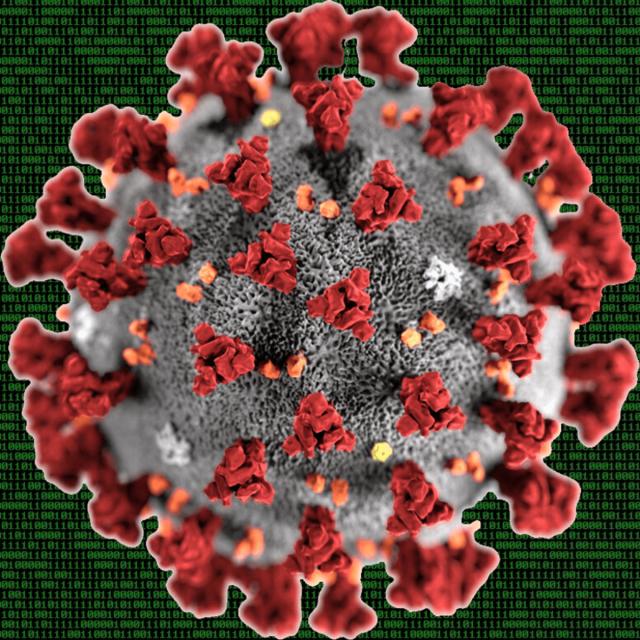
Pathway Bioinformatics is a subfield of Bioinformatics that is concerned with computationally deriving functional insights from genomic data through analysis of molecular networks. This course will present principles and techniques from Pathway Bioinformatics, and will apply these methodologies to the search for drug targets for SARS-CoV-2.

Class Deals by MOOC List - Click here and see Coursera's Active Discounts, Deals, and Promo Codes.

The course will begin by discussing motivations for Pathway Bioinformatics, and by presenting an overview of metabolism and of metabolic pathways. Next it will discuss machine representation of pathway data, and methods for pathway visualization. The course will describe how the metabolic pathways of an organism can be inferred from genome data, and how pathways can be used to interpret high-throughput data such as transcriptomics data. It will show how to predict the essential genes of an organism via reachability analysis, and then present a metabolic analysis of human metabolism when interacting with SARS-CoV-2 to predict SARS-CoV-2 drug targets.

Syllabus

WEEK 1
Hacking COVID-19 — Course 4: Searching for Drug Targets
In this course, we will use pathway bioinformatics techniques to search for potential COVID-19 drug targets.
Go to Class
MOOC List is learner-supported. When you buy through links on our site, we may earn an affiliate commission.

Related Courses

R Programming and Tidyverse Capstone Project (Coursera) Coursera
University of Colorado Boulder

R Programming and Tidyverse Capstone Project (Coursera)

In this third and final course of the "Expressway to Data Science: R Programming and Tidyverse" specialization you will reinforce and display your R and tidyverse skills by completing an analysis of COVID-19 data! Here is a chance to apply your skills to a real-world dataset that has effected all of us.

Jun 1st 2026
3 Weeks
Rastreamento de contato da COVID-19 (Coursera) Coursera
Johns Hopkins University

Rastreamento de contato da COVID-19 (Coursera)

A crise da COVID-19 criou uma necessidade sem precedentes de rastreamento de contato em todo o país, exigindo que milhares de pessoas aprendessem rapidamente as principais habilidades. As qualificações para os cargos de rastreamento de contato diferem em todo o país e no mundo, com alguns novos cargos abertos a indivíduos com diploma de ensino médio ou equivalente.

Jun 1st 2026
1 Week
Genome Sequencing (Bioinformatics II) (Coursera) Coursera
University of California, San Diego

Genome Sequencing (Bioinformatics II) (Coursera)

You may have heard a lot about genome sequencing and its potential to usher in an era of personalized medicine, but what does it mean to sequence a genome? Biologists still cannot read the nucleotides of an entire genome as you would read a book from beginning to end. However, they can read short pieces of DNA. In this course, we will see how graph theory can be used to assemble genomes from these short pieces. We will further learn about brute force algorithms and apply them to sequencing mini-proteins called antibiotics.

May 25th 2026
5-12 Weeks
Introduction to Participatory Approaches in Public Health (Coursera) Coursera
Imperial College London

Introduction to Participatory Approaches in Public Health (Coursera)

This course will introduce you to participatory approaches to public health. You will learn about the history of participatory health research and why it is essential to solving contemporary public health challenges. The course will help you to understand the social and cultural context of public health, before introducing you to essential concepts for working with communities: knowledge and power. Finally, you will engage with critical analyses of participatory approaches, to help you to determine if and when such strategies are appropriate.

Jun 8th 2026
4 Weeks
Health, Society, and Wellness in COVID-19 Times (Coursera) Coursera
University of Colorado Boulder

Health, Society, and Wellness in COVID-19 Times (Coursera)

You may be encountering a world unlike any other generation. The public health crisis of the COVID-19 pandemic has created a context of pervasive uncertainty, heightened anxiety, and social isolation that overlaps with a critical time of your own learning and development. The COVID-19 pandemic also has exacerbated long-standing inequalities and disparities, and recent events in the United States have laid bare historical and current realities of racism and systemic oppression.

Jun 8th 2026
4 Weeks
Big Data Science with the BD2K-LINCS Data Coordination and Integration Center (Coursera) Coursera
Icahn School of Medicine at Mount Sinai

Big Data Science with the BD2K-LINCS Data Coordination and Integration Center (Coursera)

In this course we briefly introduce the DCIC and the various Centers that collect data for LINCS. We then cover metadata and how metadata is linked to ontologies. We then present data processing and normalization methods to clean and harmonize LINCS data. This follow discussions about how data is served as RESTful APIs. Most importantly, the course covers computational methods including: data clustering, gene-set enrichment analysis, interactive data visualization, and supervised learning. Finally, we introduce crowdsourcing/citizen-science projects where students can work together in teams to extract expression signatures from public databases and then query such collections of signatures against LINCS data for predicting small molecules as potential therapeutics.

Jun 1st 2026
5-12 Weeks
Big Data, Genes, and Medicine (Coursera) Coursera
The State University of New York

Big Data, Genes, and Medicine (Coursera)

This course distills for you expert knowledge and skills mastered by professionals in Health Big Data Science and Bioinformatics. You will learn exciting facts about the human body biology and chemistry, genetics, and medicine that will be intertwined with the science of Big Data and skills to harness the avalanche of data openly available at your fingertips and which we are just starting to make sense of.

Jun 8th 2026
5-12 Weeks
AI in Healthcare Capstone (Coursera) Coursera
Stanford University

AI in Healthcare Capstone (Coursera)

This capstone project takes you on a guided tour exploring all the concepts we have covered in the different classes up till now. We have organized this experience around the journey of a patient who develops some respiratory symptoms and given the concerns around COVID19 seeks care with a primary care provider. We will follow the patient's journey from the lens of the data that are created at each encounter, which will bring us to a unique de-identified dataset created specially for this specialization. The data set spans EHR as well as image data and using this dataset, we will build models that enable risk-stratification decisions for our patient.

Jun 8th 2026
5-12 Weeks
Measuring and Maximizing Impact of COVID-19 Contact Tracing (Coursera) Coursera
Johns Hopkins University

Measuring and Maximizing Impact of COVID-19 Contact Tracing (Coursera)

This course aims to provide managers and developers of contact tracing programs guidance on the most important indicators of performance of a contact tracing program, and a tool that can be used to project the likely impact of improvements in specific indicators. Students who complete the course will be proficient in using the Contact Tracing Evaluation and Strategic Support Application (ConTESSA) to estimate the impact of their contact tracing program on transmission and strategizing about how to increase their program’s impact.Free enrollment available until December 31, 2020. Valid for one enrollment per person.

Jun 1st 2026
1 Week
Introduction to Genomic Technologies (Coursera) Coursera
Johns Hopkins University

Introduction to Genomic Technologies (Coursera)

This course introduces you to the basic biology of modern genomics and the experimental tools that we use to measure it. We'll introduce the Central Dogma of Molecular Biology and cover how next-generation sequencing can be used to measure DNA, RNA, and epigenetic patterns. You'll also get an introduction to the key concepts in computing and data science that you'll need to understand how data from next-generation sequencing experiments are generated and analyzed.

May 25th 2026
4 Weeks