EdX

Generating Vision: Long-Term Big Ideas That Motivate Employees and Stakeholders (edX)

Generating Vision: Long-Term Big Ideas That Motivate Employees and Stakeholders (edX)

The “why movement” linked to crafting purpose and mission statements is now being supplanted by the emerging “where movement.” This movement goes beyond brainstorming towards declaring the “big ideas” that will inspire stakeholders. “Where are we going?” as an organization is the primal question posed by employees that CEOs and product managers must smartly address. This course will teach you how.

Class Deals by MOOC List - Click here and see EdX's Active Discounts, Deals, and Promo Codes.

CEOs, founders, and entrepreneurs must routinely craft business plans that clearly describe the company’s future and address trends they see converging. Product managers must ensure that product road-maps don’t get bogged down in iterations so that leap frog innovations take root. Every company’s future must integrate artificial intelligence, manage uncertainty and down-select from infinite choices. Publishing a pithy vision statement often fails to help employees realize their team’s full potential and anticipate future customer needs. This course will help you clearly define a vision of “where” your company is going that will outperform even an inspiring one.
Research demonstrates that companies with a long-term perspective tend to outperform those focused on short-term targets and quarterly goals. By taking a deep look into the future, leaders and employees can identify and mitigate potential blind spots and see patterns that can inhibit or drive growth.
The course will critique multiple company vision statement examples and why they often fail to be motivating. Brainstorming and future thinking must be focused and met with techniques and asking the right questions that when implemented can have a huge impact on the bottom line.
This course will help you to inspire your employees, team-members and all stakeholders through long-term thinking, visioning mindsets, strategic foresight, scenario planning and big idea generation. We will show you how to think long-term and what the many business benefits are. Too little time is allocated to dream big about the company’s future as long-term goals are quickly replaced by short term choices that holds back the full potential of the company. Leaders that don’t take the time to get the big ideas right and communicated will be rapidly replaced. This course will outline the clear differences between mission statements and strategic visioning so that management attention is routinely given towards thinking five to ten plus years into the future.
The danger is in “Short-termism” as too many managers get stuck in day to day thinking as incentives are aligned to think quarterly, small and avoid projects that will take time to deliver bottom-line impact. Visioning has become an essential element of business strategy. Long-term perspective drives success. Yet vision statements often leave employees confused and and even disengaged; retention and relevancy is on the line.
The most clever vision statements often fail to motivate employees if they can’t make sense out of the words and then see themselves within the images, concrete language story telling about the future. Vision statements are often a “check the box” crutch that leaders lean on when they are unable to imagine and get the big ideas right. This course will show that vision statements were never enough to inspire employees to join nor stay with your company. This course will bring you new frameworks, tools and templates that push leaders and mangers towards long-term thinking and planning that drives significant economic opportunity for all stakeholders.
Less than 10% of leader’s self-identify as visionary, according to the Barrett Culture Values Center.
Leaders at all levels struggle with vision and visioning for products, teams, and entire companies. Short-term incentives and behaviors inhibit exploration of the trends that are converging and may disrupt your industry. Leaders often default to generating vision statements that often fail to inspire. Yet, employees and team members crave vision and knowing how their work and longer-term career paths connect to that of the group or entire company. Vision statements were never enough to motivate collective action. while a mission statement may describes why your organization exists, vision can’t be captured in vision statement. The course examines how companies like AARP, Patagonia, Amazon and others use future-back planning, strategic foresight, visioning and long-term thinking to create a north star that pulls leaders up up from the inertia of day to day execution. We will explore the power of and dangers in analogy that held Microsoft back from growth. The course will also examine how nonprofit health care platforms like the Mayo Clinic engages in strategic planning that employs codified beliefs about the future (“the patient will see you now) and how they are looking fifty years into the future of healthcare.
This course is part of the Product Visioning and Strategy: Preparing for Agile Execution Professional Certificate.

What you'll learn

  • That vision statements are insufficient to motivate employees and their teams and that “getting the big ideas” right and communicated is essential to answering “where are we going"?” as a company.
  • High quality examples of companies that encourage long-term thinking and routinely confront the "short-termism" that hinders R&D, innovation and employee connection.
  • Understanding the difference between purpose/mission statements and vision statements, and the key questions that vision answers.
  • How to engage leadership teams and employees in shaping a long-term goals that incorporate the sustainable energy and ESG commitments your company supports.
  • Step by step guidance on how to dream big and generate the "big ideas," that must get done. We will go far beyond writing a vision statement and teach you the mindsets and skill sets that generate motivating initiatives that foster company culture’s of teamwork and collaboration.
  • How to avoid "blurry” vision statements by using concrete and sensory language and imagery linked to storytelling and thoughtful repetition.
  • Connecting vision and big ideas to business processes, including strategic planning, company core values, company mission, budgeting, innovation, company culture, new partnerships, employee growth and well-being, ESG commitments and more.
  • Understand the connection between vision and agile development and product road maps so that product managers can break away from versioning and move towards visioning — while being ethical and transparent about progress.
Go to Class
MOOC List is learner-supported. When you buy through links on our site, we may earn an affiliate commission.

Related Courses

CS50's Introduction to Artificial Intelligence with Python (edX) EdX
HarvardX,Harvard University

CS50's Introduction to Artificial Intelligence with Python (edX)

Learn to use machine learning in Python in this introductory course on artificial intelligence. AI is transforming how we live, work, and play. By enabling new technologies like self-driving cars and recommendation systems or improving old ones like medical diagnostics and search engines, the demand for expertise in AI and machine learning is growing rapidly. This course will enable you to take the first step toward solving important real-world problems and future-proofing your career.

Self Paced
Self-Paced
Impacto de la Inteligencia Artificial en la Innovación de Negocios (edX) EdX
Universidad Anáhuac,AnahuacX

Impacto de la Inteligencia Artificial en la Innovación de Negocios (edX)

En este curso aprenderás sobre los factores importantes que se requieren para fundar un negocio digital, desde la importancia del propósito del negocio, hasta las implementaciones de la IA en las diferentes industrias. La inteligencia artificial es una disciplina de las ciencias de la computación que ha buscado emular los procesos del pensamiento humano para crear máquinas inteligentes que logren tomar decisiones con base en los datos que se presenten.

Self Paced
Self-Paced
AI skills for Engineers: Supervised Machine Learning (edX) EdX
Delft University of Technology,DelftX

AI skills for Engineers: Supervised Machine Learning (edX)

Learn the fundamentals of machine learning to help you correctly apply various classification and regression machine learning algorithms to real-life problems using the Python toolbox scikit-learn. Machine learning classification and regression techniques have potential uses in various engineering disciplines. These machine learning models allow you to make predictions for a category (classification) or for a number (regression) given sensor data, and can be used in, for example, predicting properties of objects (such as their weight or shape).

Self Paced
Self-Paced
Stakeholder Collaboration: Organizing for Environmental Justice and Equitable Solutions (edX) EdX
University of Maryland, College Park,University System of Maryland - USM,USMx,UMD,University of Maryland Center for Environmental Science - UMCES,UMCES

Stakeholder Collaboration: Organizing for Environmental Justice and Equitable Solutions (edX)

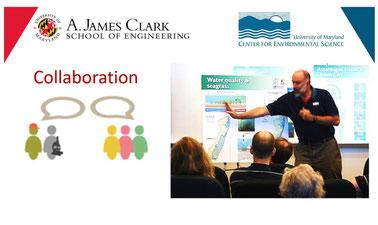
Co-produce outcomes on your environmental projects by effectively engaging and motivating diverse communities to work towards shared environmental goals. In this course you’ll learn about the power of leveraging transdisciplinary (TD) approaches to plan, implement, and govern the co-design of solutions to complex environmental problems impacting environmental justice and public health.

Self Paced
Self-Paced
AI skills: Introduction to Unsupervised, Deep and Reinforcement Learning (edX) EdX
Delft University of Technology,DelftX

AI skills: Introduction to Unsupervised, Deep and Reinforcement Learning (edX)

Learn the fundamentals and principal AI concepts about clustering, dimensionality reduction, reinforcement learning and deep learning to solve real-life problems. In this course you will learn the basics of several machine learning topics to help you solve real life challenges. Unsupervised learning techniques such as clustering and dimensionality reduction are useful to make sense of large and/or high dimensional datasets that are not annotated. Deep learning is a supervised learning technique that is useful to train neural networks to solve more complicated classification and regression tasks. Finally, reinforcement learning techniques can be used to train AI agents that interact with an environment.

Self Paced
Self-Paced
AI Skills for Engineers: Data Engineering and Data Pipelines (edX) EdX
Delft University of Technology,DelftX

AI Skills for Engineers: Data Engineering and Data Pipelines (edX)

Good data is central to effective AI applications. This course teaches the basics of data for AI, covering what data is needed, how to extract data from existing databases and basic data skills including setup of a Python notebook environment, basic data exploration and simple data visualizations.

Self Paced
Self-Paced
Storytelling That Delivers Program and Project Outcomes (edX) EdX
University of Maryland, College Park,University System of Maryland - USM,USMx,UMD

Storytelling That Delivers Program and Project Outcomes (edX)

Storytelling is how leaders lead other leaders. Tell your project’s story to inspire your project teams, encourage your stakeholders, and gain customer commitment to project and program success. Program and project managers are master storytellers. They have to be in order to weave high-priority information into a memorable narrative for their people. Customers must commit to and understand their goals, and how the program is meeting them.

Self Paced
Self-Paced
Making Evidence-Based Strategic Decisions (edX) EdX
University of Maryland, College Park,University System of Maryland - USM,USMx,UMD

Making Evidence-Based Strategic Decisions (edX)

Drive alignment among managers, employees and the organizational goals through data analytics and data products. This course on digital transformation will show you how to turn your organization into a decision-making factory. What makes a good business decision? How can we combine effective data analytics and feed robust foresight and scenario planning processes?

Self Paced
Self-Paced
Tech for Good: The Role of ICT in Achieving the SDGs (edX) EdX
SDGAcademyX,SDG Academy

Tech for Good: The Role of ICT in Achieving the SDGs (edX)

What opportunities and challenges do digital technologies present for the development of our society? Tech for Good was developed by UNESCO and Cetic, the Brazilian Network Information Center’s Regional Center for Studies on the Development of the Information Society. It brings together thought leaders and changemakers in the fields of information and communication technologies (ICT) and sustainable development to show how digital technologies are empowering billions of people around the world by providing access to education, healthcare, banking, and government services; and how “big data” is being used to inform smarter, evidence-based policies to improve people’s lives in fundamental ways.

Self Paced
Self-Paced
Design Thinking: Ideation, Iteration and Communication (edX) EdX
Rochester Institute of Technology,RITx

Design Thinking: Ideation, Iteration and Communication (edX)

Learn how ideas transform into solutions through iteration and validation along with best practices for communicating your solution to stakeholders. Designing a successful and innovative solution requires creative ideas and their iteration. As critical phases of the design thinking process, ideation and iteration are often what distinguish design thinking from traditional or linear problem-solving approaches.

Self Paced
Self-Paced