Game Design and Development 2: 2D Platformer (Coursera)

Game Design and Development 2: 2D Platformer (Coursera)

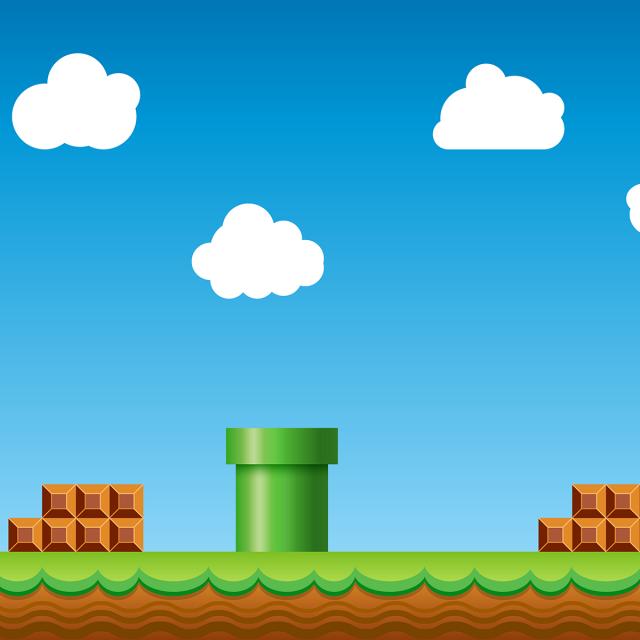
If you love games and want to learn how to make them, then this course is your second step down that path. In this course you will learn the fundamentals of game design, including an understanding of the game world, storytelling, gameplay, user experience, and game technology. You will continue developing videogames using industry standard game development tools, including the Unity game engine. At the end of the course you will have completed a 2D Platformer game, and will be able to leverage an array of game development techniques to create your own basic games.

Class Deals by MOOC List - Click here and see Coursera's Active Discounts, Deals, and Promo Codes.

Course 2 of 5 in the Game Design and Development with Unity 2020 Specialization.

Syllabus

WEEK 1
Your Second Step into Game Design and Development
Are you ready to take the next step in your journey into game design and development? In this module, we will introduce the theory and practice of this course. From a theoretical perspective, we will be using the Design, Play, Experience Framework across this course as a vehicle to discuss game design. From a practical standpoint, you will be creating your second game project in the course, a 2D Platformer. In the first part of the assignment, follow along with the tutorial videos introduced in this module. In the second part of the project, you will modify the game to make it your own.

WEEK 2
Game Worlds and Storytelling in Games
In this module, we will explore two important parts of the design, the game world and storytelling. The game world, simply put, is the world where the game takes place. At its simplest level, it is defined by space and time. But we will explore the game world across the physical, temporal, environmental, emotional, and ethical dimensions. In addition to the game world, we will also explore storytelling in games. There are two perspectives on storytelling in games, the “designer’s story” and the “player’s story”. The designer’s story is the storytelling that is designed into the game. The designer’s story can be used to set the stage, provide purpose and engagement, and convey content, among other things. The setting, character design, and narrative are the designers primary design tools. The storytelling that occurs during play combines the designer’s story with the interactions and choices the player makes. The resulting experience crafts the player’s story.

WEEK 3
Gameplay and User Experience
In this module, we will explore the next two layers of the Design, Play, Experience Framework, including gameplay and user experience. The gameplay layer defines what the player does in the game. That is, what choices the player can make in the game world and what ramifications those choices will have on the rest of the game. The gameplay layer is broken down into mechanics, dynamics, and affects. The mechanics are the rules that define the operation of the game world, what the player can do, the challenges the player will face, and the player’s goals. The dynamics are the resulting behavior when the rules are instantiated over time with the influence of the player’s interactions. The resulting experiences, or emotions derived in the player, are the affects. While the user experience layer is represented as the “deepest” layer in the framework, it is actually the most visible (or surface) layer from the perspective of the player where it is manifested through the user interface. The interface encompasses everything the user sees, hears, and interacts with and how that interaction happens (i.e., the control system.)

WEEK 4
Game Technology and Finishing Up
Everything in the Design, Play, Experience Framework is “grounded” on the technology that you are building the game upon. Overall, the capabilities and limitations of the technology and the resources required to implement the technology may greatly influence the design and should be considered throughout the design process. In this module, you will also finish up the 2D Platformer project, submit it for peer review, and peer review your fellow learners games. Finish the course strong!

Go to Class
MOOC List is learner-supported. When you buy through links on our site, we may earn an affiliate commission.

Related Courses

Teamwork and Creativity (Coursera) Coursera
University of Illinois at Urbana-Champaign

Teamwork and Creativity (Coursera)

In this course, you will enhance your ability and opportunity to work creatively within any organization, learn to understand the importance and role of teamwork within the organization, and develop skills that differentiate yourself as a team player. The professional business skills related to teamwork and creativity gained through this course will help you to succeed working in any organization.

Jun 22nd 2026
5-12 Weeks
Game Design and Development 5: Capstone Project (Coursera) Coursera
Michigan State University

Game Design and Development 5: Capstone Project (Coursera)

In the game design and development capstone course, you will create an original game from initial concept up to the first playable version! Along the way, you will have the opportunity to put your game ideas in front of your peers. The capstone experience gives you the opportunity to push your skills further and demonstrate your newfound skills as a game developer. The capstone also contains guest talks from game industry professionals at Riot Games, Blizzard Entertainment, Insomniac Games, Gearbox Entertainment, Iron Galaxy, Deep Silver Volition, Goodgame Studios, Stardock, GREE, Heart Shaped Games, and more.

Jun 22nd 2026
4 Weeks
Foundations of User Experience (UX) Design (Coursera) Coursera
Google

Foundations of User Experience (UX) Design (Coursera)

Foundations of User Experience (UX) Design is the first of a series of seven courses that will equip you with the skills needed to apply to entry-level jobs in user experience design. UX designers focus on the interactions that people have with products like websites, mobile apps, and physical objects. UX designers make those everyday interactions usable, enjoyable, and accessible. The role of an entry-level UX designer might include empathizing with users, defining their pain points, coming up with ideas for design solutions, creating wireframes, prototypes, and mockups, and testing designs to get feedback.

Jun 25th 2026
4 Weeks
Data Structures and Design Patterns for Game Developers (Coursera) Coursera
University of Colorado System

Data Structures and Design Patterns for Game Developers (Coursera)

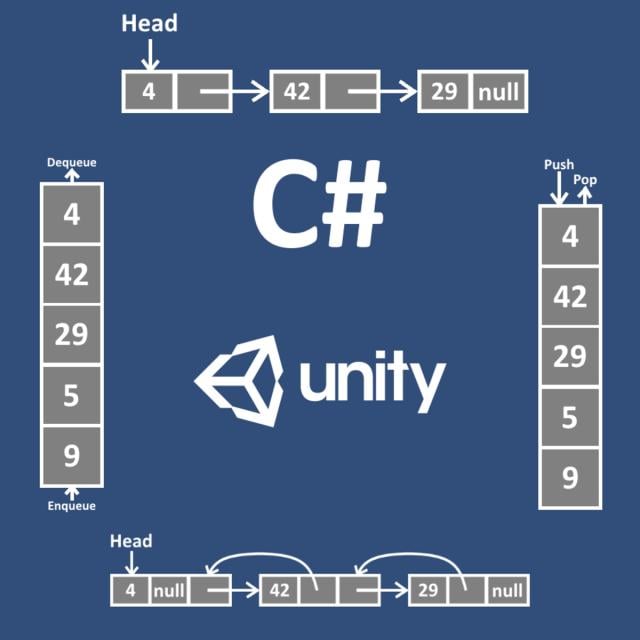
This course is the fourth course in the specialization about learning how to develop video games using the C# programming language and the Unity game engine on Windows or Mac. Why use C# and Unity instead of some other language and game engine? Well, C# is a really good language for learning how to program and then programming professionally. Also, the Unity game engine is very popular with indie game developers; Unity games were downloaded 16,000,000,000 times in 2016! Finally, C# is one of the programming languages you can use in the Unity environment.

Jun 22nd 2026
4 Weeks
Como engajar equipes e criar cultura em ambientes virtuais (Coursera) Coursera
FIA Business School

Como engajar equipes e criar cultura em ambientes virtuais (Coursera)

O programa é muito útil tanto para líderes quanto para membros de equipes virtuais. Os conhecimentos obtidos permite que você forme, participe e lidere equipes de maneira mais eficaz, principalmente em situações de mudança e transformação digital. O processo de aprendizagem é dinâmico, interativo e prático. Neste programa você aprenderá a reconhecer aspectos da cultura de uma equipe em ambientes virtuais que a maioria das pessoas normalmente desconhece. Frequentemente, são esses aspectos, aparentemente sem importância, que têm o maior efeito sobre os resultados coletivos da equipe.

Jun 22nd 2026
4 Weeks
Design a User Experience for Social Good & Prepare for Jobs (Coursera) Coursera
Google

Design a User Experience for Social Good & Prepare for Jobs (Coursera)

Design a User Experience for Social Good and Prepare for Jobs is the seventh and final course in a program that will equip you with the skills you need to become an entry-level UX designer. In this course, you will design a dedicated mobile app and a responsive website focused on social good. You will showcase all that you’ve learned during the certificate program to complete the design process from beginning to end: empathizing with users, defining their pain points, coming up with ideas for design solutions, creating wireframes and prototypes, and testing designs to get feedback. By the end of this course, you will have a new cross-platform design project to include in your professional UX portfolio.

Jun 16th 2026
5-12 Weeks
Writing in First Person Point of View (Coursera) Coursera
Wesleyan University

Writing in First Person Point of View (Coursera)

If you have always wanted to tell your own story—in a memoir, first-person essay, or any other form of autobiographical non-fiction—but felt you lacked the tools or the framework, this is the class for you. We will learn how successful first-person writing is structured to offer the reader a sense of propulsive motion, and is guided by a narrator who is deliberately crafted. We will explore the ways in which language can be used to create tone, so that the emotional freight of your words is as potent as the storytelling. And crucially, we will consider the writer's responsibility to the reader: the importance of being a guide who includes the reader in the sensory, emotional, and intellectual experience you mean to share through your writing.

Jun 22nd 2026
4 Weeks
UX Design: From Concept to Prototype (Coursera) Coursera
University of Michigan

UX Design: From Concept to Prototype (Coursera)

Great design doesn’t come out of nowhere; it is born, nurtured, and grown--all through a systematic, learnable process. In this UX course, you will explore the process of taking a basic concept, grounded in user needs, and developing it into a design that will address those needs. In the course, you will gain hands-on experience with techniques such as sketching, scenario development, storyboarding, and wireframing that will help you transform your understanding of what your users need into a compelling user experience.

Jun 22nd 2026
5-12 Weeks
Ready to Roll – The Video Production Process (Coursera) Coursera
University of Colorado Boulder

Ready to Roll – The Video Production Process (Coursera)

If you’ve done your pre-production thoroughly, then you should feel confident moving on to this next step — gathering the raw materials that you will use to build your visual story. These raw materials are your camera shots, including b-roll and interviews. The production stage is where you will finally collect the images and sound that will communicate directly to your audience. We’ll show you how to enhance your visual story by raising the quality of your shots: getting proper exposure, using the rule of thirds; and shooting sequences that promote continuity.

Jun 22nd 2026
5-12 Weeks
Writing Stories About Ourselves (Coursera) Coursera
Wesleyan University

Writing Stories About Ourselves (Coursera)

In this course, creative nonfiction writers will explore traditional storytelling methods, especially those which overlap between fiction and memoir. By looking at examples from a wide range of genres, including film, song, painting—even the theme music for Jaws!—we’ll practice exercising the creative muscle that sees ourselves as characters and the experiences we’ve had as tales.

Jun 22nd 2026
4 Weeks
Developing AR/VR/MR/XR Apps with WebXR, Unity & Unreal (Coursera) Coursera
University of Michigan

Developing AR/VR/MR/XR Apps with WebXR, Unity & Unreal (Coursera)

This third course in the XR for Everybody specialization is geared toward the technical development of XR experiences. The course provides learners with a more technical mental model of XR technologies and the tools to approach XR development with confidence. It walks through the stages of development for both VR and AR projects, introducing the main XR development platforms as well as the key methods and tools. This third course also helps learners infer advanced XR requirements from physical/digital prototypes and teaches them how to differentiate major technical concerns, estimate development costs, and plan research necessary to advance XR.

Jun 22nd 2026
4 Weeks