Game Design and Development 3: 3D Shooter (Coursera)

Game Design and Development 3: 3D Shooter (Coursera)

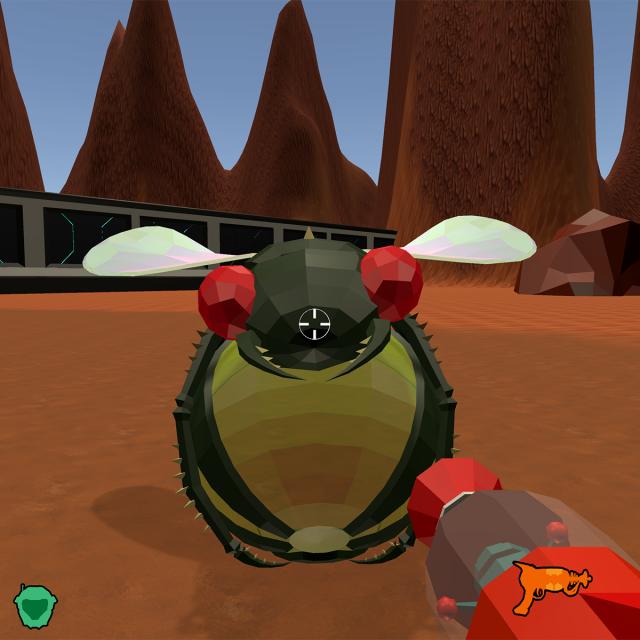
If you love games and want to learn how to make them, then this course is your third step down that path. In this course you will learn the fundamentals of game design, including an understanding of level design, game balancing, prototyping, and playtesting, as well as game asset creation techniques. You will continue developing video games using industry standard game development tools, including the Unity 2020 game engine. At the end of the course you will have completed a 3D First-Person Shooter game, and will be able to leverage an array of game development techniques to create your own basic games.

Class Deals by MOOC List - Click here and see Coursera's Active Discounts, Deals, and Promo Codes.

Course 3 of 5 in the Game Design and Development with Unity 2020 Specialization.

Syllabus

WEEK 1
Your Third Step into Game Design and Development
Are you ready to take the next step in your journey into game design and development? In this module, we will introduce the course and kick off your third game project, a 3D Shooter. In the first part of the assignment, follow along with the tutorial videos introduced in this module. In the second part of the project, you will modify the game to make it your own.

WEEK 2
Game Assets
A big part of game development is developing the game assets. Game assets in Unity include the visuals (2D and 3D graphics, fonts, materials, animations), audio (sound effects, voice acting, ambient sounds, and music), and even the game logic (C# scripts), amongst other things. In this module, we will explore concepts and creation techniques of graphics, concepts and creation techniques of audio, the asset pipeline, and explore programming best practices.

WEEK 3
Level Design and Game Balancing
In this module, we will explore level design and game balancing. Level design is where the ‘rubber meets the road’. The level design is where the gameplay, storyline, art, and technology all come together to create the actual game world the player experiences. We have discussed the idea of creating experience goals, designing, playtesting, comparing the difference between the experience goals and the actual experience, and then iterating on the design, several times. This is game balancing. It is what iterative design is all about.

WEEK 4
Making Your Game Better
Prototyping is one of the most critical skills a game designer can cultivate. The ability to "find the fun" in gameplay design is critical to being a successful designer. In this module we will discuss prototyping of a game. This can then be put in front of players during a playtest, allowing you to better understand if the underlying mechanics, systems and aesthetic are something that players may find engaging. As you work on your 3D Shooter project, you should be playtesting. In this module, you will also finish up the 3D Shooter project, submit it for peer review, and peer review your fellow learners games. Finish the course strong!

Go to Class
MOOC List is learner-supported. When you buy through links on our site, we may earn an affiliate commission.

Related Courses

Intermediate Object-Oriented Programming for Unreal Games (Coursera) Coursera
University of Colorado System

Intermediate Object-Oriented Programming for Unreal Games (Coursera)

This course is the fourth and final course in the Specialization about learning how to develop video games using the C++ programming language and the Unreal game engine on Windows or Mac. This course assumes you have the prerequisite knowledge from the previous three courses in the specialization. You should make sure you have that knowledge, either by taking those previous courses or from personal experience, before tackling this course.

Jul 27th 2026
4 Weeks
Game Developers and Esports Organizations (Coursera) Coursera
University of California, Irvine

Game Developers and Esports Organizations (Coursera)

Before you can have an Esport, you must have a video game to play and a game developer to design it. This course is dedicated to discussing game developers and their relationship with their respective Esport. The content will help you recognize the qualities a video game must have to become a successful Esport. We will examine the diagram demonstrating the various competitive structures commonly found in Esports.

Jul 20th 2026
2 Weeks
Game Design and Development 2: 2D Platformer (Coursera) Coursera
Michigan State University

Game Design and Development 2: 2D Platformer (Coursera)

If you love games and want to learn how to make them, then this course is your second step down that path. In this course you will learn the fundamentals of game design, including an understanding of the game world, storytelling, gameplay, user experience, and game technology. You will continue developing videogames using industry standard game development tools, including the Unity game engine. At the end of the course you will have completed a 2D Platformer game, and will be able to leverage an array of game development techniques to create your own basic games.

Jul 20th 2026
4 Weeks
Getting Started with GameMaker (Coursera) Coursera
University of Colorado System

Getting Started with GameMaker (Coursera)

This course is all about starting to learn how to develop video games using GameMaker on Windows or Mac. Why use GameMaker instead of using C# and Unity or C++ and Unreal*? Learning to develop games with GameMaker is much easier than learning to program in C# or C++ AND learning Unity or Unreal. If you just want to start learning how to develop games in a more "gentle" way, this is a great starting point.

Jul 20th 2026
4 Weeks
The 3D Printing Revolution (Coursera) Coursera
University of Illinois at Urbana-Champaign

The 3D Printing Revolution (Coursera)

This course will demonstrate how 3D printers work, show what people make with them, and examine the 3D printing ecosystem. It will also explore the future of 3D printing and discuss how this technology will revolutionize our world. Learners who complete this introductory course will have a solid understanding of 3D printing and its revolutionary potential, and will be able to print and customize 3D designs.

Jul 20th 2026
2 Weeks
Introduction to Solid Edge (Coursera) Coursera
Siemens

Introduction to Solid Edge (Coursera)

The Introduction to Siemens Solid Edge software will enable you to learn basic design concepts in both 2D and 3D environments using Computer-Aided Design (CAD) software. The concepts include 2D sketches, basic shapes, 3D models, and simple assemblies. You’ll gain experience using commands such as extrude, revolve, rounds, blend, and thinwall to more efficiently design solid models. Additionally, you’ll learn about drafting concepts such as detailing, drawing view, section cuts, and design intent.

Aug 3rd 2026
5-12 Weeks
3D Printing Capstone Coursera
University of Illinois at Urbana-Champaign

3D Printing Capstone

The capstone will integrate the learning acquired from the four courses in the 3D Printing Specialization through a hands-on project. This project will enable you to turn an idea into an object using the knowledge and skills acquired through the other courses. Specifically, you will be guided through a step-by-step process in which you imagine, design, make, and share a 3D printed object. Thus, through this capstone, you will be able to put course concepts into action and utilize the skills that you have acquired throughout the Specialization.

Aug 3rd 2026
4 Weeks
World Design for Video Games (Coursera) Coursera
California Institute of the Arts

World Design for Video Games (Coursera)

Start creating your world. A game world is not just a backdrop for your game—be it minimal or detailed, contained or part of a much bigger universe, it provides the context for your player. Ultimately, a game world should feel alive and wholly unique to any player who will experience it. In this course, we will explore game worlds in existing games and study the art and influences that inform their themes and styles. We will also investigate key components of environment and level design as well as strategies designers use to define gameplay or advance it. We’ll also look at navigation and the elements that make your world as real (or unreal) as you want it to be.

Jul 27th 2026
4 Weeks
Introduction to Game Design (Coursera) Coursera
California Institute of the Arts

Introduction to Game Design (Coursera)

Welcome! This course is an introduction to the primary concepts of gaming, and an exploration of how these basic concepts affect the way gamers interact with our games. In this course you will understand what defines a “game” and the mechanics and rules behind different types of games. Through four linked assignments you'll learn ways to create and describe a game concept, and specifically what makes a compelling game. This course focuses on the conceptual underpinnings of games, and all assignments can be completed with a pencil and paper – no previous programming knowledge is required.

Jul 27th 2026
4 Weeks
Games, Sensors and Media (Coursera) Coursera
University of California, Irvine

Games, Sensors and Media (Coursera)

You will learn to make fluid digital interactive experiences that are suitable for gaming and use the advanced sensor hardware built into the iPhone and iPad. This includes drawing 2D graphics, playing sounds and music, integrating with Game Center, the iOS physics engine and detecting device orientation and location.

Aug 3rd 2026
4 Weeks
Developing AR/VR/MR/XR Apps with WebXR, Unity & Unreal (Coursera) Coursera
University of Michigan

Developing AR/VR/MR/XR Apps with WebXR, Unity & Unreal (Coursera)

This third course in the XR for Everybody specialization is geared toward the technical development of XR experiences. The course provides learners with a more technical mental model of XR technologies and the tools to approach XR development with confidence. It walks through the stages of development for both VR and AR projects, introducing the main XR development platforms as well as the key methods and tools. This third course also helps learners infer advanced XR requirements from physical/digital prototypes and teaches them how to differentiate major technical concerns, estimate development costs, and plan research necessary to advance XR.

Jul 20th 2026
4 Weeks