Classic Detective Fiction (FutureLearn)

Classic Detective Fiction (FutureLearn)

Develop detailed knowledge of one of the most popular and widely read literary sub-genres of crime fiction. Are you the next Hercule Poirot? A budding Sherlock Holmes? Embrace your inner Dick Tracy and dive into the world of detective fiction! Explore the back-stories of some of the earliest examples of crime fiction. This course delves deep into the evolution of the crime fiction genre from the early nineteenth century to the present day with a focus on detective novels. Many of these novels shaped the way we think about reading, and have engaged generations of readers from childhood through to our twilight years.

Class Deals by MOOC List - Click here and see FutureLearn's Active Discounts, Deals, and Promo Codes.

Did you know that over 2 billion copies of Agatha Christie’s detective novels are estimated to have been sold?
On this course you will develop advanced skills in analysing and contextualising crime fiction texts from the UK, the US, Australia and beyond.
Join us and embark on the fascinating tale behind the twist.

What topics will you cover?

  • The early history of detective fiction
  • Detective fiction sub-genres
  • Reading detective fiction
  • Plots and narrative structures
  • Classic detective fiction devices

What will you achieve?
By the end of the course, you‘ll be able to...

  • Discuss the history of crime fiction and some of the key crime fiction subgenres.
  • Explore the key formal, thematic and contextual characteristic of individual crime fiction texts.
  • Investigate crime fiction texts in relation to their genre and the idea of genre evolution.
Go to Class
MOOC List is learner-supported. When you buy through links on our site, we may earn an affiliate commission.

Related Courses

Writing and Disseminating Grey Literature (Coursera) Coursera
Indian Institute for Human Settlements

Writing and Disseminating Grey Literature (Coursera)

If you are a researcher, academic, student, development sector professional or a practitioner who is keen to reach the research-based knowledge you have created to a wider audience, this course is for you. Vast amounts of knowledge are produced by educational and research institutions through rigorous research and fieldwork. Yet, there is a dearth of access to this knowledge among non-academic communities (which includes practitioners, policymakers, and citizens) due to the language used. Researchers can bring visibility to grey literature if they engage with alternate public writing forms.

Oct 19th 2026
5-12 Weeks
Samuel Johnson’s Rasselas: An Introduction (FutureLearn) FutureLearn
Ralston College

Samuel Johnson’s Rasselas: An Introduction (FutureLearn)

Explore the humane realism of Samuel Johnson in a deep dive into his only novel with Theodore Dalrymple as your guide. Explore the humane realism of Samuel Johnson in a deep dive into his only novel. Learn from Theodore Dalrymple. Theodore Dalrymple, the pseudonym of Anthony Daniels, is an English cultural critic of great distinction. He has written extensively on culture, its contemporary neglect, and its enduring potential.

Jan 24th 2022
5-12 Weeks
Literature in the Digital Age: from Close Reading to Distant Reading (FutureLearn) FutureLearn
University of Basel

Literature in the Digital Age: from Close Reading to Distant Reading (FutureLearn)

Learn new ways of interpreting literary texts, from time-tested methods to computer-assisted practices such as distant reading. As we make sense of what we read, we construe meaning using the ancient cultural technique of interpretation. Only rarely do we actually reflect this process: what are the means that help us to understand literary texts? How does interpretation work? And how has our increasing use of e-books and tablets changed the way we read and interpret literature?

Available now
5-12 Weeks
Writing Stories About Ourselves (Coursera) Coursera
Wesleyan University

Writing Stories About Ourselves (Coursera)

In this course, creative nonfiction writers will explore traditional storytelling methods, especially those which overlap between fiction and memoir. By looking at examples from a wide range of genres, including film, song, painting—even the theme music for Jaws!—we’ll practice exercising the creative muscle that sees ourselves as characters and the experiences we’ve had as tales.

Oct 12th 2026
4 Weeks
Masterpieces of World Literature (edX) EdX
HarvardX,Harvard University

Masterpieces of World Literature (edX)

Embark on a global journey to explore the past, present, and future of World Literature. This literature course explores how great writers refract their world and how their works are transformed when they intervene in our global cultural landscape today. No national literature has ever grown up in isolation from the cultures around it; from the earliest periods, great works of literature have probed the tensions, conflicts, and connections among neighboring cultures and often more distant regions as well.

Self Paced
Self-Paced
Shakespeare's Hamlet: The Ghost (edX) EdX
HarvardX,Harvard University

Shakespeare's Hamlet: The Ghost (edX)

Explore the haunting figure at the heart of one of William Shakespeare’s most famous plays. In the first act of William Shakespeare’s Hamlet, the Ghost of the dead King of Denmark appears to his son, setting off a chain of events that culminates in the play’s notoriously bloody finale. But how would this mysterious figure have been understood in Shakespeare’s time?

Self Paced
Self-Paced
What Is Poetry? An Introduction to Literary Analysis (FutureLearn) FutureLearn
The University of Newcastle, Australia

What Is Poetry? An Introduction to Literary Analysis (FutureLearn)

Understand the basics of poetry analysis and learn key skills for studying English literature by exploring a variety of texts. Explore, understand and critique poetry. What are the different ways you can understand a poem? How do different elements of a poem work together? What difference does context make to literature?

Jul 19th 2021
3 Weeks
Shakespeare: Print and Performance (FutureLearn) FutureLearn
King's College London

Shakespeare: Print and Performance (FutureLearn)

As part of Shakespeare400, learn about Shakespeare in print and performance around the world, from early modern times to today. Why do we continue to read and perform Shakespeare’s works around the world today? How were his plays performed and printed 400 years ago, and how has our conception of Shakespeare changed over the centuries?

Self Paced
4 Weeks
Leer a Macondo: La obra de Gabriel García Márquez (FutureLearn) FutureLearn
Universidad de los Andes

Leer a Macondo: La obra de Gabriel García Márquez (FutureLearn)

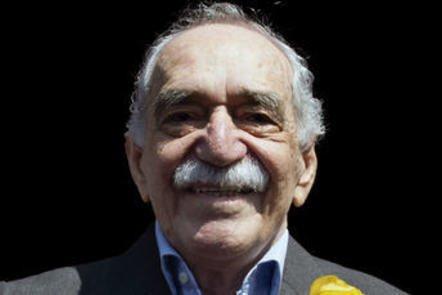
Explorar por qué el autor de Cien años de Soledad es uno de los escritores más importantes del siglo XX. Gabriel García Márquez es un escritor colombiano que ganó el premio Nobel de Literatura en 1982 y ha sido reconocido como uno de los escritores más importantes del siglo XX. Sus obras han sido traducidas a más de 35 idiomas, han sido adaptadas para televisión y cine y han inspirado múltiples obras de arte.

No sessions available
5-12 Weeks
Introduction to Academic Writing (Coursera) Coursera
O.P. Jindal Global University

Introduction to Academic Writing (Coursera)

Welcome to the Introduction to Academic Writing course! By the end of this course, you will gain an in-depth understanding of reading and writing as essential skills to conduct robust and critical research. This course introduces you to critical reading and writing skills within the conventions of academic writing.

Oct 12th 2026
4 Weeks
A-level Study Boost: Unseen Poetry and the Creative Process (FutureLearn) FutureLearn
University of Reading

A-level Study Boost: Unseen Poetry and the Creative Process (FutureLearn)

Discover effective techniques to analyse unseen poetry and learn about the creative writing process. Improve your skills in analysis and creative writing. What do you do when you encounter a poem for the first time? How can the process of writing poetry help you to enjoy and understand the written word in new ways? On this course, you’ll explore strategies for close reading and creative writing using a poem called ‘Patagonia’ by Kate Clanchy as a case study.

No sessions available
2 Weeks