Free Will and Neuroscience (Coursera)

Offered by Dartmouth College,
Free Will and Neuroscience (Coursera)

In this course, we will discuss free will from a neuroscientific perspective. Module one of the course will explore two neuroscientific arguments against free will from Libet and Wegner and evaluate neuroscientists’ arguments against free will. You will also examine where these experiments do not succeed in debunking free will.

Class Deals by MOOC List - Click here and see Coursera's Active Discounts, Deals, and Promo Codes.

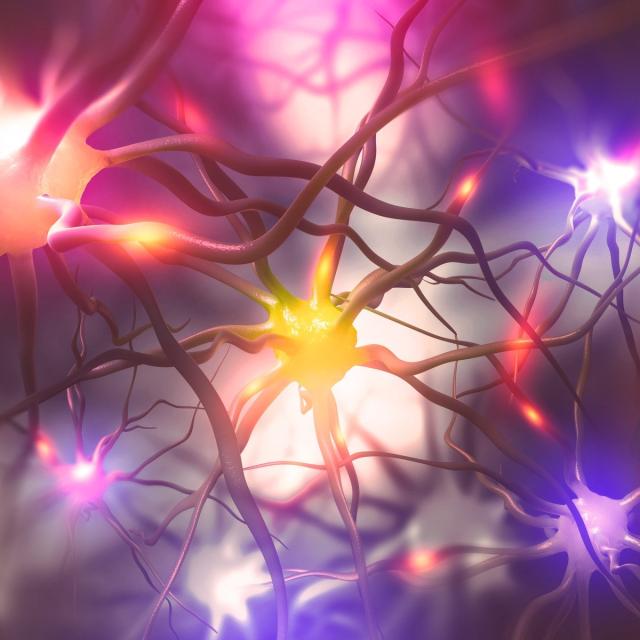
In module two, the anatomy and physiology of neurons will be described. You will also learn how they communicate. You will have an understanding about neural anatomy and physiology to consciousness, attention, and free will.
In the final and the third module of the course, you will explore an example of the top-down influence on bottom-up processing called volitional attention. You will see how neural circuits responsible for both volitional and non-volitional thought and action interact with each other. Next, you will learn how a neural circuit can change its physical structure and function, and how these changes might impact human behavior.
This course is part of the Libertarian Free Will Specialization.

Syllabus

Module 1: Neuroscientific Arguments Against Free Will
Module 1
This module explains neuroscientific arguments against free will including Libet experiment and Wegner's experiment.

Module 2: The Neuroscience of Free Will: Part 1
Module 2
This module deals with the neuroscientific aspects of free will including the structure and function of neuron, neural receptors, and concepts such as indeterminism. It also explains the top-down executive function of the brain.

The Neuroscience of Free Will: Part 2
Module 3
This module explores the concept of volition in the brain and further explores concepts such as the neural basis of mindfulness, volitional imagination, self-transformation etc.

Go to Class
MOOC List is learner-supported. When you buy through links on our site, we may earn an affiliate commission.

Related Courses

Social Psychology (Coursera) Coursera
Wesleyan University

Social Psychology (Coursera)

This course offers a brief introduction to classic and contemporary social psychology, covering topics such as decision making, persuasion, group behavior, personal attraction, and factors that promote health and well-being. Ever wonder why people do what they do? This course—which includes more than $1,000 of video and reading materials—offers some answers based on the latest research from social psychology.

Jun 22nd 2026
5-12 Weeks
Computational Neuroscience (Coursera) Coursera
University of Washington

Computational Neuroscience (Coursera)

This course provides an introduction to basic computational methods for understanding what nervous systems do and for determining how they function. We will explore the computational principles governing various aspects of vision, sensory-motor control, learning, and memory. Specific topics that will be covered include representation of information by spiking neurons, processing of information in neural networks, and algorithms for adaptation and learning.

Jun 22nd 2026
5-12 Weeks
Pricing Strategy (Coursera) Coursera
IE Business School

Pricing Strategy (Coursera)

Pricing is one of the most important but least understood marketing decisions. Learn and practice concepts, techniques, and get to grips with the latest thinking on assessing and formulating pricing strategies. Analyze how firms attempt to capture value, as well as profits, in the revenues they earn. After this course, you will be able to contribute to the process of formulating pricing strategies for your own products and services, or those of your firm.

Jun 22nd 2026
4 Weeks
Psicología de la salud (Coursera) Coursera
Tecnológico de Monterrey

Psicología de la salud (Coursera)

En este curso aprenderás los fundamentos conceptuales de la Psicología de la Salud. Comenzaremos con los antecedentes históricos acerca del estudio de los componentes subjetivos y de comportamiento en el proceso salud-enfermedad y de la atención de la salud. Además, se conocerán los factores psicosociales relacionados en la calidad de vida y la promoción de la salud, la prevención de las enfermedades, la atención de los enfermos y personas con secuelas.

Jun 22nd 2026
4 Weeks
Positive Psychology: Applications and Interventions (Coursera) Coursera
University of Pennsylvania

Positive Psychology: Applications and Interventions (Coursera)

Positive interventions are one of the building blocks for the application of positive psychology in our day-to-day lives. In this course taught by Dr. James Pawelski, we explore positive interventions through theory, research and practice. We provide learners the basic tools for using and measuring positive psychology in professional or personal contexts. Suggested prerequisite: Positive Psychology: Martin E. P. Seligman’s Visionary Science.

Jun 22nd 2026
4 Weeks
Introducción a la Psicología (Coursera) Coursera
Universidad Austral

Introducción a la Psicología (Coursera)

¿Qué es el inconsciente? ¿Qué es la autoestima? ¿Qué es el apego y cómo incide en los vínculos adultos ? ¿Cómo funciona nuestro cerebro y cómo se modifica a lo largo de la vida? En este curso se abordarán estos interrogantes y diversos temas vinculados con la Psicología desde una mirada académica y mediante el estudio de los principales autores que han realizado significativos aportes a esta ciencia.

Jun 22nd 2026
5-12 Weeks
Unethical Decision Making in Organizations (Coursera) Coursera
University of Lausanne

Unethical Decision Making in Organizations (Coursera)

This course 'Unethical decision making in organizations : A seminar on the dark side of the force' will teach you how strong organizational contexts push good people towards unethical decisions. You will also learn how to protect yourself and your organization against such forces lurking in the dark. This course teaches how narrow frames and strong contexts can push good people towards unethical decisions and how they can protect themselves and their organization against ethical blindness.

Jun 15th 2026
5-12 Weeks
A Life of Happiness and Fulfillment (Coursera) Coursera
Indian School of Business - ISB

A Life of Happiness and Fulfillment (Coursera)

What are the determinants of a happy and fulfilling life? This is surely one of life’s biggest questions, and a question that has interested many of our ancestors. Buddha famously gave up his kingdom in search of happiness. Several Greek philosophers (from Aristotle to Epicurus and Plato to Socrates) had their own views on what it takes to be happy. And of course, we all have our own theories about happiness too.

Jun 22nd 2026
5-12 Weeks
Foundations of Mindfulness (Coursera) Coursera
Rice University

Foundations of Mindfulness (Coursera)

This course provides a broad overview of the fundamental concepts, principles, and practices of mindfulness. With interactive exercises to help students explore their own attitudes, mental habits and behaviors, Foundations of Mindfulness offers a pathway for living with more freedom, authenticity and ease. Featured components of the course include experiential exercises, guided meditations, personal reflection and interactive discussions.

Jun 22nd 2026
4 Weeks
Children's Human Rights - An Interdisciplinary Introduction (Coursera) Coursera
University of Geneva

Children's Human Rights - An Interdisciplinary Introduction (Coursera)

Drawing on the contributions of several academic disciplines including law, psychology, sociology, history, educational and health sciences, economy and anthropology, an interdisciplinary approach guides the student into a selection of critical issues concerning children’s rights. Participants will gain insight relative to the development of this specific human rights category, as well as to the evolution of the challenges faced by children over time and society’s efforts to respond.

Jun 15th 2026
5-12 Weeks
Philosophy, Science and Religion: Science and Philosophy (Coursera) Coursera
University of Edinburgh

Philosophy, Science and Religion: Science and Philosophy (Coursera)

Philosophy, Science and Religion mark three of the most fundamental modes of thinking about the world and our place in it. Are these modes incompatible? Put another way: is the intellectually responsible thing to do to ‘pick sides’ and identify with one of these approaches at the exclusion of others? Or, are they complementary or mutually supportive? As is typical of questions of such magnitude, the devil is in the details. For example, it is important to work out what is really distinctive about each of these ways of inquiring about the world. In order to gain some clarity here, we’ll be investigating what some of the current leading thinkers in philosophy, science and religion are actually doing.

Jun 22nd 2026
5-12 Weeks