A life with ADHD (Coursera)

Offered by University of Geneva,
A life with ADHD (Coursera)

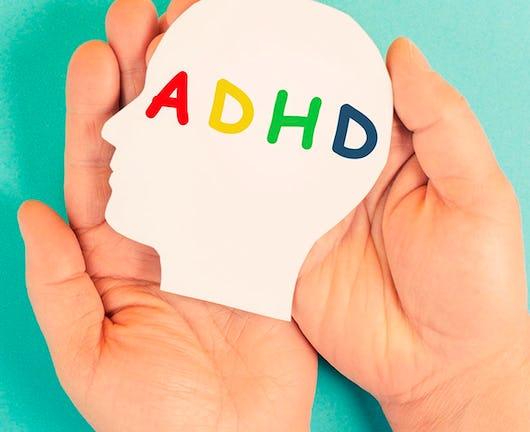
What is ADHD and what are the challenges that come with it? Whether you are a person affected by ADHD, a family member or a professional, this MOOC will provide you with an understanding of what ADHD is. It will allow you to respond to the specific challenges of ADHD by developing a complex strategy that integrates psychological dimensions, neurobiological treatments, as well as environmental interventions. Since in two thirds of cases this disorder is relatively persistent, even though it may fluctuate over the course of an individual's life, this course will provide keys to understanding how to live with ADHD over time.

Class Deals by MOOC List - Click here and see Coursera's Active Discounts, Deals, and Promo Codes.

Through presentations by experts in the field, activities and various resources such as readings and videos, you will learn about

  • The assessment of ADHD symptoms
  • The specifics of ADHD diagnosis, as well as its differential diagnoses and comorbidities
  • Biological (including medication), psychological and environmental interventions for ADHD

This MOOC has been created for teenagers and adults affected by ADHD, as well as their families. It has also been designed for professionals interested in ADHD. This MOOC is also proposed to medical and psychology students who wish to learn more about ADHD.
We hope you will have a lot of fun following this MOOC!

What you'll learn

  • Understand what ADHD is and the challenges related to this disorder
  • Familiarize yourself with the diagnostic and therapeutic issues of this disorder
  • Know the biological, psychological and environmental interventions

Syllabus

What is ADHD? Challenges and strengths
Module 1
In this module, you will discover the signs of ADHD and the diagnostic elements, and how the difficulties that appear, according to age, can lead to specific challenges in everyday life, in relationships at school or in the workplace.

Responding to challenges
Module 2
This module will help you reflect on the construction of a global and sustainable strategy that can take into account different types of therapeutic approaches. You will also learn about comorbidities (disorders associated with ADHD) and their impact on ADHD. Finally, strategies that do not work will also briefly be discussed.

Biological interventions
Module 3
In this module, you will learn about biological interventions such as psychopharmacology, dietary supplements and diets, and other emerging interventions, such as transcranial stimulation, that can modulate brain function and help improve attention and hyperactivity.

Psychological interventions
Module 4
In this module, you will learn the main principles of psychological interventions for ADHD. At the end of this module, you will know why they are important for both patients and their loved ones. Self-teaching tips for people with ADHD and teaching tips for therapists will be given. The major psychological areas of ADHD, such as attention difficulties, task planning and organization problems, hyperactivity and impulsivity, both behavioral and emotional, will be described in terms of the difficulties they cause at any age.

Skills Buildings
Module 5
In this module, you will learn about the specific areas of ADHD discussed in Module 4 (attention difficulties, problems with planning and organizing tasks, hyperactivity and impulsivity both behavioral and emotional), and they will be detailed here in order to define simple and effective strategies to live with ADHD. This module will provide you with the skills to create a toolbox for yourself or a patient (if you are a therapist).

Environmental interventions
Module 6
In this module, you will learn specifically about the different accommodations that can be offered to people with ADHD, whether at home, at school or in the workplace. A second part of this module will focus on family caregiver and family interventions.

Go to Class
MOOC List is learner-supported. When you buy through links on our site, we may earn an affiliate commission.

Related Courses

Free Will and Neuroscience (Coursera) Coursera
Dartmouth College

Free Will and Neuroscience (Coursera)

In this course, we will discuss free will from a neuroscientific perspective. Module one of the course will explore two neuroscientific arguments against free will from Libet and Wegner and evaluate neuroscientists’ arguments against free will. You will also examine where these experiments do not succeed in debunking free will.

Jun 8th 2026
3 Weeks
Understanding Multiple Sclerosis (MS) (University of Tasmania) Other Providers
University of Tasmania

Understanding Multiple Sclerosis (MS) (University of Tasmania)

'Understanding Multiple Sclerosis (MS)' is a free online course that aims to improve understanding and awareness of MS. Developed by the Menzies Institute for Research in partnership with Multiple Sclerosis Limited, the content is delivered by 27 experts in the field including neurologists, researchers, clinicians, allied health practitioners, carers and people living with Multiple Sclerosis.

Sep 12th 2022
5-12 Weeks
Fundamentals of Neuroscience, Part 1: The Electrical Properties of the Neuron (edX) EdX
HarvardX,Harvard University

Fundamentals of Neuroscience, Part 1: The Electrical Properties of the Neuron (edX)

Learn how electricity makes the neurons in your brain tick. Fundamentals of Neuroscience is a three-courseseries that explores the structure and function of the nervous system—from the inner workings of a single nerve cell to the staggering complexity of the brain and the social interactions they enable.

Self Paced
Self-Paced
An Introduction to Consumer Neuroscience & Neuromarketing (Coursera) Coursera
Copenhagen Business School

An Introduction to Consumer Neuroscience & Neuromarketing (Coursera)

How do we make decisions as consumers? What do we pay attention to, and how do our initial responses predict our final choices? To what extent are these processes unconscious and cannot be reflected in overt reports? This course will provide you with an introduction to some of the most basic methods in the emerging fields of consumer neuroscience and neuromarketing. You will learn about the methods employed and what they mean. You will learn about the basic brain mechanisms in consumer choice, and how to stay updated on these topics. The course will give an overview of the current and future uses of neuroscience in business.

Jun 1st 2026
5-12 Weeks
What is a Mind? (FutureLearn) FutureLearn
University of Cape Town

What is a Mind? (FutureLearn)

Explore the most pertinent scientific and philosophical concepts for understanding our own minds with this free online course. This free online course will bring together learners and practitioners interested in how the mind works. It aims to build bridges between traditionally antagonistic approaches to understanding the mind.

Jul 25th 2022
5-12 Weeks
Childhood Adversity: The Impact of Childhood Maltreatment on Mental Health (FutureLearn) FutureLearn
University College London

Childhood Adversity: The Impact of Childhood Maltreatment on Mental Health (FutureLearn)

Explore the connection between childhood adversity and mental health, and enhance your knowledge of mental health in young people. Learn how childhood trauma impacts a child’s beliefs, behaviour, and development. We know half of all mental health conditions emerge before age fourteen, but there’s a need for a greater understanding of young people’s mental wellbeing. On this course, you’ll improve your understanding of how early adverse experiences can impact a young person’s mental health.

Jan 17th 2022
3 Weeks
Understanding Dementia (University of Tasmania) Other Providers
University of Tasmania

Understanding Dementia (University of Tasmania)

The Understanding Dementia MOOC was developed by the Wicking Dementia Research and Education Centre based in the College of Health and Medicine at the University of Tasmania. This world-leading online course is free, easily accessible and available to everyone with an interest in dementia. This course is free and runs twice a year in February and July.

Feb 7th 2023
5-12 Weeks
The Psychology of Thrill Seekers (Coursera) Coursera
Emory University

The Psychology of Thrill Seekers (Coursera)

Sensation seeking is a trait we all have and includes the search for complex and new experiences. Thrill Seekers, people with high-sensation seeking personalities, crave exotic and intense experiences even when physical or social risks are involved. This course helps learners examine the remarkable world of the high-sensation seeking personality and explores the lifestyle, psychology, and neuroscience behind thrill seekers.

May 25th 2026
5-12 Weeks
Philosophy, Science and Religion: Science and Philosophy (Coursera) Coursera
University of Edinburgh

Philosophy, Science and Religion: Science and Philosophy (Coursera)

Philosophy, Science and Religion mark three of the most fundamental modes of thinking about the world and our place in it. Are these modes incompatible? Put another way: is the intellectually responsible thing to do to ‘pick sides’ and identify with one of these approaches at the exclusion of others? Or, are they complementary or mutually supportive? As is typical of questions of such magnitude, the devil is in the details. For example, it is important to work out what is really distinctive about each of these ways of inquiring about the world. In order to gain some clarity here, we’ll be investigating what some of the current leading thinkers in philosophy, science and religion are actually doing.

Jun 1st 2026
5-12 Weeks