First Aid for Babies and Children (FutureLearn)

First Aid for Babies and Children (FutureLearn)

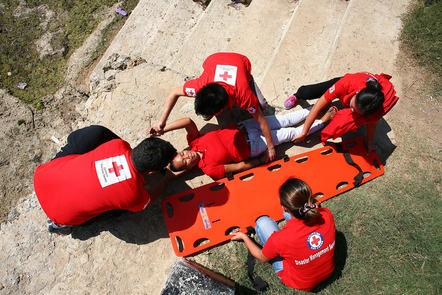
Learn life-saving skills to treat choking, burns, wounds or cardiac arrest in children through this free online first aid course. Each year around 830,000 children die as a result of an accidental injury – whether from road traffic crashes, drowning, burns, falls or poisoning. When a medical professional is not available, family members, carers and teachers must be the first to react to accidents. It is their timely and effective actions that save lives.

Class Deals by MOOC List - Click here and see FutureLearn's Active Discounts, Deals, and Promo Codes.

Learn first aid techniques that will save children’s lives
On this free online course, you will learn to apply first aid, including CPR, effectively in the five most common causes of injuries in children:

  • Choking
  • Bleeding
  • Burns
  • Wounds and abrasions
  • Cardiac arrest.

In just four hours, you will learn key life-saving skills, to increase children’s survival rates and lessen the severity of injuries. We’ll cover key concepts, like basic care and assessment, and how to carry out first aid on babies, infants and children safely and effectively.

Learn with the International Federation of Red Cross and Red Crescent Societies
The course is delivered by subject matter first aid experts at the International Federation of Red Cross and Red Crescent Societies (IFRC). For more than 100 years, the IFRC has been the world’s leading provider of first aid training courses.
All of the techniques that you’ll learn in this course are in accordance with the IFRC’s latest International First Aid and Resuscitation Guidelines.
When you complete the course, you will have the option to buy a Statement of Participation from FutureLearn. You will not hold a formal first aid qualification. To become a certified first aider, you can contact your respective National Society for more information on the available first aid courses and training in your country.
Go to Class
MOOC List is learner-supported. When you buy through links on our site, we may earn an affiliate commission.

Related Courses

Heart Health: A Beginner's Guide to Cardiovascular Disease (FutureLearn) FutureLearn
University of Reading

Heart Health: A Beginner's Guide to Cardiovascular Disease (FutureLearn)

Learn more about how your heart works, the causes of heart disease and how to keep your heart healthy with this free online course. Learn how to keep your heart healthy. Your heart beats around 100,000 times a day, pumping blood around your body to deliver oxygen and nutrients, while taking away waste products. When your heart is unhealthy, it can’t perform this vital task so effectively.

Self Paced
4 Weeks
Challenges in Antibiotic Resistance: Point Prevalence Surveys (FutureLearn) FutureLearn
British Society for Antimicrobial Chemotherapy - BSAC

Challenges in Antibiotic Resistance: Point Prevalence Surveys (FutureLearn)

Learn how to use Point Prevalence Surveys (PPS) to measure antibiotic consumption and fight antimicrobial resistance. Point Prevalence Surveys (PPS) are an important tool for healthcare professionals to use to assess and improve antibiotic prescribing locally, nationally and globally. This online course - led by experts from the British Society for Antimicrobial Chemotherapy (BSAC) - looks at their use. You’ll discover the importance of measuring antibiotic consumption and how PPS can help.

Self Paced
2 Weeks
Why Do We Age? The Molecular Mechanisms of Ageing (FutureLearn) FutureLearn
University of Groningen,University Medical Center Groningen - UMCG

Why Do We Age? The Molecular Mechanisms of Ageing (FutureLearn)

Why do we age? Is there a limit to human lifespan? Can we prolong our lives? Find out with this free online course. Discover the science behind the ageing process. The “why” and “how” of ageing has puzzled mankind ever since it questioned its place in the universe.

Self Paced
5-12 Weeks
Understanding Autism (FutureLearn) FutureLearn
University of Kent

Understanding Autism (FutureLearn)

Understand more about autism, including diagnosis, the autistic spectrum and life with autism, with this online course. First identified over 70 years ago, autism is a lifelong developmental disability affecting how a person communicates with and relates to others, and how they make sense of the world. It is a spectrum condition; all people on the spectrum share certain difficulties, but their condition will affect them in different ways.

Self Paced
4 Weeks
Perioperative Medicine in Action (FutureLearn) FutureLearn
University College London

Perioperative Medicine in Action (FutureLearn)

Explore perioperative medicine and how you can improve care for the high risk surgical patient. Join this RCoA endorsed course. Too many patients die or suffer prolonged complications following surgery. Perioperative medicine is an emerging, multi-disciplinary approach, which tackles this issue, by optimising the care of high-risk surgical patients. It encompasses disciplines including anaesthetics, surgery, nursing, care of the elderly, physiotherapy and healthcare management.

Self Paced
4 Weeks
Achieving Sustainable Development (FutureLearn) FutureLearn
Trinity College Dublin

Achieving Sustainable Development (FutureLearn)

Explore the challenges of sustainable development. See the impact of UN Sustainable Development Goals on real people. Consider the impact that UN Sustainable Development Goals could have. Governments of the world have signed up to the Sustainable Development Goals (SDGs), a UN initiative for international development. They are targets for improving the world by 2030, including: health, environment, education, and security. But will they have an impact on the lives of people?

Self Paced
4 Weeks
Managing Change in a Healthcare Environment (FutureLearn) FutureLearn
University of East Anglia

Managing Change in a Healthcare Environment (FutureLearn)

Understand why change happens in healthcare environments and learn how to improve your response. In rapidly changing world, with new healthcare roles emerging and the complexity of care increasing, being able to respond to change is vital. On this course for healthcare professionals, you will explore the issue of change in healthcare environments, and learn how to improve your response to change.

Self Paced
3 Weeks
Challenges in Antibiotic Resistance: Gram Negative Bacteria (FutureLearn) FutureLearn
British Society for Antimicrobial Chemotherapy - BSAC

Challenges in Antibiotic Resistance: Gram Negative Bacteria (FutureLearn)

This course by BSAC is for healthcare professionals managing infections. You will learn about Gram Negative Bacteria. Identify, diagnose and treat gram negative bacterial infections. Gram negative bacteria (GNB) are a group of bacteria that can cause infection and toxic reaction in patients, yet are difficult to differentiate and treat with antibiotics due to their structure.

Self Paced
3 Weeks
Quality Improvement in Healthcare: the Case for Change (FutureLearn) FutureLearn
University of Bath

Quality Improvement in Healthcare: the Case for Change (FutureLearn)

Explore new and better ways of organising health and social care services, to improve quality, with this free online course. Why is quality improvement in health and social care systems so difficult? Why is it so challenging to bring in new and better ways of organising health and social care services? Many reasons have been put forward: lack of money; lack of knowledge about either the actual quality of care delivered, or resistance to making changes to long-established ways of working; excessive and sometimes misunderstood regulations; and professional opinions and interests that are hard to influence when systems are working at or beyond capacity.

Self Paced
5-12 Weeks
Health and Wellbeing in the Ancient World (FutureLearn) FutureLearn
The Open University

Health and Wellbeing in the Ancient World (FutureLearn)

Use literary and archaeological evidence to see how ancient Greeks and Romans approached health, well-being and societal issues. What did being healthy in ancient Rome or Greece look like? How can we tell what well-being meant in ancient times? This online course will help you investigate these questions, using both literary and archaeological evidence, to uncover details of real life in ancient societies.

Self Paced
5-12 Weeks