EdX

The Extremes of Life: Microbes and Their Diversity (edX)

Offered by Kyoto University, KyotoUx,
The Extremes of Life: Microbes and Their Diversity (edX)

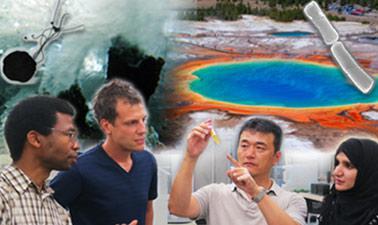
Microbes are everywhere! Find out how diverse microbial life is, and what their genome sequences tell us. Life on our planet is diverse. While we can easily recognize this in our everyday surroundings, an even more diverse world of life can be seen when we look under a microscope. This is the world of microorganisms.

Class Deals by MOOC List - Click here and see EdX's Active Discounts, Deals, and Promo Codes.

Microorganisms are everywhere, and although some are notorious for their roles in human disease, many play important roles in sustaining our global environment. We will explore these and in particular, those that thrive in the most extreme environments on our planet, the extremophiles.

In this course, we will discover how diverse life is on our planet and consider the basic principles that govern evolution. We will also learn how to classify organisms. One method is based on the different mechanisms that organisms utilize to conserve energy and obtain carbon. Another method is based on comparing sequences of common molecules present in different organisms. In the latter half of the course we will introduce the various extremophiles that have been not identified until now, and their basic characteristics. Finally, focusing on the thermophiles, we will study how proteins from thermophiles can maintain their structure and function at high temperatures.

What you'll learn:

  • Basic principles of evolution
  • Recognition of the diversity of life
  • Methods to classify organisms
  • Basic knowledge of extremophiles
  • Principles that govern protein stability

Syllabus

Week 1: Evolution and the Diversity of Life

  • Evolution is a result of diversification and selection
  • How can we classify life?
  • Phylogenetic analysis
  • The three domains of life

Week 2: Life in Boiling Water

  • Extreme environments
  • Hyperthermophiles
  • More hyperthermophiles
  • Thermostable proteins from hyperthermophiles

Week 3: Diversity of Extremophiles

  • Preparing for a hot reaction
  • Watching a hot reaction
  • Extremophiles
  • More extremophiles

Week 4: Genome Sequences

  • What they tell us
  • How can we use them?
  • Using the genome to find new metabolic pathways | Part 1 and Part 2
  • Diversity of the microbial world
Go to Class
MOOC List is learner-supported. When you buy through links on our site, we may earn an affiliate commission.

Related Courses

Anatomy: Cardiovascular, Urinary, and Respiratory Systems (edX) EdX
University of Michigan,MichiganX

Anatomy: Cardiovascular, Urinary, and Respiratory Systems (edX)

Learn the multifaceted structures and functions of the cardiovascular, urinary, and respiratory systems. This course is a primer for the cardiovascular, respiratory, and urinary systems in which students learn the pertinent details of the structures and functions through a combination of lectures, videos, labeling activities and quizzes.

Self Paced
Self-Paced
AP® Biology - Part 2: Genetics (edX) EdX
Rice University,RiceX

AP® Biology - Part 2: Genetics (edX)

The second course in a comprehensive series designed to prepare you for the AP Biology exam, focusing on genetics and DNA. Preparing for the AP Biology exam requires a deep understanding of many different topics in biology as well as an understanding of the format of the AP exam and the types of questions it asks. This course is Part 2 of the AP Biology series designed to prepare you for the AP Biology exam.

No sessions available
5-12 Weeks
Human Anatomy: Musculoskeletal Cases (edX) EdX
HarvardX,Harvard University

Human Anatomy: Musculoskeletal Cases (edX)

Learn the anatomy basic to understanding five musculoskeletal injuries commonly seen in primary care medicine and orthopedic clinical specialty practice. Follow hypothetical patients from injury to operating room. Human Anatomy: Musculoskeletal Cases invites students to join medical and basic science faculty at Harvard Medical School (HMS) to learn about musculoskeletal injuries commonly seen in clinical practice.

Self Paced
Self-Paced
The Chemistry of Life (edX) EdX
Kyoto University,KyotoUx

The Chemistry of Life (edX)

Learn how to generate ideas at the interface between chemistry and biology. Chemistry and biology are traditionally taught as separate subjects at the high school level, where students memorize fundamental scientific principles that are universally accepted. However, at the university level and in industry, we learn that science is not as simple as we once thought. We are constantly confronted by questions about the unknown and required to use creative, integrated approaches to solve these problems.

Self Paced
Self-Paced
Molecular Biology – Part 3: RNA Processing and Translation (edX) EdX
MIT,MITx

Molecular Biology – Part 3: RNA Processing and Translation (edX)

An in-depth adventure through RNA Processing and Translation. Strengthen your scientific thinking and biological experimental design skills. In Part 3 of 7.28x, you’ll explore translation of mRNA to protein, a key part of the central dogma of biology. Do you know how RNA turnover or RNA splicing affects the outcome of translation? Although not official steps in the central dogma, the mechanisms of RNA processing strongly influence gene expression.

Self Paced
Self-Paced
DNA and Atoms: The Secret of Life (edX) EdX
Seoul National University,SNUx

DNA and Atoms: The Secret of Life (edX)

Learn about DNA structure, how atoms are bonded to make DNA molecules and the periodic table, through Nobel lectures and key scientific papers. In this chemistry course, you will learn about “Life in the Universe." We will explore DNA as genetic material and atoms as the building blocks of life. We will discuss the discovery and key features of the double helical structure of DNA and the chemical principles behind the sugar-phosphate backbone and hydrogen bonding in the base pairs will be emphasized.

This course is archived
4 Weeks
Effective Teaching Strategies for Biology (edX) EdX
Trinity College, Hartford,TrinityX

Effective Teaching Strategies for Biology (edX)

Learn and practice effective teaching strategies for undergraduate biology that engage students and improve learning outcomes. In this education and teacher training course we will explore effective teaching methods for biology. We will emphasize approaches proven to be effective and show you how to implement them. We will also give you the opportunity to reflect on your own teaching experience and exchange ideas and share challenges with other learners in the course.

No sessions available
4 Weeks
Specialized Cells (edX) EdX
University of Queensland,UQx

Specialized Cells (edX)

An introduction to cell physiology. Learn how specialized cells perform specific functions. The human body is composed of trillions of cells working together to perform essential body functions. Cells operate in a regulated internal environment, with different types of cells having unique properties suited to their specific functions. In this course we will dive into the complex world of human physiology, starting at the cellular level.

May 31st 2022
5-12 Weeks
Sharks! (edX) EdX
University of Queensland,CornellX,Cornell University,UQx

Sharks! (edX)

Learn about the most fascinating animals on Earth, their sophisticated senses and how sharks and their relatives have impacted human history and culture. Did you know that you can track some sharks’ movements on Twitter? Or that the scales on their skin have influenced the way humans design boats, planes, and even swimsuits? Or that sharks have more senses than humans?

Jul 3rd 2023
4 Weeks