Excel Regression Models for Business Forecasting (Coursera)

Offered by Macquarie University,
Excel Regression Models for Business Forecasting (Coursera)

This course allows learners to explore Regression Models in order to utilise these models for business forecasting. Unlike Time Series Models, Regression Models are causal models, where we identify certain variables in our business that influence other variables. Regressions model this causality, and then we can use these models in order to forecast, and then plan for our business' needs.

Class Deals by MOOC List - Click here and see Coursera's Active Discounts, Deals, and Promo Codes.

We will explore simple regression models, multiple regression models, dummy variable regressions, seasonal variable regressions, as well as autoregressions. Each of these are different forms of regression models, tailored to unique business scenarios, in order to forecast and generate business intelligence for organisations.

Course 2 of 3 in the Excel Skills for Business Forecasting Specialization

Syllabus

WEEK 1
Welcome and Critical Information
Regression Models
In this module, we explore the context and purpose of business forecasting and the three types of business forecasting using regression models. We will learn the theoretical underpinning for a regression model, and understand the relationship between explanatory variables and dependent variables. We will first focus on single variable or simple regression, and learn how to critically evaluate the model using regression diagnostic tools and then use our models for forecasting to suit our organisation's needs.

WEEK 2
Multiple Variable Regression
In this module, we extend the simple regression model to take in multiple explanatory variables. We will extend the theoretical underpinning for a regression model by involving multiple dependent variables. We will learn how to critically evaluate the multiple regression models using regression diagnostic tools and then use our models for forecasting to suit our organisation's needs.

WEEK 3
Dummy Variable Regression
In this module, we extend the multiple regression model to take in qualitative binary explanatory variables. We will extend the theoretical underpinning for a multiple regression model by creating dummy variables for binary qualitative data. We will learn how to critically evaluate the dummy variable regression models using regression diagnostic tools and then use our models for forecasting to suit our organisation's needs.

WEEK 4
Seasonal Dummy Regression
In this module, we extend the binary dummary variable regression model to take in seasonal variables. We will extend the theoretical underpinning for a binary dummy variable regression model by creating a series of dummy variables to capture seasonality. We will learn how to critically evaluate the seasonal dummy regression models using regression diagnostic tools and then use our models for forecasting to suit our organisation's needs.
In this module we will also explore autoregressions - their theoretical underpinning, creating an autoregression, critically evaluating this, and utilising our model for business forecasting. We will end the module by learning how to create a composite forecast by combining two forecasts across this course and the first course in this specialisation.
Go to Class
MOOC List is learner-supported. When you buy through links on our site, we may earn an affiliate commission.

Related Courses

Strategy and Sustainability (Coursera) Coursera
IESE Business School

Strategy and Sustainability (Coursera)

Business and environmental sustainability are not natural bedfellows. Business is about making money. Sustainability is about protecting the planet. Business is measured in months and quarters. Sustainability often requires significant short term costs to secure a sometimes uncertain long-term benefit. To some activists, all executives are exploitative, selfish one percenters. To some executives, all activists are irresponsible, unyielding extremists.

Sep 14th 2026
5-12 Weeks
Excel Modeling for Professionals: Best Practices & Pitfalls (Coursera) Coursera
Delft University of Technology,Erasmus University Rotterdam

Excel Modeling for Professionals: Best Practices & Pitfalls (Coursera)

Through this course learners will gain the tools to decide whether or not Excel is the right software to use. They will learn how to set up good input data, format correctly, and the importance of good documentation. Learners will gain the ability to discern between different functions, to understand the pitfalls and strengths of commonly used functions, and to apply correct functions to their excel models. Those that follow the course will also gain understanding of logical spreadsheet structure, graphs and reporting, and protection and hidden information in Excel, and users will learn how to apply these things to their own models.

Sep 14th 2026
4 Weeks
Excel/VBA for Creative Problem Solving, Part 2 (Coursera) Coursera
University of Colorado Boulder

Excel/VBA for Creative Problem Solving, Part 2 (Coursera)

Excel/VBA for Creative Problem Solving, Part 2" builds off of knowledge and skills obtained in "Excel/VBA for Creative Problem Solving, Part 1" and is aimed at learners who are seeking to augment, expand, optimize, and increase the efficiency of their Excel spreadsheet skills by tapping into the powerful programming, automation, and customization capabilities available with Visual Basic for Applications (VBA).

Sep 7th 2026
4 Weeks
Análise de Segmentação de Mercado (Coursera) Coursera
FIA Business School

Análise de Segmentação de Mercado (Coursera)

Nossas boas-vindas ao Curso Análise de Segmentação de Mercado. Neste curso, você aprenderá que as organizações estão adotando tecnologias de Big Data como parte de sua estratégia de negócios e em um mercado orientado a dados, trabalhar com a segmentação de forma eficiente é um grande desafio para a maioria das empresas. Uma segmentação eficaz consiste em agrupar seu público-alvo conforme a característica de cada indivíduo, reduzindo esforços e direcionando corretamente ao objetivo desejado.

Sep 14th 2026
4 Weeks
Infonomics I: Business Information Economics and Data Monetization (Coursera) Coursera
University of Illinois at Urbana-Champaign

Infonomics I: Business Information Economics and Data Monetization (Coursera)

Thriving in the Information Age compels organizations to deploy information as an actual business asset, not as an IT asset or merely as a business byproduct. This demands creativity in conceiving and implementing new ways to generate economic benefits from the wide array of information assets available to an organization. Unfortunately, information too frequently is underappreciated and therefore underutilized.

Sep 14th 2026
4 Weeks
Corporate Sustainability. Understanding and Seizing the Strategic Opportunity (Coursera) Coursera
Università Bocconi

Corporate Sustainability. Understanding and Seizing the Strategic Opportunity (Coursera)

In this course, thought leaders in a wide variety of management and economics fields illustrate how to assess and seize the opportunities offered by these global emergencies. They will offer new ways to understand the purpose and the logic of success of the business enterprise in this new context, providing ideas and examples on how to manage the transition process to realize the value creation potential from corporate sustainability for all involved stakeholders.

Sep 7th 2026
5-12 Weeks
Practical Time Series Analysis (Coursera) Coursera
The State University of New York

Practical Time Series Analysis (Coursera)

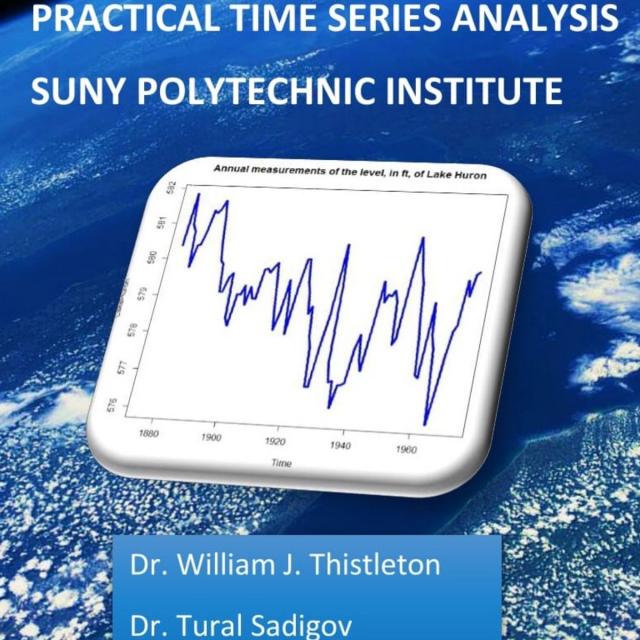
Many of us are "accidental" data analysts. We trained in the sciences, business, or engineering and then found ourselves confronted with data for which we have no formal analytic training. This course is designed for people with some technical competencies who would like more than a "cookbook" approach, but who still need to concentrate on the routine sorts of presentation and analysis that deepen the understanding of our professional topics.

Sep 7th 2026
5-12 Weeks
Estrategias de Emprendimiento (Coursera) Coursera
Tecnológico de Monterrey

Estrategias de Emprendimiento (Coursera)

Este curso busca ayudar al emprendedor a ser capaz de desarrollar un plan de operación y expansión, basado en la generación de objetivos de estabilización y crecimiento para su negocio, a partir de sus fortalezas y oportunidades detectadas, así como de un análisis de su situación actual, aprovechando así las oportunidades del entorno y adecuando su Modelo de Negocio y sus estrategias financieras, mismas que plasmará en un Pitch para presentar su plan a todos los Stakeholders actuales y futuros.

Sep 14th 2026
5-12 Weeks
Habilidades de Excel para el negocio: Conceptos básicos (Coursera) Coursera
Macquarie University

Habilidades de Excel para el negocio: Conceptos básicos (Coursera)

En este primer curso de la especialización de habilidades de Excel para el negocio, aprenderá los conceptos básicos de Microsoft Excel. En seis semanas, podrá navegar, de forma experta, a través de la interfaz de usuario de Excel, realizar cálculos básicos con fórmulas y funciones, dar formato profesional a hojas de cálculo y crear visualizaciones de datos a través de gráficos y cuadros.

Sep 14th 2026
5-12 Weeks
Sustainable Fashion (Coursera) Coursera
Copenhagen Business School

Sustainable Fashion (Coursera)

Sometimes when we say we work with sustainable fashion people look at us like... "Mmmm, is it really possible for something like fashion to be sustainable?" And let's face it, people are right being suspicious. If anything the fashion industry has become increasingly unsustainable over the last decades, using more and more natural resources and creating more and more waste.

Sep 14th 2026
5-12 Weeks
Teoria dos Jogos: Da Teoria à Prática (Coursera) Coursera
FIA Business School

Teoria dos Jogos: Da Teoria à Prática (Coursera)

Nossas boas-vindas ao Curso Teoria dos Jogos: Da Teoria à Prática. Neste curso, você aprenderá que a Teoria dos Jogos é um ramo da Economia que trata da análise da tomada de decisões quando todos os tomadores de decisões são presumivelmente racionais, e cada um procura prever as ações e reações de seus concorrentes. Desta forma, terá subsídios para tomar decisões. Por exemplo, de fazer ou não acordos, desencorajar a entrada no mercado de potenciais concorrentes, de preços quando as condições de demanda e custo apresentam variações ou novos concorrentes entrarem no mercado, dentre outras.

Sep 14th 2026
4 Weeks
Design Thinking and Global Startup (Coursera) Coursera
Korea Advanced Institute of Science and Technology - KAIST

Design Thinking and Global Startup (Coursera)

This course offers a systematic engineering design methodology: Stanford Design Thinking for preparing global startup. The course empathizes the whole Stanford design thinking process, "Empathy-Define-Ideation-Prototype-Test," for building a startup with a business model that has a “customer truly need” component.

Sep 14th 2026
5-12 Weeks