Evaluación para el aprendizaje: Enfoque cuantitativo (Coursera)

Evaluación para el aprendizaje: Enfoque cuantitativo (Coursera)

La perspectiva contemporánea de la educación ha considerado que dentro del proceso educativo es indispensable la evaluación como una parte esencial de la enseñanza y el aprendizaje. Realizar este proceso de manera adecuada requiere de una formación especializada que nos permita conocer tanto el proceso en sí mismo, así como los elementos involucrados en él y la pertinencia de hacer uso de las técnicas e instrumentos más adecuados y necesarios para cada tipo de evaluación.

Class Deals by MOOC List - Click here and see Coursera's Active Discounts, Deals, and Promo Codes.

El conocimiento de los instrumentos de evaluación es una parte fundamental de la formación para la evaluación para el aprendizaje, para fines didácticos existen dos manera de clasificar a estos instrumentos: cuantitativos y cualitativos.
A través de una serie de videos, actividades y ejercicios, se pretende que en este curso conozcas el concepto, las características, el diseño, la elaboración y el uso de resultados de cuatros de los instrumentos más utilizados en el enfoque cuantitativo de la evaluación para el aprendizaje: las pruebas objetivas, la lista de cotejo, el quiz y la rúbrica.
Al término del curso:
El participante diseñará los instrumentos de evaluación para el aprendizaje que integran el enfoque cuantitativo para sustentar evaluaciones pertinentes, altamente formativas y éticas.

Course 2 of 4 in the Evaluación educativa Specialization

Syllabus

WEEK 1
Enfoque cuantitativo
En este módulo revisaremos qué son las pruebas objetivas, así como la construcción de dos elementos indispensables para comenzar y guiar todo proceso de evaluación: Perfil de referencia y la tabla de especificaciones, ya que en ellos se establece el qué, a quién, para qué y cómo de la evaluación.

WEEK 2
Elaboración de reactivos
En este módulo revisaremos qué son los reactivos de opción múltiple, las partes que los componen, algunos tipos de reactivos y algunos criterios para su correcta elaboración. También te explicaremos los procedimientos adecuados para realizar el análisis cualitativo de reactivos de opción múltiple.

WEEK 3
Análisis cuantitativo de reactivos
En este módulo te explicaremos los procedimientos adecuados para realizar el análisis cuantitativo de reactivos de opción múltiple. Esto con la finalidad de que posteriormente los puedas realizar y garantizar la efectividad y confiabilidad de los reactivos que elabores y utilices en los exámenes que apliques a tus estudiantes.

WEEK 4
Otros instrumentos de evaluación
En este módulo conoceremos tres instrumentos más que integran el enfoque cuantitativo de la evaluación para el aprendizaje: la lista de cotejo, el quiz y la rúbrica. Conocerás qué son, cómo se elaboran y aplican, así como el uso de los resultados que arrojan acerca del desempeño de nuestros estudiantes.
Go to Class
MOOC List is learner-supported. When you buy through links on our site, we may earn an affiliate commission.

Related Courses

Social Norms, Social Change I (Coursera) Coursera
University of Pennsylvania

Social Norms, Social Change I (Coursera)

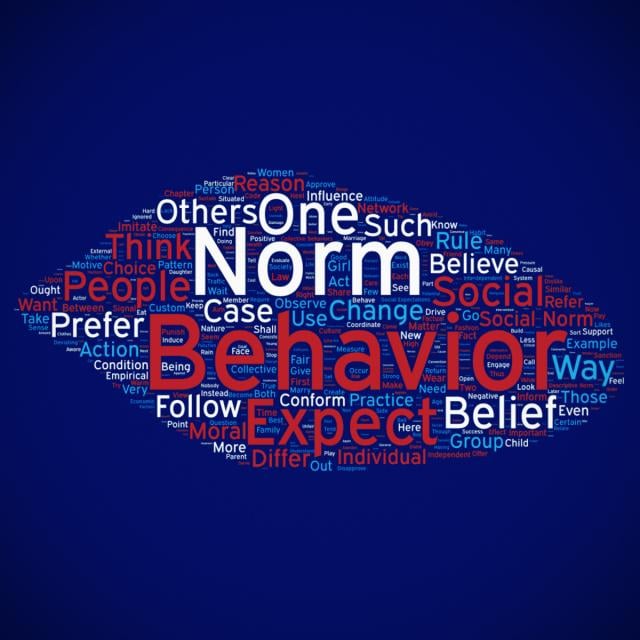
This is a course on social norms, the rules that glue societies together. It teaches how to diagnose social norms, and how to distinguish them from other social constructs, like customs or conventions. These distinctions are crucial for effective policy interventions aimed to create new, beneficial norms or eliminate harmful ones. The course teaches how to measure social norms and the expectations that support them, and how to decide whether they cause specific behaviors.

Nov 23rd 2026
4 Weeks
Disability Awareness and Support (Coursera) Coursera
University of Pittsburgh

Disability Awareness and Support (Coursera)

The goal of this course is to promote equal opportunity and the full participation of students with disabilities in higher education by helping participants advance their awareness of the meaning of accessibility in education. Participants will gain competence and confidence in working with students by focusing on legislation, universal design, and assistive technologies. Thank you to Abbas (Bobby) Husain Quamar, Graduate Student Researcher in the Department of Rehabilitation Science and Technology at the University of Pittsburgh, for his contributions to the course.

Nov 23rd 2026
4 Weeks
Perfect Tenses and Modals (Coursera) Coursera
University of California, Irvine

Perfect Tenses and Modals (Coursera)

This is the first course in the Learn English: Intermediate Writing specialization. In this course, you will learn about important intermediate verb tenses, including present perfect, present perfect progressive, past perfect, and past perfect progressive. You will also learn about common modal verbs used in English. This course is designed for learners who have a basic understanding of English grammar but who want to learn more and improve their skills for everyday speaking or writing, as well as for academics. It will be a fun class with lots of entertaining and informative video lectures.

Nov 23rd 2026
4 Weeks
ODS y sostenibilidad: una mirada desde los colegios (Coursera) Coursera
Universidad de los Andes

ODS y sostenibilidad: una mirada desde los colegios (Coursera)

En este curso veremos cómo podemos generar cambios y transformaciones (a nivel individual, organizacional y social) para la sostenibilidad desde la educación formal y no-formal. Partiremos del concepto de los Objetivos de Desarrollo Sostenible (ODS) como un marco potente para generar reflexiones críticas, que nos lleven a generar acciones colectivas desde la escuela en pro de la sostenibilidad.

Nov 23rd 2026
4 Weeks
Aprendiendo a Aprender (Coursera) Coursera
IE Business School

Aprendiendo a Aprender (Coursera)

Con el propósito de desarrollar habilidades y herramientas mentales que favorecen el aprendizaje, Aprendiendo a Aprender busca ayudar a los participantes a dominar temas complejos y difíciles; además de motivarlos a continuar aprendiendo a lo largo de la vida. Aprendiendo a Aprender se encuentra divido en cuatro grandes módulos: en el primero, se explica en qué consiste realmente aprender, qué pasa en el cerebro cuando aprendemos, el rol de la memoria, la práctica regular, y el hecho de que, durmiendo, también se puede aprender.

Nov 23rd 2026
4 Weeks
My Favorite Lectures @ HKUST (Coursera) Coursera
The Hong Kong University of Science and Technology - HKUST

My Favorite Lectures @ HKUST (Coursera)

In 1994, the HKUST University Council established "The Michael G. Gale Medal for Distinguished Teaching" to commemorate the late Founding Council Member, Mr Michael G. Gale, for his distinguished service and outstanding contributions to the development of the University. This course aims to showcase our students’ favorite lectures conducted by their favorite teachers who are also the Medalists. Each speaker would share with the learners his/her teaching philosophy which is vividly illustrated in the module. The course contains four modules and in each we will feature one HKUST Michael G. Gale Medal recipient.

Nov 23rd 2026
5-12 Weeks
Teaching Science at University (Coursera) Coursera
University of Zurich

Teaching Science at University (Coursera)

This course will prepare you for teaching science in higher education. In this MOOC you will learn to make your knowledge as an excellent researcher accessible to your students. We will show you how to communicate science to novices as well as advanced students in science.

Nov 23rd 2026
5-12 Weeks
Design Thinking for the Greater Good: Innovation in the Social Sector (Coursera) Coursera
University of Virginia

Design Thinking for the Greater Good: Innovation in the Social Sector (Coursera)

Do you work for a nonprofit or in the social sector? Are you struggling to solve the problems and meet the needs of the people you serve? Come learn more about how design thinking, a human-centered approach to problem solving, can help you truly understand an issue, generate ideas worth testing and iterate to find solutions that make a real difference. Through global stories from areas as diverse as government, health care, and education, we’ll show you the tools, techniques and mindset needed to use design thinking to uncover new and creative solutions in the social sector.

Nov 23rd 2026
4 Weeks
Primate Conservation (Coursera) Coursera
University of Colorado Boulder

Primate Conservation (Coursera)

We are presently facing a potential extinction crisis for the order Primates (and many other life forms). In this course we will learn about threats to primate conservation globally. We will be using the, “Primates in Peril: The World’s 25 Most Endangered Primates 2018-2020” by Schwitzer et al (2019) as a basis for the discussion of global primate populations.

Nov 23rd 2026
5-12 Weeks