EdX

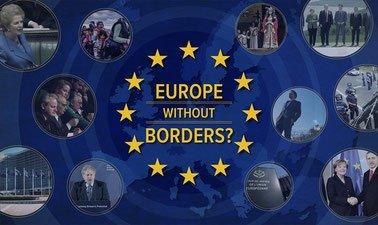
Europe Without Borders? (edX)

Europe Without Borders? (edX)

A Europe that’s united and without borders is under threat. Can it survive the challenges presented by the eurozone crisis, Brexit and the COVID-19 outbreak? Do you wonder what the European Union is all about? What challenges does it face and can it survive them? How will the eurozone crisis, the refugee crisis, Brexit and the COVID-19 outbreak reshape Europe? This is the course for you!

Class Deals by MOOC List - Click here and see EdX's Active Discounts, Deals, and Promo Codes.

In this course, we will introduce you to key concepts and historical turning points, which have shaped contemporary Europe. What is national sovereignty and can it be shared? What impact has the 1989 collapse of communism had on Europe and is the East-West divide still relevant today? Can the North-South division triggered by the eurozone crisis be overcome, or will it be reinforced through the COVID-19 outbreak? And finally, what is the best size for a political unit?
The course’s ultimate focus is on the function and status of national and European borders and the question of what it means to belong to a political community: who is in, who is out? How and why are people included or excluded? And, what, finally, is the future of a borderless Europe?
Taught by a skeptical European who lived, studied and worked in Germany, Slovakia, Ireland, Australia and Hong Kong, this course includes a number of interviews with leading scholars, practitioners and best-selling authors, including Timothy Garton Ash, David Goodhart, Kalypso Nicolaïdis, George Papandreou and Helen Thompson.

The European Union pervades all aspects of people’s lives. But the course will be of particular interest to many professionals dealing with the EU whether they are EU citizens, or not.

What you'll learn

  • Key political concepts such as citizenship, democracy, nationalism and sovereignty
  • An understanding of the multiple sources of the European project’s crisis
  • Historical moments which have shaped contemporary Europe, such as 1989
  • The impact of current challenges: coronavirus outbreak, Brexit, eurozone crisis

Syllabus

Week 1: Europe at a crossroads: COVID-19 & Brexit

  • What is the ideal of a “Europe without Borders”? Are we witnessing its unravelling?
  • How is Europe confronting the challenges of Brexit and the COVID-19 pandemic?
  • Why does the concept of sovereignty matter for understanding the current state of the world?

Week 2: The European Union and the nation-state

  • Who are “We, the People”? What holds political communities together? Who is included/excluded?
  • What type of political unit is the European Union? What does it mean to be an EU citizen? Has the EU transcended the idea of sovereignty?

Week 3: A union under strain: The Eurozone and refugee crises

  • Has European integration proceeded too fast?
  • Eurozone crisis: what are the limits of solidarity inside the EU?
  • Refugee crisis: Towards a divided Europe of reinstated borders?

Week 4: Post-1989 Europe and the “end of history”

  • The meaning of 1989 and the return of Central Europe
  • Is the old East-West divide still relevant today?
  • Can European values survive the resurgence of illiberalism? What are the prospects of the European project in the near future?
Go to Class
MOOC List is learner-supported. When you buy through links on our site, we may earn an affiliate commission.

Related Courses

Moral Foundations of Politics (Coursera) Coursera
Yale University

Moral Foundations of Politics (Coursera)

When do governments deserve our allegiance, and when should they be denied it? This course explores the main answers that have been given to this question in the modern West. We start with a survey of the major political theories of the Enlightenment: Utilitarianism, Marxism, and the social contract tradition. In each case, we begin with a look at classical formulations, locating them in historical context, but then shift to the contemporary debates as they relate to politics today.

Jun 15th 2026
5-12 Weeks
Economic Democracy: The Cooperative Alternative (edX) EdX
University of Edinburgh,EdinburghX

Economic Democracy: The Cooperative Alternative (edX)

Could a cooperative market economy, in which firms are owned and controlled by their workers, be a viable and efficient alternative to capitalism? Most Western societies are proud of being political democracies, but democracy rarely operates within the firm. Democratic governments, in principle, can be criticised freely and are answerable to those they seek to govern. By contrast, managers are not, in general, answerable to those they seek to manage, and the mildest criticism can be dangerous.

No sessions available
5-12 Weeks
Virology and Epidemiology in the Time of COVID-19 (Coursera) Coursera
American Museum of Natural History

Virology and Epidemiology in the Time of COVID-19 (Coursera)

This course covers the science and social impacts of viral infectious diseases. We will begin by covering the basics: what a virus is, the structural and functional diversity of viruses, and how viruses use our bodies and the bodies of other organisms to replicate. Then we will dive into the human response: how our immune systems work to protect us from pathogenic viruses and how we use science and social systems to fend off viruses through vaccines and public health measures.

Jun 22nd 2026
5-12 Weeks
Democracy and Development: Perspectives from Africa (edX) EdX
MIT,MITx

Democracy and Development: Perspectives from Africa (edX)

Learn about the drivers of democratic development in contemporary Africa. On a continent once dominated by closed political systems, democratic political institutions have taken root in more than a dozen African countries over the past 20 years. In this course, you’ll learn about this remarkable experiment, and try to better understand both the opportunities and the challenges of democratic governance.

This course is archived
5-12 Weeks
Managing Supply Chain Disruption During COVID-19 (Coursera) Coursera
University of Illinois at Urbana-Champaign

Managing Supply Chain Disruption During COVID-19 (Coursera)

In this course, you will learn about why and how supply chains become susceptible to a disruption. We will examine this by discussing supply side and demand side issues, primary supply chain flows, complexity, risk management and a combination of solid theoretical supply chain perspectives and current real-world stories. You will learn about the structural, relational and operational factors that come into play during a supply chain disruption and the mechanisms for the effective management of these factors.

Jun 22nd 2026
4 Weeks
Re-Imagine Work: Strategies During COVID-19 and Beyond (edX) EdX
The University of British Columbia,UBCx

Re-Imagine Work: Strategies During COVID-19 and Beyond (edX)

Improve and reinvent working at a distance during COVID-19 and beyond! Learn from strategic design experts, and build your at-home toolkit by applying human-centered design techniques. As a result of COVID-19, millions of us are adapting to working from home, may have lost our jobs, or are looking for ways to reinvent our work to meet social distancing requirements.

Self Paced
Self-Paced
COVID-19 and Global Inequalities (edX) EdX
University of California, Berkeley,BerkeleyX

COVID-19 and Global Inequalities (edX)

Law

This course explores the global impact of the COVID-19 pandemic on members of disadvantaged communities, with lectures and course materials from dozens of countries, around the world. The COVID-19 pandemic has taken millions of lives and caused many millions of people to lose their jobs and/or businesses.

Self Paced
Self-Paced
JuryX: Deliberations for Social Change (edX) EdX
HarvardX,Harvard University

JuryX: Deliberations for Social Change (edX)

Deliberate emotionally charged issues with your peers online without fear or rancor, and experience a system by which a jury, or any community, can move from a place of deep division to agreement and action. Today, you are the law. What does it mean to be a citizen? It means to participate in your society, to connect with others, and to decide, with them, the issues that you face. It starts with you.

No sessions available
5-12 Weeks
The Making of Modern Ukraine (Coursera) Coursera
Yale University

The Making of Modern Ukraine (Coursera)

Ukraine must have existed as a society and polity on 23 February 2022, else Ukrainians would not have collectively resisted Russian invasion the next day. What does it mean for a nation to exist? Is this a matter of structures, actions, or both? Why has the existence of Ukraine occasioned such controversy? In what ways are Polish, Russian, and Jewish self-understanding dependent upon experiences in Ukraine? Just how and when did a modern Ukrainian nation emerge?

Jun 22nd 2026
1 Week