Espace mondial, une vision française des global studies (Coursera)

Offered by Sciences Po,
Espace mondial, une vision française des global studies (Coursera)

Afin d’expliquer comment la mondialisation reconstruit les politiques publiques et les comportements sociaux nous étudions les échanges et interactions entre les acteurs politiques, économiques et sociaux -publics et privés, individuels et collectifs- et la façon dont ils redessinent les relations internationales.

Class Deals by MOOC List - Click here and see Coursera's Active Discounts, Deals, and Promo Codes.

Ce cours prend sa source dans les approches sociologique et historique françaises des relations internationales.
This course is also available in english version.

Syllabus

WEEK 1
Introduction
Notre monde globalisé nécessite une nouvelle approche de l’international, en rupture avec les théories classiques.
Les inégalités
Les principaux indicateurs économiques et sociaux montrent un monde inégal et instable.

WEEK 2
Le régionalisme
De nouveaux types d’intégration, et particulièrement des constructions régionales fragiles, remettent en question le territoire de l’État-nation.

WEEK 3
Les acteurs mondiaux
Les États-nation ne sont plus les seuls acteurs internationaux. De nombreux groupes et 7 milliards d’individus sont aujourd’hui des acteurs potentiels du système international.

WEEK 4
La mondialisation
La mondialisation est un processus complexe qui remet en question les principaux aspects de l’ordre mondial.

WEEK 5
Les identités
L’identité est une notion à revoir et à considérer comme une construction sociale et politique.

WEEK 6
Religions
La religion est perçue comme un paramètre majeur de l’ordre mondial contemporain, mais cette vision est simpliste.

WEEK 7
L’État-nation
L’État-nation est-il encore fonctionnel partout dans le monde ?

WEEK 8
La puissance
La puissance a-t-elle encore un sens et une efficacité ?

WEEK 9
Guerre et paix
La spécificité des nouveaux conflits internationaux implique de nouveaux traitements.

WEEK 10
Le système international
La polarisation et le multilatéralisme sont les nouvelles caractéristiques du système international après 1945. La première est probablement dépassée et la seconde contestée.
Conclusion
Vers de nouvelles régulations ?


Go to Class
MOOC List is learner-supported. When you buy through links on our site, we may earn an affiliate commission.

Related Courses

Western Religions & Ecology (Coursera) Coursera
Yale University

Western Religions & Ecology (Coursera)

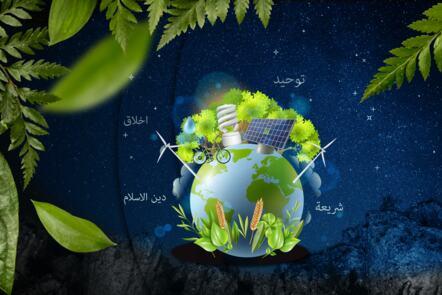
At first glance the fields of religion and ecology may seem and unlikely pairing, but a deeper consideration reveals the two have a great deal to contribute to one another and are indeed inextricably linked. Religions recognize the unity and interdependence of humans with nature. Ecological sciences affirm this deep interconnection with the natural world. This partnership can inspire work for the wellbeing of the Earth community

Aug 31st 2026
5-12 Weeks
Old Norse Mythology in the Sources (Coursera) Coursera
University of Colorado Boulder

Old Norse Mythology in the Sources (Coursera)

This course is an introduction to the religion of the Vikings as it is recorded in Old Norse and Scandinavian literature from the medieval period. You will learn about the different written sources and what they can teach us about pre-Christian religion in northern Europe in the Viking Age. The course surveys the primary collection of Old Norse poetry about the pre-Christian Scandinavian gods, the Poetic Edda. We will also work with the main collections of stories about the Old Norse gods in prose: Snorri Sturluson's Edda and Saxo's History of the Danes.

Aug 24th 2026
4 Weeks
Ethics in Action (edX) EdX
SDGAcademyX,SDG Academy

Ethics in Action (edX)

What do the world’s great religious and secular philosophies have to say about ethical conduct? Which virtues are common across faiths? And what role do religious communities have to play in building a more just and sustainable world? The challenges of sustainable development are more than technical or political—they are also moral, calling on us to examine who we are as human beings, and who we want to be going forward.

Self Paced
Self-Paced
Découvrir l'anthropologie (edX) EdX
LouvainX,Université Catholique de Louvain - UCL

Découvrir l'anthropologie (edX)

Expérimentez un autre regard sur les sociétés humaines avec des chercheurs en anthropologie prospective. Comment les humains s’organisent-ils en sociétés ? Qu’appelle-t-on « familles » et comment se constituent-elles ? Quel regard et quels types d’analyse l’anthropologie propose-t-elle sur les systèmes de parenté, symboliques, politiques, religieux ?

Self Paced
Self-Paced
Why Religion Matters: Religious Literacy, Culture and Diversity (FutureLearn) FutureLearn
The Open University

Why Religion Matters: Religious Literacy, Culture and Diversity (FutureLearn)

Discover why religion is important for understanding and engaging with global challenges. Consider the ways religion affects personal and political decision-making. Religion not only influences personal behaviours and ethics, but it’s also relevant to international conflicts and domestic policy decisions. On this course, you will gain a broader understanding of why religion matters in society and in different cultures.

Self Paced
4 Weeks
Introduction to Religions & Ecology (Coursera) Coursera
Yale University

Introduction to Religions & Ecology (Coursera)

At first glance the fields of religion and ecology may seem and unlikely pairing, but a deeper consideration reveals the two have a great deal to contribute to one another and are indeed inextricably linked. Religions recognize the unity and interdependence of humans with nature. Ecological sciences affirm this deep interconnection with the natural world. This partnership can inspire work for the wellbeing of the Earth community
.

Aug 31st 2026
5-12 Weeks
Intellectual Humility: Science (Coursera) Coursera
University of Edinburgh

Intellectual Humility: Science (Coursera)

It’s clear that the world needs more intellectual humility. But how do we develop this virtue? And why do so many people still end up so arrogant? Do our own biases hold us back from becoming as intellectually humble as we could be—and are there some biases that actually make us more likely to be humble? Which cognitive dispositions and personality traits give people an edge at being more intellectually humble - and are they stable from birth, learned habits, or something in between? And what can contemporary research on the emotions tell us about encouraging intellectual humility in ourselves and others?

Sep 14th 2026
4 Weeks
Philosophy, Science and Religion: Science and Philosophy (Coursera) Coursera
University of Edinburgh

Philosophy, Science and Religion: Science and Philosophy (Coursera)

Philosophy, Science and Religion mark three of the most fundamental modes of thinking about the world and our place in it. Are these modes incompatible? Put another way: is the intellectually responsible thing to do to ‘pick sides’ and identify with one of these approaches at the exclusion of others? Or, are they complementary or mutually supportive? As is typical of questions of such magnitude, the devil is in the details. For example, it is important to work out what is really distinctive about each of these ways of inquiring about the world. In order to gain some clarity here, we’ll be investigating what some of the current leading thinkers in philosophy, science and religion are actually doing.

Aug 24th 2026
5-12 Weeks
Luther and the West (Coursera) Coursera
Northwestern University

Luther and the West (Coursera)

In this course we will discuss the history of some ideas that have been hugely influential in the modern west and that were taken out to the rest of the world. The discussion centers on an extraordinary and historically important figure, a sixteenth century German man named Martin Luther. Luther is recognized today as the originator of many of the most significant ideas that continue to affect and shape who we as modern people are and how we see the world and ourselves for better and for worse.

Aug 24th 2026
5-12 Weeks
Espaço Mundial: Perspectivas França-Brasil (Coursera) Coursera
Sciences Po

Espaço Mundial: Perspectivas França-Brasil (Coursera)

Na perspectiva da França e do Brasil explicam como a globalização reconstitui as políticas públicas e os comportamentos sociais. Nós estudamos os intercâmbios e as interações entre os atores políticos, econômicos e sociais – públicos e privados, individuais e coletivos – e o modo pelo qual redesenham as relações internacionais. Este curso fundamenta-se nas abordagens da sociologia e da história das relações internacionais.

Apr 24th 2023
4 Weeks