EdX

Entrepreneurial Land Redevelopment Approach: Land Readjustment (edX)

Offered by MIT, MITx,
Entrepreneurial Land Redevelopment Approach: Land Readjustment (edX)

Explore land readjustment as an alternative to conventional approaches of assembling land for urbanization. This course examines and presents processes of designing and implementing land readjustment in the context of developing countries.

Class Deals by MOOC List - Click here and see EdX's Active Discounts, Deals, and Promo Codes.

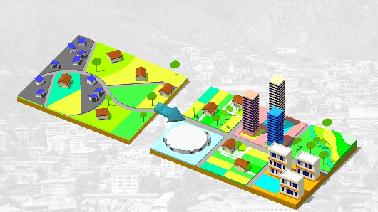
Land readjustment is an alternative land-assembly approach to government compulsory purchase (often referred to as eminent domain) and voluntary market transaction. In the land readjustment process, a public or private agency invites property owners to become stakeholders in a redevelopment project and to contribute their lands to the project as investment capital. In return, each property owner receives a land site of at least equal value in the vicinity of the original site upon project completion. After all properties in the district are assembled, the combined land sites are subdivided to make space for wider roads and other local infrastructure.
The conventional approaches to land assembly are often conflict-ridden. Through this course, practitioners can add another viable option to their toolbox by learning about land readjustment as an alternative approach to urbanization in developing countries.
Land readjustment has been shown to reduce the initial capital requirement for land assembly, discourage holdouts, and minimize massive relocation of existing residents. When applying land readjustment at the right time and in the right place, this approach could mediate a major hindrance of land redevelopment in countries that are facing rapid urbanization.

What you'll learn

  • Increase your awareness and knowledge of land readjustment as a tool for facilitating urbanization and land redevelopment in developing countries;
  • Provide you with techniques and strategies to design and implement land readjustment projects;
  • Expose you to selected international experiences of land readjustment; and
  • Facilitate cross-fertilization of ideas between you and other global policymakers, practitioners, and scholars who are interested in adopting land readjustment in their home country.

Course Syllabus

Module 1: Introduction to Land Readjustment
In the first week, we will familiarize ourselves with the concept of land readjustment. We will explore problems associated with rapid urbanization in developing countries and the effectiveness of conventional methods in resolving these issues. Finally, we will present our rationale for arguing for land readjustment as a potential alternative to existing conventional methods.

Module 2: International Experiences with Land Readjustment
In the second week, we will move from the conceptualization of land readjustment to analyses of actual practices of land readjustment in international contexts by examining different examples from developing countries.

Module 3: Policy Goals of Land Readjustment
The third week of the course focuses on the policy goals of land readjustment. We will discuss preconditions required for land readjustment to accomplish these policy goals. More importantly, we will identify which necessary preconditions stated by the conventional wisdom are myths, and which are realities.

Module 4: Designing and Implementing Land Readjustment Projects
The fourth week of the course will present some stylized steps for designing, implementing, monitoring, and scaling up land readjustment projects.

Module 5: Conclusions
The final module of this course will summarize key ideas and provide an opportunity for reflection.

Go to Class
MOOC List is learner-supported. When you buy through links on our site, we may earn an affiliate commission.

Related Courses

Railway History: The Rise of the Railway Station (FutureLearn) FutureLearn
University of Strathclyde

Railway History: The Rise of the Railway Station (FutureLearn)

Gain a unique insight into British history as you explore the heritage and uses of railway stations from the 19th century to now. Go behind the scenes of York Railway Museum with the University of Strathclyde. Railway stations are an integral part of British history, helping to shape the economy and Britain’s built environment. On this four-week course, you’ll discover the heritage of railway stations and their significance in British history and culture.

Self Paced
4 Weeks
The Meaning of Rome: The Renaissance and Baroque City (edX) EdX
University of Notre Dame,NotreDameX

The Meaning of Rome: The Renaissance and Baroque City (edX)

Learn how the art, architecture, and urban form of Renaissance and Baroque Rome projected the city’s image of itself to its citizens and the world. We can read a city in a number of ways: in its plan, in the buildings that make its streets and public spaces, in the skyline. We can ask, what are the buildings or spaces saying? How do they say it? How does it all stitch together?

No sessions available
5-12 Weeks
The Architectural Imagination (edX) EdX
HarvardX,Harvard University

The Architectural Imagination (edX)

Learn fundamental principles of architecture — as an academic subject or a professional career — by studying some of history’s most important buildings. Architecture engages a culture’s deepest social values and expresses them in material, aesthetic form. This course will teach you how to understand architecture as both cultural expression and technical achievement. Vivid analyses of exemplary buildings, and hands-on exercises in drawing and modeling, will bring you closer to the work of architects and historians.

Self Paced
Self-Paced
Coexistence in Medieval Spain: Jews, Christians, and Muslims (Coursera) Coursera
University of Colorado System

Coexistence in Medieval Spain: Jews, Christians, and Muslims (Coursera)

This course explores Jewish, Christian, and Muslim intercultural relations in Iberia from the Visigothic era (6th century CE) until the creation of Queen Isabel I and King Ferdinand II Catholic Spain (late 15th century). We evaluate the many identities of the peninsula known as Christian Hispania, Jewish Sefarad, and Islamic al-Andalus. We trace the origins and trajectory of conflict between these communities (the Muslim conquest of Spain, Christian Reconquista, prohibitions blocking intermixing of peoples, and expulsions).

Aug 31st 2026
5-12 Weeks
Design: Creation of Artifacts in Society (Coursera) Coursera
University of Pennsylvania

Design: Creation of Artifacts in Society (Coursera)

This is a course aimed at making you a better designer. The course marries theory and practice, as both are valuable in improving design performance. Lectures and readings will lay out the fundamental concepts that underpin design as a human activity. Weekly design challenges test your ability to apply those ideas to solve real problems.

Mar 30th 2026
5-12 Weeks
Experiencing Malaysian Architecture (OpenLearning) OpenLearning
Taylor's University

Experiencing Malaysian Architecture (OpenLearning)

The MOOC “Experiencing Malaysian Architecture” introduces the diverse approaches to contemporary Malaysian architecture, and explores the rhetorical questions on Malaysian architecture and identity. It emphasizes on the theoretical and design rigor within the process of design through the documentation, analysis and discussion of Malaysian architecture.

Self Paced
Self-Paced
Structures en architecture (FUN) FUN
Ecole Nationale Supérieure d’Architecture de Montpellier

Structures en architecture (FUN)

Ce MOOC est une introduction aux notions de base de mécanique des structures en architecture. L’équipe pédagogique a souhaité renouveler l’approche de l’enseignement des structures en tenant compte des profonds changements en matière d’apprentissage des étudiants, mais elle n’en a pas pour autant abandonné les exigences de rigueur indispensables aux notions abordées. Cette approche est sensible et progressive, et partira des propres intuitions de chacun pour aller étape par étape vers la compréhension des phénomènes physiques en jeu.

Nov 14th 2022
5-12 Weeks