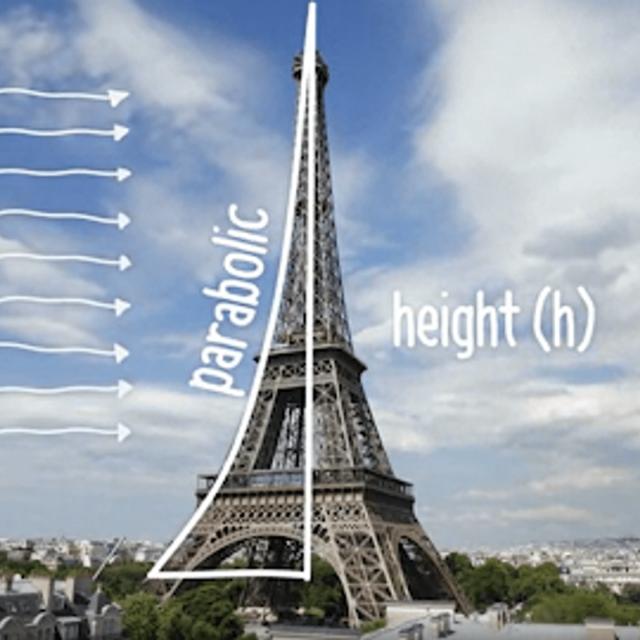
Ce MOOC est une introduction aux notions de base de mécanique des structures en architecture. L’équipe pédagogique a souhaité renouveler l’approche de l’enseignement des structures en tenant compte des profonds changements en matière d’apprentissage des étudiants, mais elle n’en a pas pour autant abandonné les exigences de rigueur indispensables aux notions abordées. Cette approche est sensible et progressive, et partira des propres intuitions de chacun pour aller étape par étape vers la compréhension des phénomènes physiques en jeu.
Chaque développement théorique est mis en lien avec des exemples de structures réelles, des expériences de la vie quotidienne. Le cours exploite toutes sortes de modèles, qu’il s’agisse de structures existantes, de simulations numériques, ou de maquettes pédagogiques.
Format
Chaque session est composée de 8 séquences de 8 semaines et la participation hebdomadaire demandée des inscrits est de 2h30 à 3h. Chaque semaine, sauf la semaine 7 et la semaine 8 dédiées aux bilans aborde une thématique particulière et comprend de 3 à 7 cours vidéo, des quiz, et des activités dont deux co-évaluées. Une attestation de suivi avec succès à l’issue des 8 semaines est délivrée à toute personne ayant participé aux évaluations (quiz et activités de co-évaluation).
Ce MOOC est "joué" c’est-à-dire animé, encadré du lundi 14 septembre au vendredi 13 novembre 2020. Tous ceux qui souhaitent obtenir une attestation de réussite doivent impérativement s’inscrire avant le vendredi 26 septembre 2020 à 20h. Les ressources pédagogiques sont en libre accès pour toute personne voulant apprendre à son rythme sans avoir à respecter les échéances demandées pour les deux activités de co-évaluation. Dans ce cas, aucune attestation de suivi avec succès ne pourra être délivrée.
Types d'activités proposées
Les activités proposées sont diverses selon les séquences : productions à faire évaluer par les pairs, exercices d'entrainement, échanges sur les forums, participation au glossaire. Le calcul n'intervient qu'à la toute fin de la dernière séquence.
Prérequis
Ce cours s’adresse aux étudiants des écoles d’architecture en début de cursus et leur permet d'acquérir les notions indispensables à toute démarche de conception qui tienne compte des enjeux structurels dès les premières idées et esquisses. Il s’adresse également à tous ceux qui sont curieux de comprendre les phénomènes qui ont inspiré dès l’origine les fascinantes structures des architectes. Les prérequis sont ceux d'un niveau fin de lycée.
Plan du cours
Semaine 0 : Découverte de l'environnement de formation
Semaine 1 : Structure et architecture
Semaine 2 : Fonctions structurelles : "franchir"
Semaine 3 : Fonctions structurelles : "Porter", "contreventer", "Fonder"
Semaine 4 : Fonction "franchir"
Semaine 5 : Fonction "Porter" et "Fonder"
Semaine 6 : Fonction "contreventer"
Semaine 7 : Bilan, restitutions des productions finales. Descente de charges ( en option )
Semaine 8 : quiz final
Lectures recommandées
Introductions générales à la mécanique des structures :
- François Fleury et Rémy Mouterde ; Comprendre simplement la résistance des matériaux ; Deuxième édition ; Editions du Moniteur, Paris, 2010.
- Aurelio Muttoni ; L'art des structures - Une introduction au fonctionnement des structures en architecture ; Deuxième édition ; Presses polytechniques et universitaires romandes, 2015.
- Robert Heller & Mario Salvadori ; Structure et Architecture ; Eyrolles, Paris, 1976
- Mario Salvadori ; Comment ça tient ? et Pourquoi ça tombe ? ; Parenthèses Editions, 2005
Ouvrage méthodologique général :
- Roland Tormey et Cécile Hardebolle ; Apprendre à étudier : Guide à l'usage des étudiants en sciences et en ingénierie ; Presses polytechniques et universitaires romandes.
- MOOC associé : Apprendre à étudier en sciences et ingénierie. Inscriptions sur le site de l'EPFL.