EdX

The Meaning of Rome: The Renaissance and Baroque City (edX)

The Meaning of Rome: The Renaissance and Baroque City (edX)

Learn how the art, architecture, and urban form of Renaissance and Baroque Rome projected the city’s image of itself to its citizens and the world. We can read a city in a number of ways: in its plan, in the buildings that make its streets and public spaces, in the skyline. We can ask, what are the buildings or spaces saying? How do they say it? How does it all stitch together?

Class Deals by MOOC List - Click here and see EdX's Active Discounts, Deals, and Promo Codes.

In this architecture course you will learn how to “read” Rome, an ancient city, reborn in the fifteenth century and reshaped substantially in the following three centuries. You will discover how Renaissance and Baroque Rome’s urban form, art, and architecture projected the city’s image of itself to its citizens (urbi) and the world (orbi).
Popes, architects, scholars and sculptors invested in Rome a variety of narratives that strove to explain the city’s history, convince its citizens and visitors of its harmony, and exhort society at large to share in and shape its destiny. The city that resulted became a destination for pilgrims and Grand Tourists, and still is today.

The Meaning of Rome: The Renaissance and Baroque City is organized around three themes—the city and memory, the city as reliquary, and the city as theater. In uncovering some of the meaning of Rome, you will be equipped with the skills necessary to consider how our own cities and communities are, or could be, meaningful. You will come away from this course not only better informed about the cities of the past, but also better equipped to think about the cities of the present and the future.
Students who successfully complete all of the required course assignments will have the opportunity to compile a Digication ePortfolio and earn a digital badge.

What you'll learn:

  • Discover the major players and events that shaped the architecture of Rome and the world beyond.
  • Explore ways that sacred relics and monuments, theaters, and other buildings convey meaning and how this meaning reflects a people's values.
  • Learn to ‘read’ cities, by applying the concepts covered in class to cities other than Rome.
Go to Class
MOOC List is learner-supported. When you buy through links on our site, we may earn an affiliate commission.

Related Courses

À la découverte du théâtre classique français - Tome 1 (edX) EdX
Sorbonne University,SorbonneX

À la découverte du théâtre classique français - Tome 1 (edX)

Tout ce qu’on doit savoir sur le théâtre français du 17e siècle pour apprécier les chefs-d’œuvre de Molière, de Corneille et de Racine. Le théâtre classique du 17e siècle passe pour le sommet de l’art du théâtre en France. Ses trois représentants les plus connus, Corneille et Racine pour la tragédie et Molière pour la comédie comptent parmi les plus grands dramaturges européens de tous les temps, et Molière reste l’un des auteurs les plus joués dans le monde.

No sessions available
5-12 Weeks
Teaching Critical Thinking through Art with the National Gallery of Art (edX) EdX
Smithsonian,SmithsonianX

Teaching Critical Thinking through Art with the National Gallery of Art (edX)

Learn how to integrate works of art using Artful Thinking routines, effective strategies from Project Zero at Harvard University, in this online course for teachers of all levels and subjects. Based on the National Gallery of Art’s popular Art Around the Corner professional development program for teachers in Washington, D.C., this five-part online course provides everything you need to begin creating a culture of critical thinking and collaboration for any classroom, subject, or level.

Self Paced
Self-Paced
Interpreting Vernacular Architecture in Asia (edX) EdX
University of Hong Kong,HKUx

Interpreting Vernacular Architecture in Asia (edX)

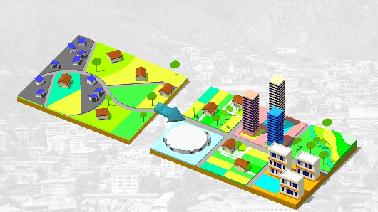
Discover the value of local peoples' traditional built environments in Asia, find inspiration in these buildings, and learn how to conserve them for future generations. This course is about architecture. But it’s not about grand structures such as monuments or royal palaces. Rather, it is about the built environment that the ordinary people live in. Instead of the architectural techniques, we use stories to understand the processes through which people make their building decisions.

Self Paced
Self-Paced
Vernacular Architecture of Asia: Tradition, Modernity and Cultural Sustainability (edX) EdX
University of Hong Kong,HKUx

Vernacular Architecture of Asia: Tradition, Modernity and Cultural Sustainability (edX)

Learn about built environments in Asia and how we can better conserve and sustain vernacular architecture in the future. How do we deal with the challenges and threats to vernacular architecture and make sure that it is sustained in this modern urbanized world? This is the key question we will try to answer in this course.

No sessions available
5-12 Weeks
La percepción del paisaje (edX) EdX
Universidad Autonoma de Madrid,UAMx

La percepción del paisaje (edX)

En este MOOC nos proponemos dos objetivos: recrear la historia del paisaje y percibirlo no sólo por la vista, sino por los cinco sentidos. De forma que veremos cómo se ha ido pasando de una percepción frontal del paisaje (la del caminante y el navegante), a una lateral (la de las ventanillas del ferrocarril) y a otra vertical (la de los submarinos y los satélites espaciales). Y desde la aparición de internet ha surgido otra dimensión: el paisaje virtual.

Self Paced
Self-Paced
Artful Medicine: Art’s Power to Enrich Patient Care (edX) EdX
Brown University,BrownX

Artful Medicine: Art’s Power to Enrich Patient Care (edX)

Discover how the medical community harnesses the power of art and empathy to improve patient care. What impact can art and the humanities have on patient care? Can art enhance medical caregivers’ powers of observation and humanize their interactions with patients? Through presence alone, can caregivers heal what they cannot cure?

No sessions available
3 Weeks
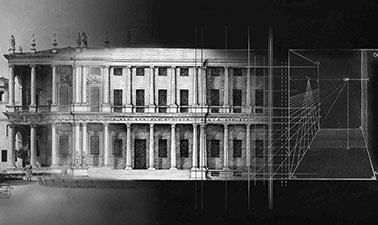
Models in Architecture – design through physical & digital models (edX) EdX
Delft University of Technology,DelftX

Models in Architecture – design through physical & digital models (edX)

Learn to develop your architectural designs by using scale models as well as Virtual Reality representations. Physical and digital design skills are key to practitioners in art, design, and engineering, as well as many other creative professions. Models are essential in architecture. In design practice all kinds of physical scale models and digital models are used side by side.

No sessions available
5-12 Weeks
Claves para leer imágenes (edX) EdX
Universidad Autonoma de Madrid,UAMx

Claves para leer imágenes (edX)

Vivimos en la era de la revolución icónica. Necesitamos métodos para comprender las imágenes. Los mapas, los paisajes, las obras de arte, los medios de masas, las películas de cine y las páginas de internet nos hablan, por lo que debemos conocer sus códigos para entenderlas. Conoce las claves para analizar las imágenes históricas que hemos producido los seres humanos. Tenemos dos objetivos: enseñar a utilizarlas como documentos históricos y emplearlas como recursos didácticos.

Self Paced
Self-Paced
The Einstein Revolution (edX) EdX
HarvardX,Harvard University

The Einstein Revolution (edX)

Traces Albert Einstein’s engagement with relativity, quantum mechanics, Nazism, nuclear weapons, philosophy, the arts, and technology. Albert Einstein has become the icon of modern science. Following his scientific, cultural, philosophical, and political trajectory, this course aims to track the changing role of physics in the 20th and 21st centuries.

Self Paced
Self-Paced
Pyramids of Giza: Ancient Egyptian Art and Archaeology (edX) EdX
HarvardX,Harvard University

Pyramids of Giza: Ancient Egyptian Art and Archaeology (edX)

Explore the archaeology, history, art, and hieroglyphs surrounding the famous Egyptian Pyramids at Giza. Learn about Old Kingdom pharaohs and elites, tombs, temples, the Sphinx, and how new technology is unlocking their secrets. Where is Giza? How were the Pyramids built? How did the cemeteries and hundreds of decorated tombs around them develop? What was Giza’s contribution to this first great age of ancient Egyptian civilization, the Old Kingdom?

Self Paced
Self-Paced