Energy Transition Selection (IFP School)

Offered by IFP School,
Energy Transition Selection (IFP School)

This module is intended either for students and professionals interested in the energy transition challenges and innovative solutions to reduce CO2 emissions. But more specifically it is intended for those willing to gain knowledge about developing a decarbonized energy mix based on both renewables and natural gas, underground CO2 and energy storage, energy efficiency and CO2 abatements in processes, biofuels. In general, for those who are convinced that climate change is really a challenge that can also be sustained through concrete solutions and societal awareness. ENERGY TRANSITION SELECTION WILL BE AVAILABLE UNTIL MARCH 31ST.

Upon completion of the course, participants will be able to:
o State on the world energy context and its expected evolution considering the energy transition challenges to meet sustainability in development;
o Demonstrate the advantages of a sustainable energy mix based on the development of renewable sources of energy and natural gas, in order to achieve carbon neutrality by the end of the century;
o Analyze associated limitations and justify innovative mitigation solutions based on the development of underground storage capacities for emitted CO2 and energy from renewables. Describe how these options can be deployed in time;
o Demonstrate the importance of energy efficiency in processes, the advantage of new generation of biofuels regarding induced CO2 abatements and describe selected technical solutions.Chapters:

Discovering the energy transition general context
Topic 1 - Energy mix part 1: Renewables for electricity generation in a carbon constrained world
Topic 2 - Energy mix part 2: Underground resources: geothermal power and natural gas
Topic 3 - Underground CO2 storage and energy storage
Topic 4 - Energy efficiency in processes, biofuels, bio sourced chemicals and benefit regarding CO2 emissions reduction
Go to Class
MOOC List is learner-supported. When you buy through links on our site, we may earn an affiliate commission.

Related Courses

People, Technology and the Future of Mobility (Coursera) Coursera
University of Michigan

People, Technology and the Future of Mobility (Coursera)

Welcome to the People Technology & Future of Mobility course! This course provides a lay-person’s introduction to some of the major technological innovations currently underway in the mobility space and asks learners to apply a variety of social science concepts to understand the likely social impacts of these technologies. The course is appropriate for learners from all backgrounds and does not require prior training in engineering or social science.

Nov 9th 2026
5-12 Weeks
Thermodynamique : fondements (Coursera) Coursera
École Polytechnique Fédérale de Lausanne

Thermodynamique : fondements (Coursera)

Ce cours vous apportera une compréhension des concepts fondamentaux de la thermodynamique du point de vue de la physique, de la chimie et de l’ingénierie. Il est scindé un deux MOOCs. Dans la première partie, le Professeur J.-Ph. Ansermet de l’EPFL et son collaborateur le Dr. Sylvain Bréchet ont rassemblé en quatre leçons tous les principes fondamentaux de la thermodynamique. La deuxième partie du MOOC illustre l’approche thermodynamique par une série d’applications présentées par des spécialistes provenant de diverses institutions partenaires du réseau RESCIF.

Nov 9th 2026
4 Weeks
Hydrogen for Mobility (IFP School) Other Providers
IFP School

Hydrogen for Mobility (IFP School)

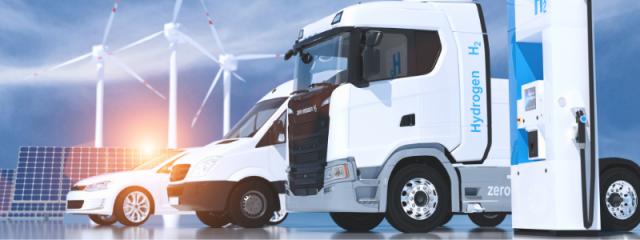
Hydrogen is a hot topic nowadays. Why? Because society must find solutions to reduce its impact on climate change and because there is now a political will (in Europe) to develop a hydrogen economy. The mobility sector, and in particular the heavy mobility, is concerned by this transformation. After some general information about hydrogen production and the hydrogen economy, you will gain a deep understanding of the hydrogen solution for mobility. We will explore both the fuel cells and the hydrogen thermal engine solutions as a mean to reduce the environmental footprint of heavy mobility.

Jan 16th 2023
1 Week
Nanotechnology: A Maker’s Course (Coursera) Coursera
Duke University,University of North Carolina,North Carolina State University

Nanotechnology: A Maker’s Course (Coursera)

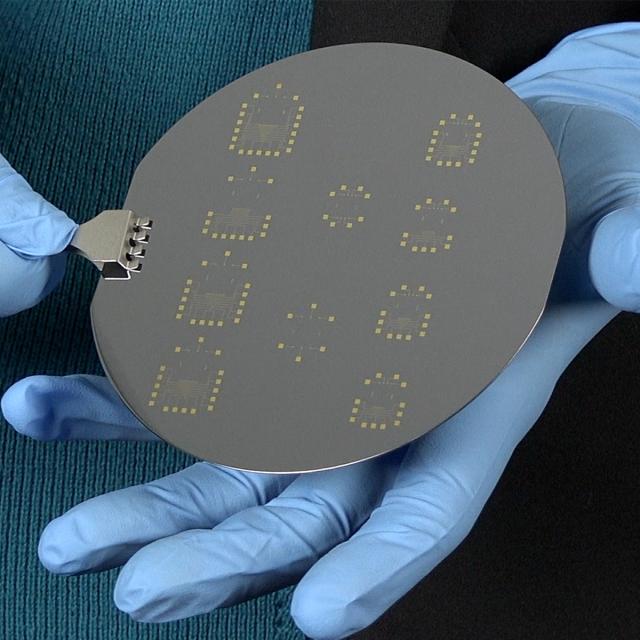
How can we create nano-structures that are 10,000 times smaller than the diameter of a human hair? How can we “see” at the nano-scale? Through instruction and lab demonstrations, in this course you will obtain a rich understanding of the capabilities of nanotechnology tools, and how to use this equipment for nano-scale fabrication and characterization.

Nov 2nd 2026
5-12 Weeks
Exploring Light: Hands-on Activities and Strategies for Teachers (Coursera) Coursera
Exploratorium

Exploring Light: Hands-on Activities and Strategies for Teachers (Coursera)

This is an Exploratorium teacher professional development course taught by Teacher Institute staff, open to any science teacher (particularly middle or high school level) and science enthusiast. This is a hands-on workshop that explores topics and strategies teachers can use to help their students become active investigators of light.

Nov 1st 2026
4 Weeks
Cómo autoconstruir tu vivienda (Coursera) Coursera
Universidad Nacional Autónoma de México

Cómo autoconstruir tu vivienda (Coursera)

Aprenderás las bases y los procedimientos precisos paso a paso para que puedas llevar a cabo la autoconstrucción de una vivienda básica, segura y económica para ti y tu familia; también te será de gran utilidad si estás buscando aprender a reparar, mejorar la estructura de tu vivienda e incluso si buscas autoemplearte.

Nov 9th 2026
4 Weeks
Materials Science: 10 Things Every Engineer Should Know (Coursera) Coursera
University of California, Davis

Materials Science: 10 Things Every Engineer Should Know (Coursera)

We explore “10 things” that range from the menu of materials available to engineers in their profession to the many mechanical and electrical properties of materials important to their use in various engineering fields. We also discuss the principles behind the manufacturing of those materials. By the end of the course, you will be able to: recognize the important aspects of the materials used in modern engineering applications; explain the underlying principle of materials science: “structure leads to properties,”; identify the role of thermally activated processes in many of these important “things” – as illustrated by the Arrhenius relationship; relate each of these topics to issues that have arisen (or potentially could arise) in your life and work.

Oct 26th 2026
5-12 Weeks
Materials Data Sciences and Informatics (Coursera) Coursera
Georgia Institute of Technology

Materials Data Sciences and Informatics (Coursera)

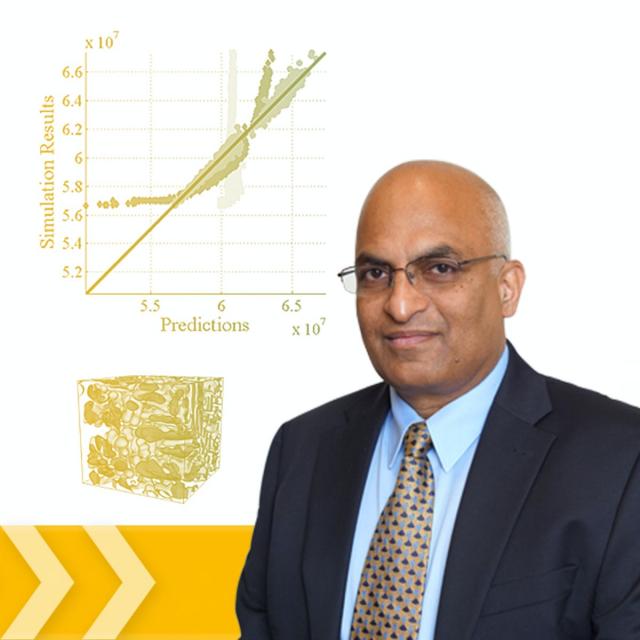
This course aims to provide a succinct overview of the emerging discipline of Materials Informatics at the intersection of materials science, computational science, and information science. Attention is drawn to specific opportunities afforded by this new field in accelerating materials development and deployment efforts.

Nov 2nd 2026
5-12 Weeks
Ferrous Technology I (Coursera) Coursera
Pohang University of Science and Technology - POSTECH

Ferrous Technology I (Coursera)

Steel, ever-evolving material, has been the most preeminent of all materials since it can provide wide range of properties that can meet ever-changing requirements. In this course, we explore both fundamental and technical issues related to steels, including iron and steelmaking, microstructure and phase transformation, and their properties and applications.

Oct 26th 2026
5-12 Weeks
Renewable Energy Futures (Coursera) Coursera
University of Colorado Boulder

Renewable Energy Futures (Coursera)

Renewable energy's future is bright, yet uncertain. Will it continue to grow rapidly? Is current growth sufficient to achieve climate stabilization? How do related technologies, like electric vehicles and heat pumps, fit in? This course will shed light on the many confusing and at-times inconsistent claims and predictions for renewable energy.

Oct 26th 2026
5-12 Weeks
Controle de Sistemas no Plano-s (Coursera) Coursera
Instituto Tecnológico de Aeronáutica

Controle de Sistemas no Plano-s (Coursera)

Após esse curso você será capaz de esboçar o Lugar Geométrico das Raízes (LGR - Root Locus) do denominador da Função de Transferência em Malha Fechada a partir dos polos e zeros da Função de Transferência em Malha aberta. Você também será capaz de projetar controladores de avanço de fase para atender simultaneamente requisitos de desempenho de amortecimento e de velocidade da resposta.

Oct 26th 2026
5-12 Weeks