Composición de canciones (Coursera)

Composición de canciones (Coursera)

Aprende un proceso eficiente y efectivo para escribir canciones que expresen tus ideas y emociones, incluyendo una gama de herramientas que giren alrededor del concepto de prosodia; la adecuación de letra y música para apoyar tu mensaje subyacente.

Class Deals by MOOC List - Click here and see Coursera's Active Discounts, Deals, and Promo Codes.

Course 3 of 4 in the El Músico Moderno Specialization.

Syllabus

WEEK 1
Bienvenido a Composición de Canciones
Al acabar esta lección, sabrás como desarrollar tus ideas de canciones para así crear un trayecto interesante de inicio a fin. Entenderás tus opciones para desarrollar el punto de vista de tu canción y será presentada a los seis mejores amigos de un autor.

WEEK 2
El viaje de una canción
Hacia el final de esta lección, sabrás como desarrollar tus ideas de canciones para que estas contengan un interesante viaje de principio a fin. Entenderás tus alternativas para desarrollar el punto de vista de tus canciones y te presentaremos a los 6 mejores amigos de la Composición de Canciones.

WEEK 3
Parar y arrancar
Al final de esta lección, entenderás el concepto de prosodia y como se relaciona al número de líneas/frases musicales en una sección y la longitud de línea/frases musicales. Crearás grupos de líneas/musicales estables e inestables, utilizando un número par o impar de líneas y frases musicales. Utilizando estas herramientas, escribirás un verso y un coro.

WEEK 4
GPS Sónico - Mapeando tu canción con rima
Al final de esta lección, entenderás la relación entre los esquemas de rima y la prosodia. Crearás secciones estables e inestables, utilizando diversos esquemas de rima para mostrarle a tu oído el camino a casa. Al utilizar estas herramientas, escribirás un nuevo verso y coro.

WEEK 5
Agregando movimiento
Al final de esta lección entenderás los ritmos del lenguaje, es decir la diferencia entre sílabas acentuadas frente y sílabas sin acentuar, y cómo poner ritmo en tus líneas, preparándolas para unirse a la danza del ritmo musical. Usando estas herramientas, agregarás música al verso y al coro de la semana pasada.

WEEK 6
Escribir la canción ("Hobo Wind")
En esta lección, seleccionarás un nuevo título de canción y crearás una hoja de trabajo para ayudar al desarrollo de tus ideas. Escribirás tu letra y le pondrás música, haciendo coincidir los ritmos de letra y ritmos melódicos. Crearás una melodía, usando tonos estables e inestables para apoyar tus ideas.

WEEK 7
Agregando los toques finales
Al final de esta lección, entenderás el papel del fraseo para crear el lenguaje corporal de tu canción, utilizando la relación de tus frases con los tiempos musicales para crear estabilidad o inestabilidad. Luego le darás los toques finales a tu canción de la lección 5.
Go to Class
MOOC List is learner-supported. When you buy through links on our site, we may earn an affiliate commission.

Related Courses

Musicianship: Tensions, Harmonic Function, and Modal Interchange (Coursera) Coursera
Berklee College of Music

Musicianship: Tensions, Harmonic Function, and Modal Interchange (Coursera)

After a tremendous response from learners on Coursera, Berklee Online has created a Developing Your Musicianship specialization, and this course is the third course in the series. If you have a general understanding of music theory or if you have completed Developing Your Musicianship I and II, this course will continue to help you understand musical concepts, enabling you to create and perform contemporary music. Taught by Berklee College of Music professor George W. Russell, Jr., the course includes four lessons that delve into an intermediate level of harmony and ear training.

Jun 8th 2026
4 Weeks
The Importance and Power of Music in our Society (Coursera) Coursera
Leiden University,University of the Arts The Hague

The Importance and Power of Music in our Society (Coursera)

Music plays an important role in our daily lives and is woven into the fabric of society. We listen to music while alone or in company, in a dance club or at home, through simple headphones or via high-end speakers, as background or as foreground, after we get up or before we go to bed. Music accompanies us when we are traveling, doing sports, shopping, working or relaxing. This omnipresence of music raises several questions: how does music affect our lives? What is the relation between the society we live in and the role, function, and position of music within that society? How is music influenced by and does music influence social, political, economic, technological, and multiple other developments?

Jun 9th 2026
4 Weeks
So You Think You Know Tango? (Coursera) Coursera
Emory University

So You Think You Know Tango? (Coursera)

How well do you think you know tango? This two-week mini-course is designed for music lovers, musicians, and dancers who are interested in learning more about the Argentine Tango. It will explore the many dimensions of the Argentine Tango music, including its origins, popularization during the Golden Age, dissemination abroad, evolution into an artistic music-dance form, and adoption by Argentine and international art-music composers to date.

Jun 8th 2026
2 Weeks
The Music of the Beatles (Coursera) Coursera
University of Rochester

The Music of the Beatles (Coursera)

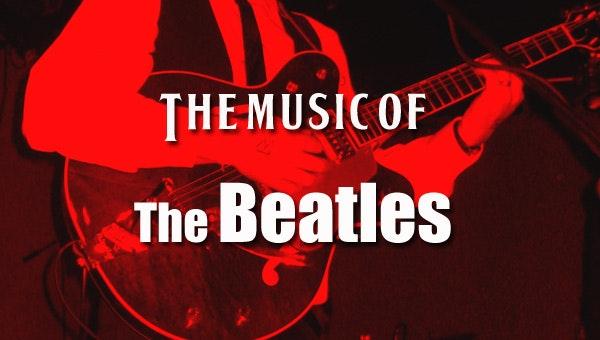
The Music of the Beatles will track the musical development of the band, starting from the earliest days in Liverpool and Hamburg, moving through the excitement of Beatlemania, the rush of psychedelia, and the maturity of Abbey Road. While the focus will be on the music, we will also consider how recording techniques, the music business, the music of other artists, and the culture of the 1960s affected John, Paul, George, and Ringo as they created the Beatles repertory.

Jun 8th 2026
5-12 Weeks
Songwriting: Writing the Music (Coursera) Coursera
Berklee College of Music

Songwriting: Writing the Music (Coursera)

If your notebook is full of unused lyrics and you’re struggling to find inspiration for the music, this course is for you. Whether you are an experienced songwriter looking for new ideas or a beginning songwriter learning to read music, this course will lead you to a rich source of songwriting possibilities. Led by award winning songwriter and Berklee College of Music professor Scarlet Keys, you’ll learn to construct strong, expressive melodies that your audience will remember as well as experiment with new chords to break out of any harmonic rut.

Jun 8th 2026
4 Weeks
Fundamentals of Music Theory (Coursera) Coursera
University of Edinburgh

Fundamentals of Music Theory (Coursera)

This course will introduce students to the theory of music, providing them with the skills needed to read and write Western music notation, as well as to understand, analyse, and listen informedly. It will cover material such as pitEli Appleby-Donaldches and scales, intervals, clefs, rhythm, form, meter, phrases and cadences, and basic harmony.

Jun 8th 2026
5-12 Weeks
In the Studio: Postwar Abstract Painting (Coursera) Coursera
The Museum of Modern Art

In the Studio: Postwar Abstract Painting (Coursera)

Want to know how some of the 20th century’s most celebrated artists made abstract paintings? This course offers an in-depth, hands-on look at the materials, techniques, and thinking of seven New York School artists, including Willem de Kooning, Yayoi Kusama, Agnes Martin, Barnett Newman, Jackson Pollock, Ad Reinhardt, and Mark Rothko. Through studio demonstrations and gallery walkthroughs, you’ll form a deeper understanding of what a studio practice means and how ideas develop from close looking, and you’ll gain a sensitivity to the physical qualities of paint.

Jun 8th 2026
5-12 Weeks
The Piano Sonata: Origins to Mozart (Coursera) Coursera
University of Michigan

The Piano Sonata: Origins to Mozart (Coursera)

In this course, you’ll be introduced to sonata form; how it works, where it came from, and how sonatas are put together as multi-movement compositions. We will analyze the early history of the piano sonata and discover the important early masters of this style (Scarlatti, CPE Bach, Haydn, and Mozart). You’ll then investigate the relationship between the keyboard instruments of the time and the musical style, and be able to differentiate between Baroque, Galant, and Classical styles.

Jun 8th 2026
4 Weeks
Introduction to Ableton Live (Coursera) Coursera
Berklee College of Music

Introduction to Ableton Live (Coursera)

In the past, Digital Audio Workstations (DAWs) were programs used only by audio engineers with a highly specific knowledge base, on machines inaccessible to most people. But over the past 10-15 years, DAWs and the act of recording music have evolved from being a luxury of the few to being available to the masses.

Jun 1st 2026
3 Weeks
Aplicaciones musicales con Arduino (Coursera) Coursera
Universidad Nacional Autónoma de México

Aplicaciones musicales con Arduino (Coursera)

En este curso nos adentraremos en el terreno del hardware. Concretamente, aprenderemos a utilizar la placa de desarrollo de hardware de código abierto, llamada Arduino, enfocándonos en las aplicaciones que esta ofrece para la experimentación musical. De manera más específica, aprenderemos en este curso a construir nuestros propios generadores de sonido, y a partir de ello haremos instalaciones sonoras que nos permitirán expandir nuestra creatividad hacia el terreno de las cosas materiales, y ya no solo de los datos informáticos.

Jun 8th 2026
4 Weeks