EdX

Economía Circular en los procesos logísticos (edX)

Offered by LOGYCAX, LOGYCA,
Economía Circular en los procesos logísticos (edX)

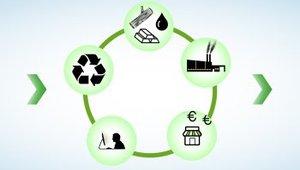
La economía circular es una alternativa que busca redefinir el crecimiento organizacional, con énfasis en los beneficios para toda la sociedad. Esto implica separar la actividad económica del consumo de recursos finitos y eliminar los residuos del sistema desde el diseño. Existen diferentes modelos que nos enseñan a utilizar este concepto, pero en este curso podrá encontrar como aplicar estos modelos en procesos logísticos de la mano de las empresas y expertos que lo han investigado.

Class Deals by MOOC List - Click here and see EdX's Active Discounts, Deals, and Promo Codes.

Debido al crecimiento de la población, se requieren cada vez más recursos naturales para abastecer la demanda de alimentos, bienes y servicios de la población creciente y esto ha generado sobrepresiones en los ecosistemas. Estudios realizados demuestran que, con la tendencia actual de consumo de recursos naturales, en el año 2050 llegaremos a un colapso, pero esto se puede evitar si implementamos la economía circular en nuestros aparatos productivos.
En los últimos años, y dada la situación de sostenibilidad que enfrentan las organizaciones en el mundo, el término economía circular ha ido en aumento. La economía circular se caracteriza por ser una los productos, componentes y materiales a su mayor utilidad y valor en todo momento.
Durante este curso aprenderemos sobre el impacto que genera la economía circular en las empresas, los retos a los que se enfrentan las organizaciones al migrar de un modelo económico lineal a un modelo circular, los conceptos claves para implementar una óptima economía circular y la importancia que tienen los encadenamientos productivos en este modelo económico.

What you'll learn
Distinguir el impacto la economía circular en las organizaciones como base fundamental para la eficiencia de la Red de Valor.
Establecer los principios claves sobre los cuales se desarrolla la economía circular en las organizaciones e identificar los modelos de Economía Circular existentes.
Analizar el potencial de circularidad en mi organización.
Desarrollar herramientas para formular la estrategia de economía circular en las organizaciones.
Comprender el proceso para la definición, formulación y seguimiento de indicadores de circularidad.
Identificar la importancia de la colaboración en los procesos de economía circular.

Syllabus

Modulo 1:¿Porqué el mundo empezó a hablar de economía circular?
Modulo 2: ¿Cuáles son los conceptos fundamentales bajo los cuales se desarrolla la aplicación de modelos de economía circular?
Modulo 3:¿Cómo se inicia el cambio en las organizaciones para implementar la economía circular?
Modulo 4:¿Cómo impacta la colaboración en los procesos de logística inversa?
Go to Class
MOOC List is learner-supported. When you buy through links on our site, we may earn an affiliate commission.

Related Courses

Sustainable Construction in a Circular Economy (Coursera) Coursera
Parsons School of Design, The New School

Sustainable Construction in a Circular Economy (Coursera)

This course takes a wide-lens view of the role of materials decisions in circular design and the promotion of a healthier world. You find out how to execute a healthier project. You learn why healthier materials matter to the entire project team and the importance of communication between teams. You look at circularity, embodied carbon reduction, and the evolution of the built environment. You examine the role designers play in executing a healthier project, from construction to installation to use, and its significance in the context of cities.

Aug 3rd 2026
3 Weeks
Introduction to Sustainable Practices in Food Service (FutureLearn) FutureLearn
International Culinary Studio

Introduction to Sustainable Practices in Food Service (FutureLearn)

Create a more sustainable food service business and make a difference to your bottom line, your stakeholders, and the environment. Improve your sustainable practices within your organisation. Sustainability isn’t just about ‘greening’; sustainability actually means ‘meeting the needs of the present without compromising the ability of future generations to meet their needs.’ On this course, you’ll look at general global sustainability concepts, issues, and concerns, before focusing on sustainability specifically within food service and what you can do to reduce your impact.

Self Paced
2 Weeks
Built environment sustainability assessment (edX) EdX
Universitat Politècnica de València,UPValenciaX

Built environment sustainability assessment (edX)

The course introduces the basic elements and trends for performing a through built environment assessment and develops the tools for urban sustainability policy impact analysis. The course introduces the basic elements and trends for performing a through built environment assessment and develops the tools for urban sustainability policy impact analysis.

Self Paced
Self-Paced
Innovating in Health Care (edX) EdX
HarvardX,Harvard University

Innovating in Health Care (edX)

Find innovation opportunities in health care technology, management, consulting, or investing by examining health care cost, quality, and access. Health care spending, quality, and access continue to plague America and global nations alike. With U.S. health care costs trending toward $4 trillion in 2020, the need to innovate and create smart, viable business plans is more important than ever before. Innovating in Health Care (IHC) explores how creating successful global business ventures in health care will not only improve access, but also better meet the needs of consumers and societies.

Self Paced
Self-Paced
Sustainability and the Circular Economy (Coursera) Coursera
University of Colorado Boulder,Siemens

Sustainability and the Circular Economy (Coursera)

As the world’s population continues to rise toward an expected 10 billion citizens by 2050, it is imperative that business practices change to ensure a high quality of life is possible for all of us, both human and non-human. Today’s learners are very aware of this. Moreover, they are highly motivated and have the extraordinary capacity to create a future that provides both economic success and a more enduring, resilient, and sustainable planet. If you are one of these learners, then Sustainability and the Circular Economy is a course for you.

Aug 3rd 2026
5-12 Weeks
Economie circulaire et innovation (FUN) FUN
Université Virtuelle Environnement et Développement - UVED

Economie circulaire et innovation (FUN)

Satisfaire nos besoins essentiels tout en rompant avec la logique linéaire dominante « extraire, fabriquer, consommer, jeter » qui génère une exploitation irraisonnée des ressources de notre planète et une profonde perturbation du système biosphère : voici l’objectif de l’économie circulaire. Comment y parvenir ? En favorisant des modes de production et de consommation moins dispendieux et qui, à service rendu égal, permettent de réduire les quantités de matières et d’énergies mises en circulation, tout en s’appuyant sur celles qui sont issues de la réutilisation des produits tout au long de leur cycle de vie ou de leur recyclage final.

No sessions available
4 Weeks
Circular business models fostering sustainable production and consumption (POK) Polimi OPEN KNOWLEDGE
Politecnico di Milano

Circular business models fostering sustainable production and consumption (POK)

How to make real the transition from linear to circular: key concepts, tools and enablers. The course will start with the basic concept of Circular Economy, its definition, core characteristics, and differences with the linear economy. The definition of Circular Economy will then be enriched with the main frameworks for understanding Circular Economy (e.g., the butterfly diagram and the RESOLVE model). Additionally, the course will give some practical examples of companies applying Circular Economy principles.

Available
4 Weeks
Modelos comerciales circulares para sistemas alimentarios urbanos sostenibles (FutureLearn) FutureLearn
EIT Food,University of Helsinki,EIT,University of Turin

Modelos comerciales circulares para sistemas alimentarios urbanos sostenibles (FutureLearn)

Descubra cómo los modelos comerciales circulares transforman los sistemas alimentarios urbanos. Explore cómo la economía circular puede fomentar sistemas alimentarios urbanos. En un contexto donde la población mundial alcanzará los 9 mil millones de personas en 2050, con casi el 70% de ellas concentradas en zonas urbanas y que requerirán tres veces más recursos de los que usamos actualmente, la “economía lineal” tradicional ya no funciona.

Jan 3rd 2022
4 Weeks
Entreprendre dans l'économie circulaire (FUN) FUN
Phenix

Entreprendre dans l'économie circulaire (FUN)

Dans un contexte de raréfaction des ressources naturelles et de prise de conscience de l’impact des activités humaines sur l’environnement, l’engagement dans une démarche écologique est souvent perçue comme un frein à la performance économique. A travers ce MOOC, nous présentons l’économie circulaire comme un levier d’innovation et de création de valeur économique à fort impact positif.

Oct 15th 2021
4 Weeks
Circular Economy MOOC (EMMA) EMMA
Euneos

Circular Economy MOOC (EMMA)

The course is aimed to everybody who works in education and wants to know more about circular economy. The course is integrated in the European project Three C Project. The course will run for 4 weeks, 1h course + 2 homework per week, and will include access to the EMMA online platform, a weekly menu of recommended reading, videos, links to further information, circular economy quizzes and one live webinar.

Self-Paced
4 Weeks
Circular Strategies for Hospitals (edX) EdX
Delft University of Technology,DelftX

Circular Strategies for Hospitals (edX)

Learn to apply the principles of the circular economy in a hospital or healthcare organization to reduce waste and contribute to sustainable healthcare. Reducing medical waste is a worldwide challenge that calls for smarter solutions that can make healthcare more sustainable. This course helps hospital staff, management, users and buyers of medical products and decision-makers make the transition to a circular economy and therefore contribute to reducing waste streams and costs.

Self Paced
Self-Paced