EdX

Early Christianity: The Letters of Paul (edX)

Early Christianity: The Letters of Paul (edX)

The course “Early Christianity: The Letters of Paul” explores the context of these letters in the Roman Empire and the impact of these powerful texts today. The letters of Paul are the earliest texts in the Christian scriptures, written by a Jew at a time when the word “Christian” hadn’t yet been coined. What is the religious and political context into which they emerged? How were they first interpreted? How and why do they make such an enormous impact in Christian communities and in politics today?

Class Deals by MOOC List - Click here and see EdX's Active Discounts, Deals, and Promo Codes.

Archaeological materials and ancient writings will help you to enter the ancient Mediterranean world and to think about religious groups, power, poverty, health, and the lives of elites and slaves in the Roman Empire.

We’ll explore how immediately controversial these letters were, and how these letters are used today to debate relations between Christians and Jews; issues such as love, law, and grace; and topics such as charismatic Christianity, homosexuality, and women’s religious leadership.
Whether you’ve been studying Paul’s letters for years or are merely curious about what Christian scriptures are, this course will provide you with information to deepen your understanding of the ancient contexts and present-day controversies about these texts.

Go to Class
MOOC List is learner-supported. When you buy through links on our site, we may earn an affiliate commission.

Related Courses

Literati China: Examinations, Neo-Confucianism, and Later Imperial China (edX) EdX
HarvardX,Harvard University

Literati China: Examinations, Neo-Confucianism, and Later Imperial China (edX)

Explore China’s imperial period, with a focus on the Song dynasty and the role of the exam system in government. Fundamental changes in government, the economy, and broader society took place between the 8th and 11th centuries in China. The state aristocracy gave way to new literati elite: educated men who sought to enter government through competitive examinations. A new kind of Confucianism also took shape, which prized the moral autonomy of individuals. With this, the later imperial period of China’s history begins.

Self Paced
Self-Paced
Cosmopolitan Tang: Aristocratic Culture in China (edX) EdX
HarvardX,Harvard University

Cosmopolitan Tang: Aristocratic Culture in China (edX)

Explore the reunification of China under the Tang with a focus on aristocratic culture — from poetry to calligraphy to literature. By the Tang period, China was divided into northern and southern dynasties with different rulers and political systems. The north was conquered by relatively unsophisticated barbarians, but in the south, the aristocratic families established a refined appreciation of writing and literature.

Self Paced
Self-Paced
The Fall of the Roman Republic (FutureLearn) FutureLearn
Colorado State University

The Fall of the Roman Republic (FutureLearn)

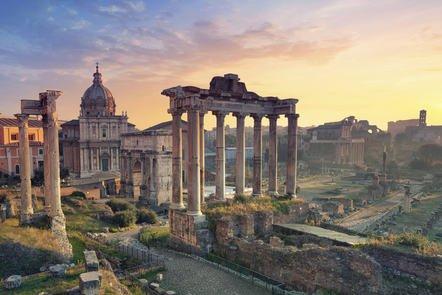
Explore the last century of the Roman Republic, its collapse and the creation of the Roman Empire. Covering the last century of the Roman Republic, this course will help you to understand the Republic’s collapse and how the emergence of the Roman Empire came about. You will gain an overview of the development of the Republic, as well as exploring significant aspects of Roman society, religion, and governance.

No sessions available
4 Weeks
Arch of Titus: Rome and the Menorah (Coursera) Coursera
Yeshiva University

Arch of Titus: Rome and the Menorah (Coursera)

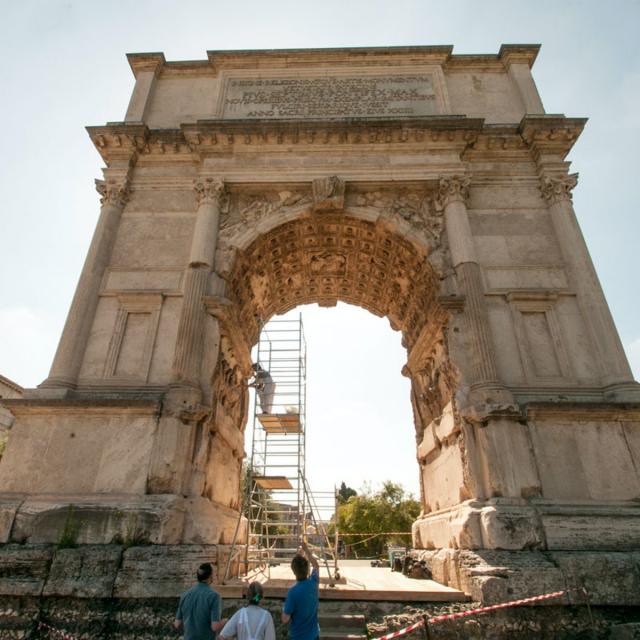
The Arch of Titus: Rome and the Menorah explores one of the most significant Roman monuments to survive from antiquity, from the perspectives of Roman, Jewish and later Christian history and art. The Arch of Titus commemorates the destruction of Jerusalem by the emperor Titus in 70 CE, an event of pivotal importance for the history of the Roman Empire, of Judaism, of Christianity and of modern nationalism. Together with your guide, Professor Steven Fine, you will examine ancient texts and artifacts, gaining skills as a historian as you explore the continuing significance of the Arch of Titus from antiquity to the very present.

Aug 31st 2026
5-12 Weeks
A Journey through Western Christianity: from Persecuted Faith to Global Religion (200 - 1650) (Coursera) Coursera
Yale University

A Journey through Western Christianity: from Persecuted Faith to Global Religion (200 - 1650) (Coursera)

This course follows the extraordinary development of Western Christianity from its early persecution under the Roman Empire in the third century to its global expansion with the Jesuits of the early modern world. We explore the dynamic and diverse character of a religion with an enormous cast characters. We will meet men and women who tell stories of faith as well as of violence, suppression, and division.

Sep 7th 2026
5-12 Weeks
Hadrian's Wall: Life on the Roman Frontier (FutureLearn) FutureLearn
Newcastle University

Hadrian's Wall: Life on the Roman Frontier (FutureLearn)

Explore the archaeology of the most heavily fortified frontier in the Roman Empire, its people and their lives. Hadrian’s Wall stretches over 73 miles (117 km), from coast to coast in what is now Northern England. The Wall, complemented by a sophisticated system of outposts and coastal watch stations, offers a remarkable glimpse of ancient society. In addition to housing one of the largest concentrations of Roman soldiers anywhere in the Empire’s provinces, Hadrian’s frontier system was home to an incredibly cosmopolitan array of civilians. This six week course offers a comprehensive introduction to Hadrian’s Wall and its people and raises fascinating issues concerning colonisation, cultural transformation, immigration, integration and imperialism.

Self Paced
5-12 Weeks
China and Communism (edX) EdX
HarvardX,Harvard University

China and Communism (edX)

Explore the Maoist period of China, from the Communist Party to the death of Mao and the reopening of China. How did the Communists conquer China? What role does culture play? What are the successes and failures of the Chinese Communist Party after seizing power in 1949? What constitutes liberation?

Self Paced
Self-Paced
Modern China’s Foundations: The Manchus and the Qing (edX) EdX
HarvardX,Harvard University

Modern China’s Foundations: The Manchus and the Qing (edX)

Learn how the Manchus conquered the Qing and established the last of the imperial dynasties. This course, part of a comprehensive series on China, looks at the Qing state in the early 1600s and the challenges that the Manchus faced as minority rulers. While living in Chinese cities and surrounded by Chinese culture — a culture that was far more sophisticated than their own — the Manchus struggled to hold onto their identity as a conquesting people.

Self Paced
Self-Paced
The American Renaissance: Classic Literature of the 19th Century (edX) EdX
DartmouthX

The American Renaissance: Classic Literature of the 19th Century (edX)

Explore the writings of famous American authors from Ralph Waldo Emerson and Harriet Beecher Stowe to Mark Twain, and examine the historic role Dartmouth College played in their formation. What is the American Renaissance? How did Dartmouth help foster the formation of the American Renaissance and its reevaluation and reinvention in the twentieth? Why should we, as twenty-first century readers, concern ourselves with this literature?

Self Paced
4 Weeks