EdX

Designing Climate-Neutral Industry and Electricity Generation (edX)

Designing Climate-Neutral Industry and Electricity Generation (edX)

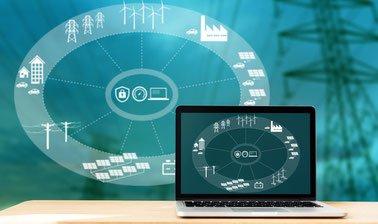
Learn about types and sources of industrial emissions and tools to mitigate them. Learn what the options are for climate-neutral electricity and review the strategies for dealing with the variability of renewable energy. This course is designed for the next generation of policy-makers, sustainability consultants or professionals and students from various fields who want an overview of climate change mitigation strategies in industry and electricity generation and apply them to their own projects.

Class Deals by MOOC List - Click here and see EdX's Active Discounts, Deals, and Promo Codes.

This course covers a wide variety of topics in the industry and electricity generation domains, from the current situation to the challenging mission of becoming climate-neutral. Specifically:

  • Industry - You will learn about types and sources of industrial emissions. You will also learn about the existing technological options, methodologies and tools to mitigate emissions (mainly GHG) inside and outside the boundaries of the industrial plant.
  • Electricity generation - you will learn what the options are for climate-neutral electricity and review the strategies for dealing with the variability of renewable energy, as well as how energy system modeling is used to devise plans and policies for the energy transition.

The course includes videos, examples, interviews with experts, exercises and quizzes so that you can master and practice what you have learnt and explore mitigation strategies through real life examples. Enriched by relevant readings and discussion forums, this course will let you dive deeper into specific areas of interest you might have and further facilitate your learning experience.
Course material and exercises will be complemented by relevant content about policy, through which you will also discover current measures taken by governments world-wide.
This course is part of the Climate-Neutral World: Theory, Applications and Taking Action Professional Certificate.

What you'll learn

  • Review the industrial sources of emissions and existing technological options to mitigate them.
  • Identify available methods and tools used to evaluate and deploy specific measures to mitigate emissions in the industrial sector beyond the boundaries of a single company.
  • Describe how the electricity system works and assess the resource potential, costs, and variability of different renewable generation options.
  • Explain the three main ways to deal with renewable generation variability and interpret energy system modelling results in order to quantify their trade-offs.

Syllabus

The course is organized across four units:

1. Industrial sector contribution to GHG emissions and mitigation measures
In the first week of the course, you will examine the role of industry as source of emissions. You will discuss the metrics and indicators that can be used to monitor GHG emissions, and will come to understand the role of different mitigation options inside the boundaries of the industrial plant.
The content is split into six modules:

  1. Industrial sources of emissions and main mitigation options
  2. Gas, solid and liquid waste
  3. Energy and material consumption and CO2 emissions
  4. Heat integration
  5. Renewable sources
  6. Carbon capture, utilization and storage

2. System thinking in the industrial sector
In week two you will explore the main methodologies and tools that are currently used to evaluate and motivate climate change mitigation options beyond the boundaries of a single company. You will see that these measures have not only benefits, but also trade-offs.
The content is split into four modules:

  1. Industrial Ecology and system thinking
  2. Environmental life cycle assessment
  3. Governance of integrated energy systems
  4. Trade-offs, synergies and industry 4.0

3. Climate-neutral electricity: the pivotal role of renewables
In week three you will focus on climate-neutral electricity, especially renewables: wind, solar, water. These technologies are likely to form the backbone of any climate-neutral energy system, but you will also discuss them in the context of other options. The five modules are:

  1. How the electricity grid works
  2. Quantifying renewables costs
  3. Quantifying renewables variability
  4. Quantifying renewables resources
  5. Other climate-neutral electricity technologies

4. Managing renewable variability and planning the energy transition
In the fourth and final week you will first systematically explore the available options for dealing with the variability of renewable electricity generation, before zooming out and looking at the role of energy system models in quantifying the trade-offs between different options and guiding policy and planning. The five modules are:

  1. Designing for variability 1: Geographical balancing
  2. Designing for variability 2: Storage
  3. Designing for variability 3: Demand response and dispatchable supply
  4. Examining trade-offs between different options: energy system models
  5. Case study: Designing options for the energy transition
Go to Class
MOOC List is learner-supported. When you buy through links on our site, we may earn an affiliate commission.

Related Courses

Renewable Energy for Arctic Food and Water Security (edX) EdX
University of Alaska Fairbanks,AlaskaX

Renewable Energy for Arctic Food and Water Security (edX)

A research-based course on resilient renewable energy solutions, with an emphasis on microgrids, and Food, Energy, and Water (FEW) security. This course provides research-based and on-the-ground tools for community planners, grid designers, and business leaders to improve and implement stronger and more resilient renewable energy in Arctic communities.

Self Paced
Self-Paced
Foundations of Microgrids (edX) EdX
University of Alaska Fairbanks,AlaskaX

Foundations of Microgrids (edX)

A foundational course on microgrid systems design with an emphasis on community-based projects and non-grid connected remote systems. The electric grid of the future will need to be more resilient, decentralized, and capable of integrating more distributed energy resources including on-site renewable energy technologies, energy storage and even electric vehicle (EV) charging. Microgrids are an important building block in designing this sustainable grid architecture of the future. This course covers fundamental concepts of microgrid design from a community-centric perspective and emphasizes a holistic approach to energy systems management.

Self Paced
Self-Paced
Sustainable Food Systems (Coursera) Coursera
University of Illinois at Urbana-Champaign

Sustainable Food Systems (Coursera)

Throughout this course, you will delve into the intricate details of the food production system through a system-thinking lens. You will examine the grand challenges faced by the food, fiber, and natural resource industries, and their repercussions on people, the planet, and profit. By the end of this course, you will have a clear understanding of the concept of systems thinking, be able to explain the three key pillars of sustainability and link these pillars to social, environmental, and economic systems.

Aug 10th 2026
5-12 Weeks
Politics and Economics of International Energy (Coursera) Coursera
Sciences Po

Politics and Economics of International Energy (Coursera)

Energy issues have always been important in international relations, but in recent years may have become even more important than in the past due to the widespread awareness of existing limits to energy sources and negative climate impacts. The course discusses global trends in energy consumption and production, various available scenarios for potential developments in the coming decades, the availability of oil reserves and the evolution of the oil industry.

Aug 10th 2026
5-12 Weeks
Beyond Systems Thinking (edX) EdX
ETH Zurich,ETHx

Beyond Systems Thinking (edX)

We need cultural and mental transformation to deal with the current global polycrisis. This MOOC is the second of four MOOCs to hybridize science, design, and transformative praxis. This joint learning journey is a fluid, intervention-driven, synergistic process addressing complex challenges with a regional focus. It entails a critical look at systems thinking, tools to navigate complexity, basics of social network analysis, resilience assessment, circularities, and systemic innovation.

Self Paced
Self-Paced
Sustainable Construction Management (edX) EdX
University of Maryland, College Park,University System of Maryland - USM,USMx,UMD

Sustainable Construction Management (edX)

Learn Sustainable Construction Management practices, and how to implement a sustainable green project. Sustainability has become essential for private and public owners who want to incorporate the economic, social, and environmental aspects of their project to improve the triple bottom line.

Self Paced
Self-Paced
Principles of Modeling, Simulations, and Control for Electric Energy Systems (edX) EdX
MIT,MITx

Principles of Modeling, Simulations, and Control for Electric Energy Systems (edX)

Apply a dynamic systems-level approach and engage emerging research on efficient, sustainable, and physically and economically feasible electric power systems of the future. As global energy demand grows, to mitigate climate change we must drive a swift transition to clean energy resources and enhanced electric power grid infrastructure. In this course, you will explore systemic principles of future electric power system management, such as the role of smart grids, data-enabled machine learning, power electronics-control, and data-driven decision-making.

No session available
5-12 Weeks
Powering Resilient Communities: A Holistic Approach to Food, Energy, and Water Security (edX) EdX
University of Alaska Fairbanks,AlaskaX

Powering Resilient Communities: A Holistic Approach to Food, Energy, and Water Security (edX)

A research-based course on resilient renewable energy solutions, with an emphasis on microgrids, and Food, Energy, and Water (FEW) security. This course provides research-based and on-the-ground tools for community planners, grid designers, and business leaders to improve and implement stronger and more resilient renewable energy systems in Arctic communities.

Self Paced
Self-Paced
Pets, Politics and Pandemics (Coursera) Coursera
Columbia University

Pets, Politics and Pandemics (Coursera)

This course is designed to be a fun and accessible introduction to the topic of systems theory. Systems theory describes a number of fundamental concepts that undergird a broad array of phenomena across many different social, political and natural arenas. It is from this broad applicability that the course derives its title: Pets (social), politics (political and economic) and Pandemics (natural).

Aug 10th 2026
5-12 Weeks