EdX

Designing Climate Neutral Buildings and Transport (edX)

Designing Climate Neutral Buildings and Transport (edX)

Familiarize yourself with decarbonization measures in the building and transport sectors. Learn about trends in energy usage, carbon intensity, and potential of available alternatives to limit greenhouse gas (GHG) emissions.

Class Deals by MOOC List - Click here and see EdX's Active Discounts, Deals, and Promo Codes.

This course is designed for the next generation of policy makers, sustainability consultants or professionals and students from other fields who want to introduce themselves to climate change mitigation strategies in the building and transport sectors and apply them to their projects.
This course covers a wide variety of topics in the building and transportation domains, with the focus on the importance of designing climate friendly systems. Specifically:
Buildings– you will learn about trends in energy use and CO2 emissions that result from heating and cooling buildings, cooking and the use of electricity for appliances and lighting. You will be able to compare various alternatives to limit GHG emissions from buildings and quantify their impact.
Transportation – you will gain knowledge of decarbonization efforts carried out in various sub-sectors of transportation (including freight, aviation and passenger transport). You will learn about trends, fuel alternatives such as electrification and hydrogen applications, examine energy intensity and calculate GHG produced by transport. Additionally, you will have the chance to evaluate different transportation modes and their impact on climate.
In addition to the lectures, the course also includes interviews with experts and various exercises that will demonstrate how to practice what you have learnt and explore GHG emissions through real life examples. Enriched by relevant readings and discussion forums, this course will let you dive deeper into specific areas of interest you might have and further facilitate your learning experience.
Course material and exercises will be complemented by relevant content about policy, through which you will also discover current measures taken by governments world-wide.
This course is part of the Climate-Neutral World: Theory, Applications and Taking Action Professional Certificate.

What you'll learn

  • Understand the big picture of how buildings contribute to global GHG emissions and differences between climate zones.
  • Analyze the contribution of heating, cooling, cooking, and use of electrical appliances to greenhouse gas emissions and examine options to mitigate CO2 emissions from these activities.
  • Perform basic calculations on GHG emissions relating to different activities in buildings.
  • Consider how policies affect GHG emission in buildings.
  • Discuss the transport sector and its contribution to GHG emissions.
  • Calculate GHG emissions relating to different modes of transport and fuels.
  • Discover the efficiency and potential of alternate fuels and a variety of measures needed to decarbonize transport.
Go to Class
MOOC List is learner-supported. When you buy through links on our site, we may earn an affiliate commission.

Related Courses

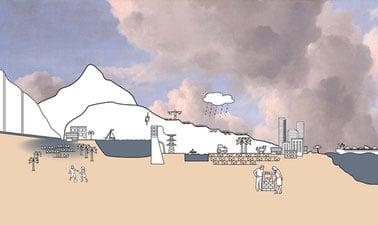
Climate Change Education (edX) EdX
Inter-American Development Bank - IDB,IDBx

Climate Change Education (edX)

Learn how to work with your students to help them explore climate change through the use of interactive and engaging activities. These activities are designed for students at the primary and secondary levels. Our climate is changing rapidly, and now more than ever we need to be ready to act and prepare the next generation to take care of our planet. This course explores the basic science behind climate change and presents the tools to teach it in a positive, engaging and participatory way. The course also introduces some of the ethical and social issues around climate change.

Self Paced
Self-Paced
Cities and the Challenge of Sustainable Development (edX) EdX
SDGAcademyX,SDG Academy

Cities and the Challenge of Sustainable Development (edX)

What is a sustainable city? Learn the basics here. According to the United Nations, urbanization and population growth could result in an increase of 2.5 billion people into urban populations by 2050, with associated impacts ranging from increased transportation needs to more building. How do we make cities sustainable to support this growth?

Self Paced
Self-Paced
Sustainable Food Systems: A Mediterranean Perspective (edX) EdX
SDGAcademyX,SDG Academy

Sustainable Food Systems: A Mediterranean Perspective (edX)

How do we produce more, better quality, and safer food while simultaneously achieving social and environmental goals? The Mediterranean region is one of the most biodiverse in the world, home to a complex and intricate patchwork of cultures, climates, and cuisines. Food systems in the region -- represented worldwide by the "Mediterranean diet" -- are equally complex, demanding analysis across the political, social, cultural, economic and nutritional spectrums from landscape to table.

Self Paced
Self-Paced
Circular Economy: An Introduction (edX) EdX
Delft University of Technology,DelftX

Circular Economy: An Introduction (edX)

Ready to make a difference? Learn how to contribute to a sustainable economic system by implementing novel business and design approaches! Our global society is not sustainable. We all know about the challenges we’re facing: waste, climate change, resource scarcity, loss of biodiversity. At the same time, we want to sustain our economies and offer opportunities for a growing world population. This course is about providing solutions we really believe in: a Circular Economy.

Self Paced
Self-Paced
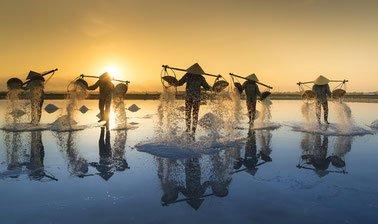
Water: Addressing the Global Crisis (edX) EdX
SDGAcademyX,SDG Academy

Water: Addressing the Global Crisis (edX)

We are living in a water stressed world. It is a global crisis and therefore we must act now! What can we do to save the planet and ensure availability of water for all by 2030? Water isthe source of all life. Without it, neither humans nor nature will survive. Yet lack of access to water is a rapidly growing problem and one of the world’s gravest risks. It is a global crisis.

Self Paced
Self-Paced
Caer o No caer. El secreto de las estructuras (edX) EdX
Universidad Carlos III de Madrid - UC3M,UC3Mx

Caer o No caer. El secreto de las estructuras (edX)

Las estructuras están presentes en todos los sistemas que nos rodean. Descubrirlas y comprender cómo funcionan es sencillo y fascinante. Las estructuras están implicadas en nuestras vidas: las plantas, los animales, casi todo lo que fabrica el ser humano, incluso nuestro propio cuerpo, deben soportar una serie de fuerzas sin romperse, y por lo tanto prácticamente cualquier elemento de nuestro entorno es una estructura de una clase u otra.

Self Paced
Self-Paced
SDG: Moving Towards Sustainable Work (edX) EdX
Universidad Carlos III de Madrid - UC3M,UC3Mx

SDG: Moving Towards Sustainable Work (edX)

Decent work is thecritical engine of sustainable development. This course explores the United Nations' Sustainable Development Goals and mechanisms for developing decent and sustainable work. The United Nations' Sustainable Development 2030 Agenda gives us the opportunity to change and improve the lives of millions of people. These widespread efforts won't juststem from organizations in the formal public or private sectors (governments, corporations, trade unions, etc.) but will also require participation from ordinary people and civil society as a whole.

Self Paced
Self-Paced
Distribution: product delivery (edX) EdX
LOGYCAX,LOGYCA

Distribution: product delivery (edX)

Processes related to transportation cover the election of routes up to ensuring the reception of returns. In this online course you will learn about product delivery to perform timely and quality delivery. No matter the volume of production of a micro or small company, delivery to clients will always be indispensable. Designing the best way to transport goods may mean performing the process by the company’s own means or through outsourcing (an important part of an organization’s logistic process).

Self Paced
Self-Paced
Climate Solutions (edX) EdX
University of Edinburgh,EdinburghX

Climate Solutions (edX)

We are in a Climate Emergency. The actions we all choose to take over the next decade will decide whether we succeed or fail to meet the biggest challenge to our civilisation in the 21st century. Learn how you can help tackle climate change. The Climate Solutions course is designed and delivered by award-winning climate change experts and educators.

Self Paced
Self-Paced
Comfort and Health in Buildings (edX) EdX
Delft University of Technology,DelftX

Comfort and Health in Buildings (edX)

Learn how to realize thermally comfortable and healthy buildings and how energy technologies impact comfort. Even in the well-accepted indoor temperature range of 20-24°C (68-75°F), people can experience thermal discomfort. Complaints about the indoor thermal environment are one of the major complaints building and facility managers have to deal with, and they spend a large amount of their time and money to solve them. People spend more than 80% of their time in buildings. Therefore a good thermal comfort and quality of the indoor environment are essential for their wellbeing, health and productivity.

Self Paced
Self-Paced
Environmental Protection and Sustainability (edX) EdX
IsraelX

Environmental Protection and Sustainability (edX)

Uncover better solutions to help manage a wide range of environmental problems and challenges facing our world today. Do you want to understand more about the environmental problems we currently face? Do you want to learn ways we can reduce the negative effects of these problems, and keep our environment more sustainable? If so, this course is for you.

Self Paced
Self-Paced
Feeding a Hungry Planet: Agriculture, Nutrition and Sustainability (edX) EdX
SDGAcademyX,SDG Academy

Feeding a Hungry Planet: Agriculture, Nutrition and Sustainability (edX)

How do we create a healthy and sustainable diet for the growing world population? Agriculture is more than waving fields of wheat; our ability to grow food from existing natural resources – and without decimating those resources – is key to sustainably feeding the world. In this course, learn about food security worldwide, the effects of malnutrition, how we manage ecosystems that provide food resources and more.

Self Paced
Self-Paced