Decoding Forensics for Legal Professionals (FutureLearn)

Decoding Forensics for Legal Professionals (FutureLearn)

Delve into forensic science and examine its limitations to better understand how to use forensics in criminal trials. Explore the basics of forensic pathology. Explore commonly relied on disciplines in forensics. Today, forensic evidence is integral to criminal investigations and trials. Therefore, it is important for legal professionals to have an understanding of the scientific foundations and limitations of different types of forensic evidence, in order to engage more meaningfully with such evidence.

Class Deals by MOOC List - Click here and see FutureLearn's Active Discounts, Deals, and Promo Codes.

On this six-week course, you’ll explore the scientific principles underlying forensic pathology, medical examination in sexual offence cases, bite mark analysis, and forensic DNA profiling. Using mock case scenarios, this insightful online course will help you develop the skills you can immediately apply in your career as a legal professional.

Delve into the legal standards of forensic evidence
You’ll explore the law on expert evidence and the procedures that courts follow in examining such evidence. With this knowledge, you’ll understand the limitations with the current forms of legal inquiries and how they can be improved.
Lastly, you’ll scrutinise the law of expert evidence and forensic science landscape in India.

Develop your scientific inquiry skills alongside experts
Through this course, you will develop a keen sense of scientific inquiry and aptitude and learn how to apply these scientific principles and evidentiary standards to forensic disciplines beyond the course.
The videos, articles and quizzes have been curated on the basis of the extensive research and criminal defence work conducted by Project 39A, a criminal justice initiative based out of National Law University, Delhi. This course will help you develop essential skills which you can use in your career as a legal professional.

What topics will you cover?
This course delves into the scientific foundations and limitations of forensic disciplines which are seen in seen in criminal cases. These disciplines are- forensic pathology, medical examination in sexual offence cases, bite mark analysis and forensic DNA profiling. Lastly, we will examine the legal standards in place to scrutinise forensic evidence.
The module on basics of forensic pathology will cover: What is an autopsy? How is the external and internal examination conducted; Understanding cause and time of death; Guidelines for collection of evidence and preparation of an autopsy report.
The module on medical examination of victims of sexual offences will cover: Debunking the myths about medical examination of victims and accused in cases of sexual assault; Process of examination of deceased victims and survivors in cases of sexual assault; Guidelines for collection of evidence and record of medical examination.
The module on bite mark analysis will cover: Introduction to Forensic Odontology; Understanding the human dentition; Challenging assumptions underlying bite mark comparison; Limitations of the process of bite mark comparison; Issues surrounding bite mark comparison in India; Scientific developments in challenging bite mark comparison around the world.
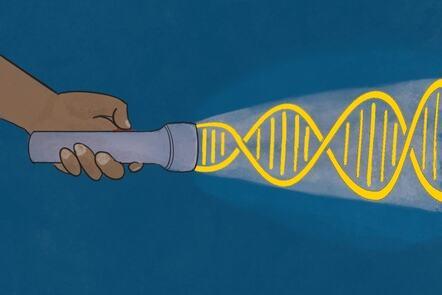
The module on forensic DNA profiling will cover: The basics of human cell and structure of DNA. What is DNA profiling and how is it conducted?; how are the results of DNA profiling interpreted? Statistical analysis in DNA profiling; what is DNA transfer?
The module on standards for examination of expert evidence will cover: Introduction to the law on expert evidence; role of courts in examining expert evidence, role of a defence lawyer in challenging expert evidence; the law of expert evidence and forensic science landscape in India.

Learning on this course
You can take this self-guided course and learn at your own pace. On every step of the course you can meet other learners, share your ideas and join in with active discussions in the comments.

What will you achieve?
By the end of the course, you‘ll be able to...
-Explore the fundamental theory behind forensic pathology, medical examination in cases of sexual assault, bitemark comparison and forensic DNA profiling.

  • Reflect on the scientific limitations of the forensic disciplines taught in the course.
  • Evaluate the role of the Court in examining forensic evidence during a criminal trial.
  • Discuss the reliability of the evidence found in the mock case scenarios based on the scientific principles learnt as part of the course.
  • Apply the principles of scientific inquiry and evidentiary standards to forensic disciplines beyond this course.

Who is the course for?
This course is designed for judges, lawyers, forensic scientists, and students of law and forensic science.
It will be particularly useful if you are interested in learning the science behind different forensic disciplines and the legal standards which apply in examining forensic evidence.
Go to Class
MOOC List is learner-supported. When you buy through links on our site, we may earn an affiliate commission.

Related Courses

Ecology and Wildlife Conservation (FutureLearn) FutureLearn
University of Leeds

Ecology and Wildlife Conservation (FutureLearn)

Discover ecology and how we can protect wildlife and conserve the natural world. Do you worry about the effects of climate change on nature? This course will show you how the work of conservation biologists and study of ecosystems can help with conserving the world’s biodiversity. You’ll explore the impact that the presence of wind farms on populations of seabirds and understand how the use of advanced techniques can be used to study different populations.

Feb 16th 2026
2 Weeks
The Science Behind Anti-Doping (FutureLearn) FutureLearn
King's College London

The Science Behind Anti-Doping (FutureLearn)

Discover the life-cycle of a sample collected for anti-doping processes within sport, and the science behind it. Learn the science behind the anti-doping process with King’s College London. This fascinating course will cover the life cycle of a sample (blood and urine) collected for anti-doping purposes within sport and explain the science behind the analytical processes involved.

Jun 24th 2024
4 Weeks
Forensic Engineering: Learning from Failures (edX) EdX
Delft University of Technology,DelftX

Forensic Engineering: Learning from Failures (edX)

Don’t let good failures go to waste! Identify the causes of failure and use this knowledge to enhance safety and improve performance. What do collapsed buildings, infected hospital patients, and crashed airplanes have in common? If you know the causes of these events and conditions, they can all be prevented. In this course, you will learn how to use the TU Delft mind-set to investigate the causes of such events so you can prevent them in the future.

Self Paced
Self-Paced
La science forensique au tribunal: témoin digne de foi? (Coursera) Coursera
University of Lausanne

La science forensique au tribunal: témoin digne de foi? (Coursera)

L’objectif de ce cours est d’encourager la réflexion critique en ce qui concerne la « science forensique », également appelée police technique et scientifique ou criminalistique. À l’heure actuelle, de manière générale, la plupart des gens sont fascinés par les possibilités techniques qu’offre la police scientifique. Ils sont bercés par une certaine illusion que les preuves de la science forensique sont infaillibles et fournissent des résultats factuels sûrs à 100 %. Ce cours – dispensé par des spécialistes du domaine – dépasse l’image conventionnelle véhiculée par des séries télévisées comme « Les Experts ».

Jun 15th 2026
5-12 Weeks
Mysteries Of The Universe (FutureLearn) FutureLearn
National Tsing Hua University

Mysteries Of The Universe (FutureLearn)

Discover how more than ninety per cent of the universe is a mystery, and expand your knowledge of cosmology and astronomy. Investigate the most mysterious and fascinating aspects of the universe The more we learn about how the universe works, the more we realise how much we don’t know. What is a black hole? What is dark energy? Will the universe eventually collapse in on itself? And how does the Earth fit into all this?

Jan 9th 2023
5-12 Weeks
Introduction to Building Information Modelling (FutureLearn) FutureLearn
Coventry University

Introduction to Building Information Modelling (FutureLearn)

Understand the historical issues in construction and how BIM can be used to support a transition to a more efficient construction. Building Information Modelling (BIM) is a process that encourages collaborative working. Why is it important? Why is the industry looking towards BIM and what historical issues does it aim to relieve? This course will help you develop a better understanding of BIM, the role it plays within the industry, and act as a gateway to further study in Construction Management and BIM.

Jan 16th 2023
2 Weeks
Eukaryotic Genome Assembly: How to Use BlobToolKit for Quality Assessment (FutureLearn) FutureLearn
Wellcome Connecting Science

Eukaryotic Genome Assembly: How to Use BlobToolKit for Quality Assessment (FutureLearn)

Gain practical skills in using the BlobToolKit to assess the quality of a eukaryotic genome assembly and improve your research. Discover how genome sequencing is moving beyond humans and model organisms. On this three-week course, you’ll gain the skills to assess the quality of published novel genomes and detect the presence of multiple organisms within a sample – including parasites, symbionts, and contaminants. This is vital to ensure that newly assembled genomes are high quality.

Dec 4th 2023
3 Weeks
Genomics for Educators (FutureLearn) FutureLearn
Wellcome Connecting Science

Genomics for Educators (FutureLearn)

Learn strategies and techniques for teaching genomics in and outside of the classroom to create enriching learning opportunities. Discover the importance of incorporating genomics into your curriculum. This three-week course from Wellcome Connecting Science will help you understand the benefits of teaching genomics and gain confidence in genomics education.

Aug 19th 2024
3 Weeks
Causes of Human Disease: Understanding Causes of Disease (FutureLearn) FutureLearn
University of Leeds

Causes of Human Disease: Understanding Causes of Disease (FutureLearn)

Learn the epidemiological methods used to understand the causes of diseases and how social factors influence their development. What causes human disease? Why do some people get a disease but others don’t? Through this course, you’ll learn how epidemiologists are helping to find answers to these complex questions and how the health of a population is measured and analysed.

Sep 23rd 2024
2 Weeks