Data Mining with Weka (FutureLearn)

Offered by University of Waikato,
Data Mining with Weka (FutureLearn)

Discover practical data mining and learn to mine your own data using the popular Weka workbench. Today’s world generates more data than ever before! Being able to turn it into useful information is a key skill. This course introduces you to practical data mining using the Weka workbench.

Class Deals by MOOC List - Click here and see FutureLearn's Active Discounts, Deals, and Promo Codes.

We’ll dispel the mystery that surrounds the subject. We’ll explain the principles of popular algorithms. We’ll show you how to use them in practical applications. You’ll get plenty of experience actually mining data during the course, and afterwards you’ll be well equipped to mine your own. Weka originated at the University of Waikato in NZ, and Ian Witten has authored a leading book on data mining.
This course is part of the Practical Data Mining program, which will enable you to become a data mining expert through three short courses.

What topics will you cover?

  • What is data mining?
  • Where can it be applied?
  • How do simple classification algorithms work?
  • What are their strengths and weaknesses?
  • In what ways are real-life classification methods more complex?
  • How should you evaluate a classifier’s performance?
  • What is “overfitting” and how can you combat it?
  • How can ensemble techniques combine the result of different algorithms?
  • What ethical considerations arise when mining data?

What will you achieve?

  • Demonstrate use of Weka for key data mining tasks
  • Evaluate the performance of a classifier on new, unseen, instances
  • Explain how data miners can unwittingly overestimate the performance of their system
  • Identify learning methods that are based on different flavors of simplicity
  • Apply many different learning methods to a dataset of your choice
  • Interpret the output produced by classification methods
  • Describe the principles behind many modern machine learning methods
  • Compare the decision boundaries produced by different classification algorithms
  • Debate ethical issues raised by mining personal data

Go to Class
MOOC List is learner-supported. When you buy through links on our site, we may earn an affiliate commission.

Related Courses

Introduction to Predictive Modelling (FutureLearn) FutureLearn
Deakin University

Introduction to Predictive Modelling (FutureLearn)

Explore the core concepts of predictive modelling and the steps of the CRISP-DM process. Learn how to produce information-based predictions to help in decision-making. The modern world is full of prediction problems in business and economics. This course will help you to explore the core concepts of machine learning and predictive modelling. You’ll be able to identify predictive modelling opportunities with economic data for use within public and private sectors.

Dec 19th 2022
2 Weeks
Probabilistic Graphical Models 1: Representation (Coursera) Coursera
Stanford University

Probabilistic Graphical Models 1: Representation (Coursera)

Probabilistic graphical models (PGMs) are a rich framework for encoding probability distributions over complex domains: joint (multivariate) distributions over large numbers of random variables that interact with each other. These representations sit at the intersection of statistics and computer science, relying on concepts from probability theory, graph algorithms, machine learning, and more. They are the basis for the state-of-the-art methods in a wide variety of applications, such as medical diagnosis, image understanding, speech recognition, natural language processing, and many, many more. They are also a foundational tool in formulating many machine learning problems.

Oct 26th 2026
5-12 Weeks
Machine Translation (Coursera) Coursera
Karlsruhe Institute of Technology - KIT

Machine Translation (Coursera)

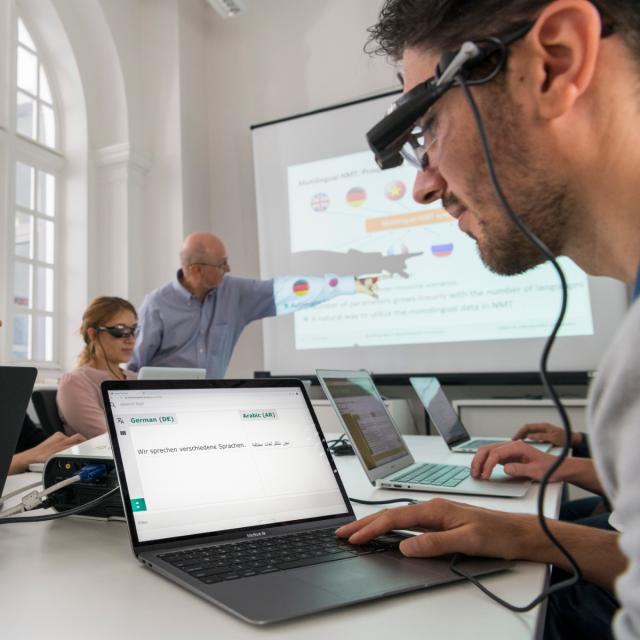
Welcome to the CLICS-Machine Translation MOOC. This MOOC explains the basic principles of machine translation. Machine translation is the task of translating from one natural language to another natural language. Therefore, these algorithms can help people communicate in different languages. Such algorithms are used in common applications, from Google Translate to apps on your mobile device.

Oct 26th 2026
5-12 Weeks
Big Data: from Data to Decisions (FutureLearn) FutureLearn
Queensland University of Technology

Big Data: from Data to Decisions (FutureLearn)

Get a practical insight into big data analytics, and popular tools and frameworks for collecting, storing and managing data. Data is everywhere and can be obtained from many different sources. Digital data can be obtained from social media, images, audio recordings and sensors, and electronic data is quite often available as real-time data streams.

No sessions available
2 Weeks
Predictive Analytics: Gaining Insights from Big Data (FutureLearn) FutureLearn
Queensland University of Technology

Predictive Analytics: Gaining Insights from Big Data (FutureLearn)

Learn to use predictive analytics tools and HPE Vertica Analytics to gain insights from big data, with this free online course. Collecting big data is just the first step; once you have it, how do you make sense of it? This free online course will show you how predictive analytics tools can help you gain information, knowledge and insights from big data.

No sessions available
4 Weeks
Intelligent Systems: An Introduction to Deep Learning and Autonomous Systems (FutureLearn) FutureLearn
University of York

Intelligent Systems: An Introduction to Deep Learning and Autonomous Systems (FutureLearn)

Discover the benefits and risks of deep learning and its uses in systems such as assistive technology and facial recognition. Delve into the inner workings of deep learning. From Ada Lovelace until the first decade of this century, we have relied on expert computer programmers to design and write software.

Self Paced
3 Weeks
Understanding Quantum Computers (FutureLearn) FutureLearn
Keio University

Understanding Quantum Computers (FutureLearn)

Explore the key concepts of quantum computing and find out how it’s changing computer science with this introductory course. In this course, we will discuss the motivation for building quantum computers, cover the important principles in quantum computing, and take a look at some of the important quantum computing algorithms.

Self Paced
3 Weeks
Big Data: Data Visualisation (FutureLearn) FutureLearn
Queensland University of Technology

Big Data: Data Visualisation (FutureLearn)

Data visualisation is vital in bridging the gap between data and decisions. Discover the methods, tools and processes involved. Data visualisation is an important visual method for effective communication and analysing large datasets. Through data visualisations we are able to draw conclusions from data that sometimes are not immediately obvious, and interact with the data in an entirely different way.

No sessions Available
3 Weeks
Probabilistic Graphical Models 3: Learning (Coursera) Coursera
Stanford University

Probabilistic Graphical Models 3: Learning (Coursera)

Probabilistic graphical models (PGMs) are a rich framework for encoding probability distributions over complex domains: joint (multivariate) distributions over large numbers of random variables that interact with each other. These representations sit at the intersection of statistics and computer science, relying on concepts from probability theory, graph algorithms, machine learning, and more. They are the basis for the state-of-the-art methods in a wide variety of applications, such as medical diagnosis, image understanding, speech recognition, natural language processing, and many, many more. They are also a foundational tool in formulating many machine learning problems.

Oct 26th 2026
5-12 Weeks
Code Free Data Science (Coursera) Coursera
University of California, San Diego

Code Free Data Science (Coursera)

The Code Free Data Science class is designed for learners seeking to gain or expand their knowledge in the area of Data Science. Participants will receive the basic training in effective predictive analytic approaches accompanying the growing discipline of Data Science without any programming requirements. Machine Learning methods will be presented by utilizing the KNIME Analytics Platform to discover patterns and relationships in data.

Oct 26th 2026
4 Weeks