Artificial Intelligence in Bioinformatics (FutureLearn)

Artificial Intelligence in Bioinformatics (FutureLearn)

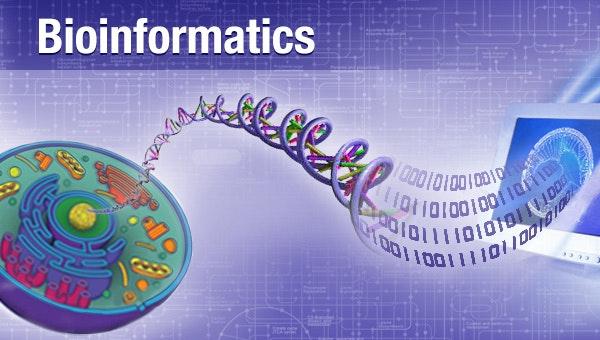
Discover the future of bioinformatics and learn how AI models of bioinformatics data help us to understand biological processes. Study the use of AI, machine learning, and deep learning in bioinformatics. This course will teach you the fundamentals of how AI is applied in the field of bioinformatics.

Class Deals by MOOC List - Click here and see FutureLearn's Active Discounts, Deals, and Promo Codes.

You’ll explore how AI, machine learning, deep learning, and natural language processing (NPL) concepts are used in the design and discovery of drugs, as well as for modelling complex biological systems.

Learn about AI-based bioinformatics
Artificial intelligence (AI) is transforming the field of bioinformatics.
On this course, you’ll learn the basics of collecting, analysing, and modeling bioinformatics data using AI.
You’ll find out how to collect and explore bioinformatics data from public resources and then use AI to analyse and model this data in order to better understand key biological processes.

Discover AI applications in bioinformatics research, such as genome sequencing
As you develop your knowledge of both the bioinformatics and artificial intelligence industries, you’ll explore how different AI concepts are applied in bioinformatics to mathematically interpret biological data and provide statistical information. You’ll develop your understanding of different cases of AI-based bioinformatics research, including genome sequencing, protein function prediction, and gene expression examination.

Build your AI toolkit for working in bioinformatics
This course will provide you with the AI knowledge and skills you need to apply AI in practice.
You’ll build data analytics and visualisation techniques that you can apply to a range of bioinformatics datasets and explore the latest machine learning concepts like feature engineering and feature learning.
You’ll put your learning into practice at the end of the course when you’ll be asked to organise and summarise data results for an academic paper in bioinformatics that’s fit for publication.
What topics will you cover?

  • Overview on bioinformatics
  • Artificial Intelligence and how to apply it to bioinformatics
  • Feature engineering
  • Feature learning
  • Deep learning in bioinformatics
  • Analyzing and visualizing data

Learning on this course
You can take this self-guided course and learn at your own pace. On every step of the course you can meet other learners, share your ideas and join in with active discussions in the comments.

What will you achieve?
By the end of the course, you‘ll be able to...

  • Collect and explore bioinformatics data from public resources.
  • Apply different AI models in bioinformatics data to understand a variety of biological processes.
  • Develop a standard framework for AI-based bioinformatics study that can be applied to different datasets.
  • Summarise and report the results to generate a bioinformatics paper for publication purpose.

Who is the course for?
This course is designed for any student, biologist, or researcher who would like to learn the basics of using AI to study bioinformatics data.
You do not need any experience in AI, bioinformatics, or programming.

What software or tools do you need?
Waikato Environment for Knowledge Analysis (Weka).
Go to Class
MOOC List is learner-supported. When you buy through links on our site, we may earn an affiliate commission.

Related Courses

Bacterial Genomes: From DNA to Protein Function Using Bioinformatics (FutureLearn) FutureLearn
Wellcome Genome Campus Advanced Courses and Scientific Conferences

Bacterial Genomes: From DNA to Protein Function Using Bioinformatics (FutureLearn)

Use bioinformatics to explore DNA sequences and protein functions, to find the determinants of virulence in microbes. Join us in our quest to discover what makes microbes dangerous. Use bioinformatics to probe genomes, to explore and represent DNA and protein sequences. Then, use databases to find protein sequences’ conserved domains and investigate their functions.

No sessions available
2 Weeks
Applied Data Science (FutureLearn) FutureLearn
Birkbeck, University of London,Coventry University,Institute of Coding

Applied Data Science (FutureLearn)

Develop your data science and analytics skills and improve your understanding of using data in the workplace. Have the opportunity to build data science skills to advance your career. On this course, you’ll be introduced to the tools and techniques used in applied data science. You’ll explore the answers to important questions asked of business professionals today, such as why data science and machine learning have become so prevalent and what problems data science can address.

Jan 16th 2023
2 Weeks
Введение в биоинформатику (Introduction to Bioinformatics) (Coursera) Coursera
Saint Petersburg State University

Введение в биоинформатику (Introduction to Bioinformatics) (Coursera)

Курс «Введение в биоинформатику» адресован тем, кто хочет получить расширенное представление о том, что такое биоинформатика и как она помогает биологам и медикам в их работе. The course is aimed at those who would like to have a better idea of what bioinformatics is and how it helps biologists and medical scientists in research and clinical work.

Sep 21st 2026
5-12 Weeks
Big Data Science with the BD2K-LINCS Data Coordination and Integration Center (Coursera) Coursera
Icahn School of Medicine at Mount Sinai

Big Data Science with the BD2K-LINCS Data Coordination and Integration Center (Coursera)

In this course we briefly introduce the DCIC and the various Centers that collect data for LINCS. We then cover metadata and how metadata is linked to ontologies. We then present data processing and normalization methods to clean and harmonize LINCS data. This follow discussions about how data is served as RESTful APIs. Most importantly, the course covers computational methods including: data clustering, gene-set enrichment analysis, interactive data visualization, and supervised learning. Finally, we introduce crowdsourcing/citizen-science projects where students can work together in teams to extract expression signatures from public databases and then query such collections of signatures against LINCS data for predicting small molecules as potential therapeutics.

Sep 21st 2026
5-12 Weeks
Introduction to Digital Transformation: Understand and Manage Digital Transformation in the Workplace (FutureLearn) FutureLearn
Media Design School

Introduction to Digital Transformation: Understand and Manage Digital Transformation in the Workplace (FutureLearn)

Improve your skills and knowledge of digital transformation and how to manage the process of technological change. Build skills for the future work landscap. In this course from the Media Design School, you’ll explore the future of the work landscape and how technology continues to redefine it through the process of digital transformation.

Jun 27th 2022
5-12 Weeks
Making sense of genomic data: COVID-19 web-based bioinformatics (FutureLearn) FutureLearn
Wellcome Connecting Science,COG-Train

Making sense of genomic data: COVID-19 web-based bioinformatics (FutureLearn)

Explore the tools for web-based SARS-CoV-2 sequencing analyses and learn techniques to prepare data and share genomic outputs. Discover how to analyse SARS-CoV-2 sequences using web-based tools. Over the past decade, sequencing technologies have become more accessible and sequencing data has increased exponentially. However, bioinformatics capacity is still limited. On this three-week course, you will learn the basics of bioinformatics concepts and explore the web-based tools used for viral data and sequencing analyses.

Jul 25th 2022
3 Weeks
Bioinformatics for Biologists: Analysing and Interpreting Genomics Datasets (FutureLearn) FutureLearn
Wellcome Connecting Science

Bioinformatics for Biologists: Analysing and Interpreting Genomics Datasets (FutureLearn)

Boost your career by gaining the skills to install and modify the elements of a bioinformatics workflow to suit your needs. Gain practical data science skills. Bioinformatics is crucial in helping to understand large and complex sets of biological data. On this three-week course, you’ll develop your knowledge of bioinformatics and gain practical experience in scaling up analysis and working with large and complex datasets effectively.

Self Paced
3 Weeks
JSON and Natural Language Processing in PostgreSQL (FutureLearn) FutureLearn
University of Michigan

JSON and Natural Language Processing in PostgreSQL (FutureLearn)

Learn to build PostgreSQL search engines using JSON and natural language processing (NLP), and level up your programming career. Create strong indexes and PostgreSQL search engines with ease. If you have a background in basic Python programming language structures, this four-week course on JSON and NLP in PostgreSQL is for you.

No sessions available
4 Weeks
Artificial Intelligence for Healthcare: Opportunities and Challenges (FutureLearn) FutureLearn
Taipei Medical University

Artificial Intelligence for Healthcare: Opportunities and Challenges (FutureLearn)

The use of artificial intelligence (AI) in healthcare is increasing, explore the challenges and opportunities AI presents. Understand how AI can be used in healthcare and the challenges it creates. The use of artificial intelligence (AI) has been a major development in healthcare. With the availability of vast amounts of health data, and the increasing possibilities of data analytics, understanding AI, and the challenges and opportunities it creates has never been been more important.

Available now
4 Weeks
AI for Legal Professionals (II): Tools for Lawyers (FutureLearn) FutureLearn
National Chiao Tung University

AI for Legal Professionals (II): Tools for Lawyers (FutureLearn)

Discover programming with Python, and the AI tools that lawyers, legal educators, and regulators can use to deliver services. Explore artificial intelligence, programming, and machine learning. Artificial Intelligence (AI) and machine learning are transforming the way our world works – and their influence is increasingly being felt in the legal profession. On this introductory course, you’ll explore common supervised and unsupervised machine learning problems, including classification, regression, clustering, and ranking.

Available now
4 Weeks
Intelligent Systems: An Introduction to Deep Learning and Autonomous Systems (FutureLearn) FutureLearn
University of York

Intelligent Systems: An Introduction to Deep Learning and Autonomous Systems (FutureLearn)

Discover the benefits and risks of deep learning and its uses in systems such as assistive technology and facial recognition. Delve into the inner workings of deep learning. From Ada Lovelace until the first decade of this century, we have relied on expert computer programmers to design and write software.

Self Paced
3 Weeks
Bacterial Genomes II: Accessing and Analysing Microbial Genome Data Using Artemis (FutureLearn) FutureLearn
Wellcome Genome Campus Advanced Courses and Scientific Conferences

Bacterial Genomes II: Accessing and Analysing Microbial Genome Data Using Artemis (FutureLearn)

Learn more about how genomic data and computational tools can help us understand and track disease-causing bacteria. Use computational tools to investigate microbial genomes. Applying increasingly powerful computation to genomics contributes to important medical breakthroughs. On this course, you will discover the basic principles of microbial bioinformatics analysis, and comparative genomics.

No sessions available
3 Weeks