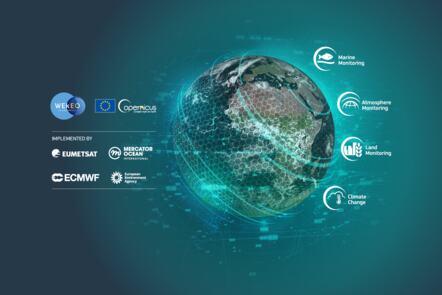
Explore how artificial intelligence (AI) and machine learning (ML) technologies are helping to advance Earth monitoring. Learn to use AI and ML to improve the use of big data in Earth Monitoring.
This is a fast-changing and critical time for Earth Observation (EO), especially for those involved in its use for climate and meteorology.
Class Deals by MOOC List - Click here and see FutureLearn's Active Discounts, Deals, and Promo Codes.
On this course, you’ll get a comprehensive overview of the Copernicus Programme and the wealth of EO data it provides, as well as how AI and ML are transforming the interpretation of EO data.
Understand key AI and ML concepts
You’ll learn about the Copernicus data and services and the massive amounts of Earth observation data that are collected every day from space, covering the oceans, land, atmosphere and, over longer periods, the climate.
You’ll then learn basic AI and ML concepts and types, exploring how they have transformed many aspects of the EO ‘value chain’.
This includes automatic feature extraction, new ways of processing very large data sets, and the development of new products and services.
Learn Python to fully access the WEkEO platform
The WEkEO platform is a ‘one-stop shop’ for Copernicus and Sentinel satellite data and services.
You’ll learn how to access Earth Observation data through it, using the Python programming language and Jupyter Notebooks to process and analyse EO data with AI.
Explore EO data with international experts
This course is funded by the Copernicus Programme and has been put together by EUMETSAT, ECMWF, Mercator Ocean International and the EEA.
Their experts in AI, EO, and Earth system monitoring will take you through four themed weeks – land, ocean, atmosphere, and climate – leaving you well-versed in the intricacies of EO and satellite data, as well as how AI and ML can unlock its full potential.
What topics will you cover?
- An introduction to artificial intelligence (AI) and machine learning (ML) in the EU Copernicus Programme.
- Accessing Earth observation data and working with it through the WEkEO platform
- An overview of AI and ML types, technology, and terminology.
- How AI and ML are used in various EO applications
- Hands-on learning using the Python programming language and Jupyter Notebooks to process and analyse EO data using ML
Learning on this course
You can take this self-guided course and learn at your own pace. On every step of the course you can meet other learners, share your ideas and join in with active discussions in the comments.
What will you achieve?
By the end of the course, you‘ll be able to...
- Recognise the importance of satellite earth observation (EO) and the EU Copernicus Programme
- Understand AI and Machine Learning concepts and how we use them with EO
- Access open and free EO data using the WEkEO platform
- Explore working examples of using AI and machine learning techniques with Copernicus data and services for each of the 4 themed weeks; Land, Ocean, Atmosphere and Climate.
Who is the course for?
This course would benefit scientists, policy/decision makers, journalists, educators, business owners, and students. It would also appeal to a curious, general interest audience, or professionals who possess some experience in the subject.