Cultural Diversity and the City (FutureLearn)

Cultural Diversity and the City (FutureLearn)

Discover how cities can develop a distinct heritage through embracing cultural diversity. Cities all over the world have embraced cultural and religious diversity, creating unique heritages. On this course you will investigate both ‘old’ and ‘new’ diversities in city heritage in four different continents.

Class Deals by MOOC List - Click here and see FutureLearn's Active Discounts, Deals, and Promo Codes.

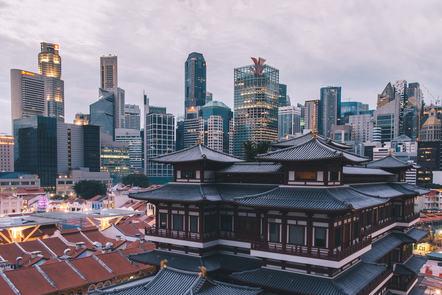
You will look at cities with a divisive heritage (Bristol as a slave port) and a post-migration heritage (such as Cologne in Germany). You will will also look at major post-colonial urban centres and how they used cultural diversity to revitalise inner city areas. You will also consider those cities that turn diversity into a branding tool, like Singapore or Doha.

Syllabus

Week 1: Cultural Diversity, Heritage and the City
Week 2: Heritage Labelling, Networks, and the City
Week 3: The Rise of New Cultural Hubs
What will you achieve?
By the end of the course, you'll be able to...

  • Identify the challenges and opportunities of cultural diversity in cities
  • Design creative solutions to deal with contested heritage
  • Assess labels aimed at promoting inclusive heritage in diverse cities
  • Explore the rise of transnational city networks for culture
  • Discuss the rise of regional and global cultural hubs in Europe, North America, Asia and Africa
Go to Class
MOOC List is learner-supported. When you buy through links on our site, we may earn an affiliate commission.

Related Courses

Cultural Heritage and the City (FutureLearn) FutureLearn
European University Institute - EUI,Global Governance Programme

Cultural Heritage and the City (FutureLearn)

Discover how cities develop their own unique cultures and explore key concepts related to cultural heritage. Cultural heritage is usually discussed in national or religious terms: we speak of Italian culture, Greek civilization, Islamic art, and so on. But today cities are creating their own heritage through museums, galleries, markets of artistic goods, and urban networks.

Oct 10th 2022
3 Weeks
Developing Digital Transition Strategies for Cultural Heritage Institutions (edX) EdX
KU Leuven University,KULeuvenX

Developing Digital Transition Strategies for Cultural Heritage Institutions (edX)

How to develop and implement effective digital strategies in Cultural Heritage Institutions. Recently, the necessity for Cultural Heritage Institutions (CHIs) to keep up with the rapid changes in the digitization of society and culture brought them to confront new challenges: 1) adaptation of new digital technologies and 2) the development of impactful digital workflows.

Sep 18th 2023
5-12 Weeks
Science and Technology in the Silla Cultural Heritage (Coursera) Coursera
Pohang University of Science and Technology - POSTECH

Science and Technology in the Silla Cultural Heritage (Coursera)

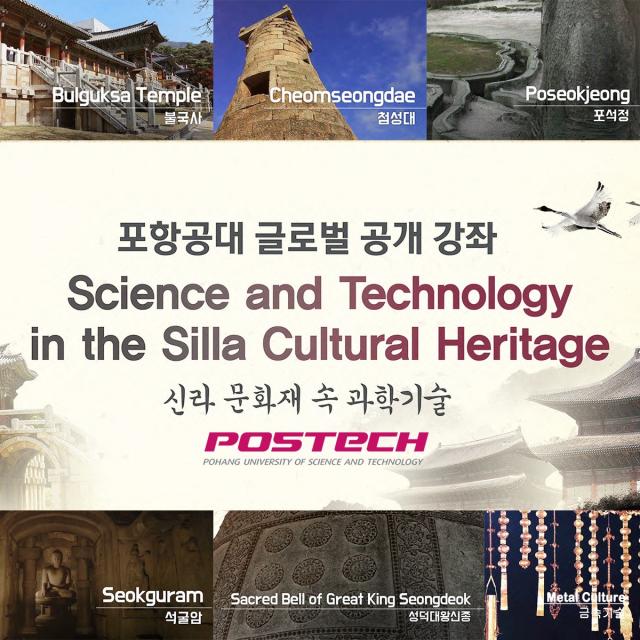
Science and Technology in the Silla Heritage. The course explores the scientific and technological aspects of the cultural heritage of Silla, an ancient dynasty in Korea, and its relationship with other ancient civilizations in the world. The lecture series will cover major cultural heritage of Silla: Bulguksa, Seokguram, Cheomseongdae, Poseokjeong, the Sacred Bell of Great King Seongdeok, and metallurgy.

Oct 19th 2026
5-12 Weeks
Improve Your Intercultural Competence (FutureLearn) FutureLearn
Purdue University

Improve Your Intercultural Competence (FutureLearn)

Develop the attitudes, skills and knowledge required to thrive in diverse workplaces. According to the Intelligence Unit at The Economist, 90% of executives in 68 countries say cross-cultural management is their biggest challenge. Good intercultural communication and an understanding of cultural differences are now critical for professionals, especially those part of global networks.

No sessions available
4 Weeks
Cities are back in town : sociología urbana para un mundo globalizado (Coursera) Coursera
Sciences Po

Cities are back in town : sociología urbana para un mundo globalizado (Coursera)

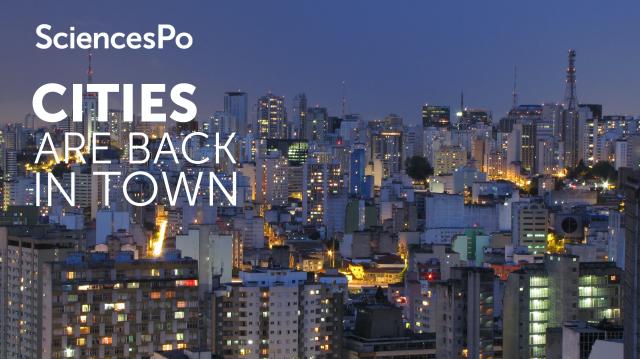
Los procesos de globalización y europeización respaldan el rápido desarrollo de las ciudades en distintas partes del mundo. En el mundo contemporáneo, el proceso de urbanización está alcanzando un nuevo pico con el incremento de las megalópolis (más de 15 millones de habitantes) como Calcuta, Los Ángeles, Daca, El Cairo, Tokio, Nueva York, Shanghái, Ciudad de México. o Seúl. Más allá de las metrópolis modernas, los investigadores intentan entender estas grandes zonas urbanas con el uso de distintos conceptos, tales como "posmetrópolis", "ciudades globales" y "ciudades-regiones globales".

Oct 26th 2026
5-12 Weeks
Sustainable Cities (edX) EdX
SDGAcademyX,SDG Academy

Sustainable Cities (edX)

Learn how government, the private sector, and other actors can support sustainable urban development. Did you know that experts estimate an additional three billion people will live in cities by 2050? What will the impact be on the current world population – half of which currently lives in cities and contributes to about three-fourths of global economic output?

Self Paced
Self-Paced
Comprender las dimensiones interculturales en la cotidianidad (Coursera) Coursera
Universidad de los Andes

Comprender las dimensiones interculturales en la cotidianidad (Coursera)

Este MOOC es el resultado de una co-construcción e investigación de profesoras de la Universidad Sorbonne-Nouvelle Paris 3 y la Universidad de los Andes (Colombia). Su objetivo principal es brindar herramientas para desarrollar dimensiones interculturales en la vida cotidianda. El curso está dirigido a estudiantes y profesionales de diferentes campos más allá de la enseñanza de idiomas (humanidades y ciencias sociales, educación, clínica intercultural, estudios de arte y gestión) que tienen que enfrentar situaciones de la vida cotidiana y de las relaciones con los demás donde las herramientas de reflexión son necesarias para tener un enfoque intercultural.

Oct 5th 2026
4 Weeks
Cities of Yesterday, Today and Tomorrow: Why Heritage Conservation Matters (FutureLearn) FutureLearn
Griffith University

Cities of Yesterday, Today and Tomorrow: Why Heritage Conservation Matters (FutureLearn)

Get an introduction to what heritage conservation is, and why it's important to you and your local community. We are able to make sense of who we are and the world around us because of our past. Find out why heritage conservation is so important to us all, with this course from Griffith University.

No sessions available
2 Weeks
Sharing Cities: Governance and Urban Sustainability (Coursera) Coursera
Lund University

Sharing Cities: Governance and Urban Sustainability (Coursera)

How can we govern the sharing economy in our cities? This course connects the sharing economy, cities, governance and urban sustainability to provide unique knowledge and insights into sharing cities. We utilize a diversity of leading examples of the emerging sharing economy in cities to bring this course to life. The sharing economy can contribute to social, environmental and economic sustainability, and sharing cities can unlock new opportunities and solve urban challenges by facilitating and applying the sharing economy in urban contexts. But it is imperative that the sharing economy is shaped and designed to advance urban sustainability.

Jul 6th 2026
5-12 Weeks
Recovering the Humankind's Past and Saving the Universal Heritage (Coursera) Coursera
Sapienza University of Rome

Recovering the Humankind's Past and Saving the Universal Heritage (Coursera)

Archaeology has as its objective the recovery and revival of humankind past, and as its aim the rescue and preservation of cultural heritage. Archaeology is, among human sciences, the discipline with the strongest importance for the rediscovery, but also for the preservation and protection of cultural heritage, as Humankind’s universal patrimony. You will be introduced to the way we ourselves reflect on and are engaged with the study of human past: from the practical and material recovery of ancient traces in the field to the study and interpretation. On the other hand, the discovery of human past implies the correct conservation and presentation for both experts and general public: the study and protection of the past we share every day prevent from any possible destruction, misuse, abuse and thus cancellation of human memory.

Oct 19th 2026
5-12 Weeks