The course provides the basics of criminal law.
More info:http://www.uninettunouniversity.net/en/mooc-program.aspx?lf=it&courseid=3504&degree=208&planid=242&faculty=0
The course provides the basics of criminal law.
More info:http://www.uninettunouniversity.net/en/mooc-program.aspx?lf=it&courseid=3504&degree=208&planid=242&faculty=0
After having followed Privacy in the Western world you have become acquainted with the overall global legal system and the origins of privacy as a concept as well as privacy as a (human) right. This course deals with the American legal system to protect privacy. In the USA privacy is protected through different legal concepts. Constitutional protection through the 4th Amendment plays a crucial role in protecting the US citizen against unjust governmental intrusion. As part of a myriad of consumer protection laws (e.g. health, financial) personal data is also protected.
The object of the course are the bankruptcy procedure and the procedures with wich enterprises can ride the crises over.
‘The Arbitration of International Disputes’ is the third course of Leiden University’s series on International Law in Action. The first course covered generalities on the international courts and tribunals in The Hague, while the second course provided an insider's perspective into the work of international criminal courts and tribunals. This third course explores the major aspects of international arbitration as one of the most common method of international dispute settlement .
Justice, one of the most famous courses taught at Harvard College, is an introduction to moral and political philosophy, offering an opportunity to discuss contemporary dilemmas and controversies. Taught by lauded Harvard professor Michael Sandel, Justice explores critical analysis of classical and contemporary theories of justice, including discussion of present-day applications.
Het recht regelt vrijwel alle aspecten van het leven. Deze cursus gaat in op de vraag wat recht is en waar je het kunt vinden. Het recht regelt vrijwel alle aspecten van de maatschappij. Soms is dat heel zichtbaar: je komt het tegen in de rechtszaal bij een zaak tegen een grote crimineel of in de Tweede Kamer bij een verhit debat over een nieuw wetsvoorstel. Het recht regelt ook kleinere - maar belangrijke - dingen, zoals het huurcontract van je nieuwe woning of je arbeidsovereenkomst.
The teaching of constitutional law focuses on general knowledge and basic concepts of the public law.
Contracts are a part of our everyday life, arising in collaboration, trust, promise and credit. How are contracts formed? What makes a contract enforceable? What happens when one party breaks a promise? Learn about contracts from Harvard Law Professor Charles Fried, one of the world’s leading authorities on contract law. Contracts are promises that the law will enforce. But when will the law refuse to honor a promise? What happens when one party does not hold to their part of the deal? This version of the course adds new units on Interpretation, Agency, Partnerships, Corporations, and Government Regulation.
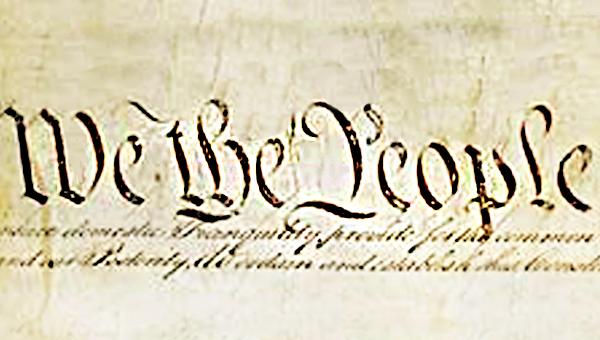
This course will highlight the construction and interpretation of the U.S. Constitution through the centuries. You'll learn the history behind the Constitution, cases that formed important precedent, and how changes in interpretation have been dependent on shifts in cultural and political climate as well as the composition of the Supreme Court.
Le cours porte sur les usages généralement admis en matière de rédaction de contrats commerciaux, dans leur forme continentale ou anglo-saxonne. Les principales clauses de ces contrats sont examinées, à l’aide d’exemples tirés de contrats classiques.
An introduction to basic techniques of constitutional interpretation.
In this path we will explore The US Federal Government Branch and Information Privacy. We will also cover US healthcare privacy related laws and privacy compliance including HIPAA, HITECH, GINA and more.
Learn what motivates the restive Muslim youth from Tunis to Tehran, what political positions Islamists from Mali to Chechnya are fighting for, where the seeming obsession with Islamic law comes from, where the secularists have vanished to, and whether it makes sense to speak of an Islamic state. This course is a survey of the constitutional ideas and institutions that have developed since the mid 19th century throughout predominantly Muslim countries, but its focus will lie on the actors that have dominated this discourse and shaped its outcomes. We will look at the large body of classical writings on the Islamic state only in so far as it is necessary to understand the contemporary debate, but concentrate on the legal and political developments of the 20th and 21st centuries.