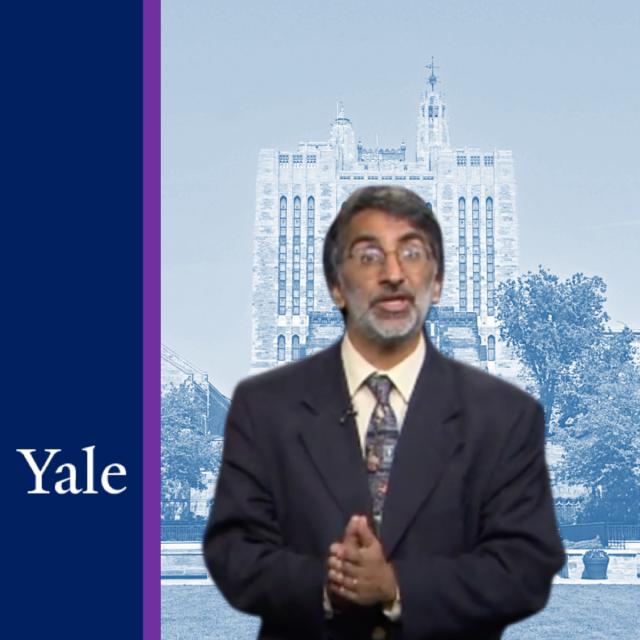
An introduction to basic techniques of constitutional interpretation.
Class Deals by MOOC List - Click here and see Coursera's Active Discounts, Deals, and Promo Codes.
Syllabus
WEEK 1
Introduction
Hello everyone and welcome to America’s Unwritten Constitution! This course is designed to teach you some of the basic tool and techniques for constitutional interpretation. Over the next 13 modules, Professor Akhil Amar will teach you how to go beyond the text of the U.S. Constitution, while still remaining faithful to it. Please, take some time to watch the two introductory videos and read through some of the course information below. Enjoy!
Heeding the Deed
Heeding the Deed, refers to the technique of understanding the Constitution further by looking at issues the nation was dealing with at the time of the passage's adoption. Another way to say this could be; putting yourself in the framer's shoes.
Reading Between the Lines
This module teaches the interpretive technique of reading between the lines. This involves extracting, from the text, things that are implicit, but not expressly stated.
WEEK 2
Hearing the People
In this module, we explore a number of unenumerated rights that exist simply because Americans embody these rights in their everyday lives. Owning pets, using contraception, testifying at one’s own trial, none of these are explicitly mentioned in the text of the Constitution, yet today, they are recognized as protected fundamental rights. Professor Amar explains why.
Confronting Modern Case Law
The "Confronting Modern Case Law" lectures take a closer look at the Warren-lead Supreme Court. Spanning from 1953 to 1969, his court decided many of the most influential cases is U.S. history. Brown v. Board of Education, Miranda v. Arizona, Griswold v. Connecticut to name a few. Professor Amar, will discuss how the court arrived at their decisions, how these rulings changed American society at the time and how they are still affecting it today.
WEEK 3
Putting Precedent in its Place
Professor Amar discusses the role that precedent—that is, prior court decisions—plays in our understanding of the document. He will answer questions about how far courts should go when interpreting the Constitution, and what courts might do when they believe that a prior decision was incorrect.
Honoring the Icons
Here we'll examine documents outside of the Constitution that influence our understanding of the founding text—things like the Declaration of Independence, The Federalist papers, Lincoln’s Gettysburg Address, and Martin Luther King’s I Have a Dream speech. Professor Amar will explain how these sources have offered meaning and guidance in constitutional interpretation.
WEEK 4
Remembering the Ladies
These lectures explore the profound changes American society underwent immediately following the ratification of the 19th amendment. The reverberations of women's enfranchisement are still being strongly felt today. Prof. Amar will highlight some legislation, he believes, directly or indirectly owe their existence to the 19th amendment.
Following Washington's Lead
Undoubtedly, the figure who looms largest in U.S. political history is George Washington. His actions before, during, and after the Presidency set precedents for the executive office which are still observed today. Prof. Amar will explain why Article II of the Constitution was custom written for our first president.
WEEK 5
Interpreting Government Practices
This module delves into how the actual structure of each government branch inherently effects their interactions with one another. The framers purposefully under-specified sections of the Constitution, leaving room for flexibility. They rightly assumed future law makers would fill these “gaps” in procedure as need arose. Indeed they have, each time a gap is discovered
Joining the Party
In this module, Prof. Amar chronicles the adoption and evolution of the two party system in America. You'll learn which framers founded each party and how the creation of the parties caused great friction in government. The lectures go on to explain how the Constitution changed to accommodate the two party system and how these changes have made to the two party system inextricably codified into the Document.
WEEK 6
Doing the Right Thing
This module discusses the role of conscience in government. It is important for us to remember, the Constitution did not implement itself. It was implemented by human beings with minds, hearts, and consciences. Understanding the interaction between these “human elements” and the text is fundamental to proper interpretation of the Constitution. We’ll go over several codified manifestations of the "human element" in the Constitution, such as the veto and juror nullification.
Envisioning the Future
In the course’s final lectures, we’ll look to the future and ask, "what will the constitution look like in 25 years? 50 years? 100?" Might we soon see an amendment allowing for a foreign born president? Or the dissolution of the Electoral College? Prof. Amar will discuss the idea of "constitutional trajectory," and the factors which affect it. We’ll go over how today’s legislators can be looked at as "framers of the future.” Which will lead to the very interesting topic of “sunrise legislation."
Bonus Content Archive
This content is not tied to the assessment materials in any way but it is interesting, entertaining, and informative nonetheless. We encourage all learners to take some time to watch these videos and post about them in the discussion forums!
Conclusion
Prof. Amar recapitulate concepts learned in this course and discuss his hopes for you all; the matriculants of America’s Unwritten Constitution. We sincerely hope you all have enjoyed the course and learned something along the way! Thank you so much for your time and effort.