Cosmetic Product Development (Coursera)

Offered by Olay,
Cosmetic Product Development (Coursera)

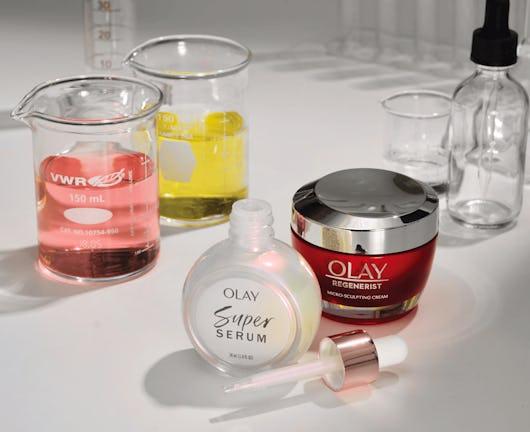
In the third course, Cosmetic Product Development, we analyze every step of developing cosmetic products. We cover everything, including how you would generate ideas, how you know what the customer wants, and feasibility studies. We strongly emphasize collaboration and prototype development, along with how we design and select cosmetic packaging.

Class Deals by MOOC List - Click here and see Coursera's Active Discounts, Deals, and Promo Codes.

We engage with raw material suppliers and navigate international manufacturing regulations. You will also learn to evaluate cosmetic product performance, market trends, and sustainable practices. We designed this course to give you a holistic understanding of the cosmetic product development process within industry standards.e.g. This is primarily aimed at first- and second-year undergraduates interested in engineering or science, along with high school students and professionals with an interest in programming.
This course is part of the Introduction to Cosmetic Science and Ingredients Specialization.

What you'll learn

  • Master the end-to-end process of launching new cosmetic products
  • Learn to evaluate market trends and customer needs for product development
  • Gain insights into sustainable practices and international manufacturing regulations
  • Understand performance and stability testing for cosmetics

Syllabus

Stages of Cosmetic Product Development
This module will delve into customer needs and idea generation, exploring consumer psychology, data collection methods, and innovative idea-generation techniques. Feasibility studies and conceptualization play an important role in developing a new product, and we will evaluate product design principles, idea viability, and proof of concept. The module concludes with prototype development and refinement, emphasizing collaboration, prototype creation steps, and adjustments based on feedback.

Packaging and Manufacturing Considerations
In this module, you will embark on the exciting journey of cosmetic product development. Starting with design and material selection for packaging, we'll explore packaging functional design principles, the importance of evaluating costs and benefits, and delve into sustainability practices. Moving on to the manufacturing process, we'll uncover the steps involved in manufacturing cosmetics, learn more about different types of raw material suppliers and how to engage with them, look at the process of scaling production from laboratory batch through to a manufacturing run and explore good manufacturing practices (GMP). Lastly, we'll cover safety standards, legal insights, international regulations, and labeling compliance, and address how to tackle compliance issues effectively.

Performance Evaluation
This module will explore the essential aspects of performance evaluation in cosmetic product development. Beginning with stability testing, we'll clarify various types of product testing, and delve into techniques for performance evaluation, focusing on diverse cosmetic products' evaluation methodologies. Building on this, we'll discuss adjusting based on performance evaluation, demonstrating the process of modifying products based on compiled data. To ensure consistent product quality, we'll outline the necessary steps for maintaining quality control. Additionally, we'll cover ethical testing to ensure products align with legal and ethical standards. Shifting our focus to product launch, we'll explore preparation steps, roll-out strategies, and supply chain management for risk reduction and efficiency, followed by post-launch evaluation techniques and consumer feedback analysis for continuous improvement.

Formula Optimization
In this module, we explore the diverse aspects involved in developing cosmetic products. We'll assess the formula's alignment with current market needs by reviewing trends and gauging its success accordingly. You'll discover why when looking for methods to maximize and differentiate, the assessment of novel materials is essential. To make your formulas environmentally friendly, we will also examine several methods for ensuring formula optimization, comprehend the fine line that separates quality from cost, assess different formula designs, and investigate sustainable applications.
Go to Class
MOOC List is learner-supported. When you buy through links on our site, we may earn an affiliate commission.

Related Courses

Quality Control and Regulatory in Cosmetic Science (Coursera) Coursera
Olay

Quality Control and Regulatory in Cosmetic Science (Coursera)

This course explores the multifaceted world of cosmetic science and quality assurance. You will explore the historical evolution of cosmetic regulatory landscapes, gain insights into cutting-edge safety assessment methodologies, and delve into the principles and practices of quality systems. The course emphasizes a holistic approach, ensuring participants understand the importance of regulations, enhance their expertise in safety assessments, and master the principles of quality control in cosmetic manufacturing.

Aug 31st 2026
4 Weeks
Establishing Product-Market Fit (Coursera) Coursera
University of Maryland, College Park

Establishing Product-Market Fit (Coursera)

Entrepreneur and investor Marc Andreessen coined the term product-market fit in 2007 when he said, “Product-market fit means being in a good market with a product that can satisfy that market.” While there are ample articles that mention the term, detailed guidance on how to actually achieve product-market fit is scarce.

Aug 24th 2026
4 Weeks
Deliver No-Code/Low-Code Products that Delight Customers and Stakeholders – Product Development and Management Skills (edX) EdX
University of Maryland, College Park,University System of Maryland - USM,USMx,UMD

Deliver No-Code/Low-Code Products that Delight Customers and Stakeholders – Product Development and Management Skills (edX)

Learn how to use product development and management techniques to build training programs that teach citizen developers basic product development and management concepts. This course describes how training professionals can use product development and management concepts to build training programs for citizen developers. In essence, trainers will practice the same skills that they will instruct citizen developers to use.

Self Paced
Self-Paced
Business Analytics Using Forecasting (FutureLearn) FutureLearn
National Tsing Hua University

Business Analytics Using Forecasting (FutureLearn)

Discover how business can harness the power of big data to make better predictive analysis. Learn how to use data to create powerful business forecasts. Organisations currently collect a vast quantity of data about suppliers, clients, employees, citizens, transactions, and much more. However, many are unaware of the predictive power this ‘big data’ has if anaylsed correctly. On this course, you’ll learn about forecasting using big data, exploring how it’s used by business as an important component of decision making.

Self Paced
5-12 Weeks
Beauty Decoded: Strategy in the Global Beauty Business (FutureLearn) FutureLearn
The Hopenclass

Beauty Decoded: Strategy in the Global Beauty Business (FutureLearn)

Get educated on global marketing strategies, the country of origin effect and more with this three-week beauty business course. Learn about business and marketing strategies within the global beauty sector. This informative course will help you learn integrated business and marketing strategies within the global beauty sector, taking into account the differing perspectives of marketing practices across national boundaries. You’ll learn to prioritise information that influences marketing decisions, and will develop skills in how to handle challenges that may arise within a business or brand.

Available now
3 Weeks
Validating product ideas with interviews for Product Managers (Skillshare) Skillshare
Skillshare

Validating product ideas with interviews for Product Managers (Skillshare)

I designed this course for Product Managers who have new product or feature ideas and would like to talk to customers and learn whether their idea will fly. This is the first and ultimate question in product development: do customers need my product? Do they need it so dearly that they would actually pay for it? So, how do you figure this out before actually building the product? Well, user research has your back covered. You can find out whether customers need a product or a feature even before you wrote a single line of code.

Self Paced
Self-Paced
Future Technologies Series: 3D printing and digital manufacturing (CanopyLAB) CanopyLAB
CanopyLAB

Future Technologies Series: 3D printing and digital manufacturing (CanopyLAB)

This course is a deep-dive in our “Future Technologies” series, where we explore the basics behind the buzzwords to properly understand the impact of technological developments on society. Will you soon be able to print your own clothes? Your own food? Your own gun? This course dives into the possibilities of Digital Manufacturing, popularly known as 3D printing.

Self Paced
Self-Paced
An Introduction to the U.S. Food System: Perspectives from Public Health (Coursera) Coursera
Johns Hopkins University

An Introduction to the U.S. Food System: Perspectives from Public Health (Coursera)

A food system encompasses the activities, people and resources involved in getting food from field to plate. Along the way, it intersects with aspects of public health, equity and the environment. In this course, we will provide a brief introduction to the U.S. food system and how food production practices and what we choose to eat impacts the world in which we live. Through several case studies, we will discuss some key historical and political factors that have helped shape the current food system and consider alternative approaches from farm to fork.

Sep 14th 2026
5-12 Weeks
Data Management for Clinical Research (Coursera) Coursera
Vanderbilt University

Data Management for Clinical Research (Coursera)

This course presents critical concepts and practical methods to support planning, collection, storage, and dissemination of data in clinical research. Understanding and implementing solid data management principles is critical for any scientific domain. Regardless of your current (or anticipated) role in the research enterprise, a strong working knowledge and skill set in data management principles and practice will increase your productivity and improve your science. Our goal is to use these modules to help you learn and practice this skill set.

Sep 14th 2026
5-12 Weeks