Computer Vision Basics (Coursera)

Computer Vision Basics (Coursera)

By the end of this course, learners will understand what computer vision is, as well as its mission of making computers see and interpret the world as humans do, by learning core concepts of the field and receiving an introduction to human vision capabilities. They are equipped to identify some key application areas of computer vision and understand the digital imaging process. The course covers crucial elements that enable computer vision: digital signal processing, neuroscience and artificial intelligence.

Class Deals by MOOC List - Click here and see Coursera's Active Discounts, Deals, and Promo Codes.

Topics include color, light and image formation; early, mid- and high-level vision; and mathematics essential for computer vision. Learners will be able to apply mathematical techniques to complete computer vision tasks.
This course is ideal for anyone curious about or interested in exploring the concepts of computer vision. It is also useful for those who desire a refresher course in mathematical concepts of computer vision. Learners should have basic programming skills and experience (understanding of for loops, if/else statements), specifically in MATLAB.
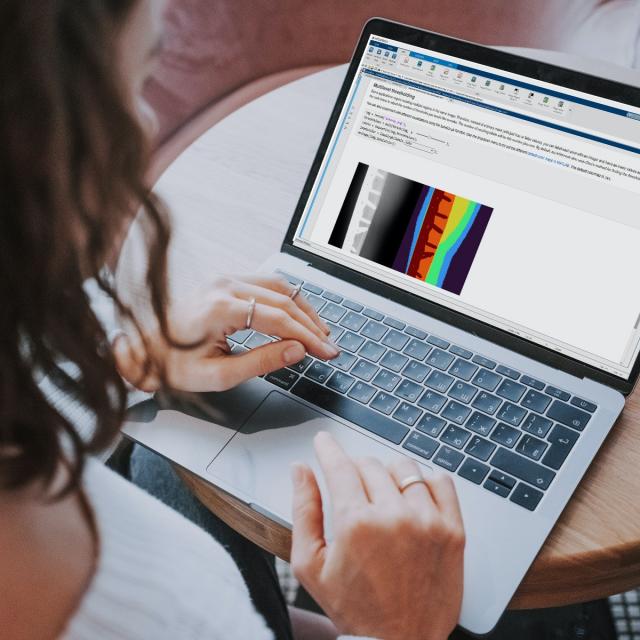
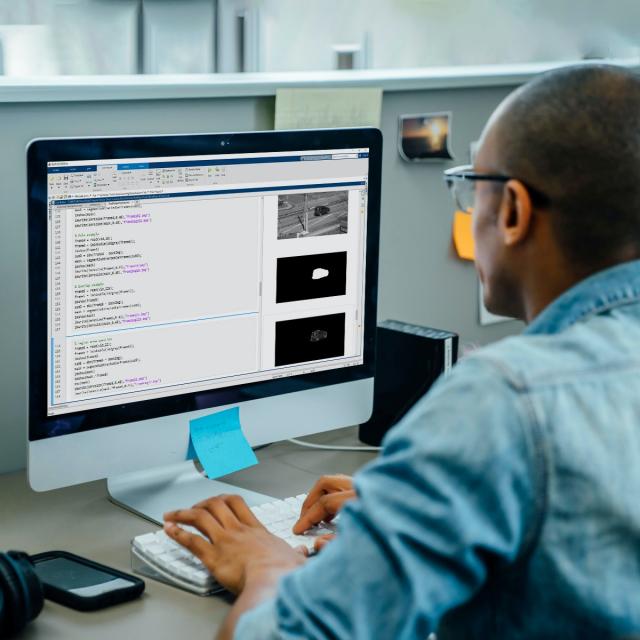
Material includes online lectures, videos, demos, hands-on exercises, project work, readings and discussions. Learners gain experience writing computer vision programs through online labs using MATLAB* and supporting toolboxes.

  • A free license to install MATLAB for the duration of the course is available from MathWorks.

What You Will Learn

  • Understand what computer vision is and its goals
  • Identify some of the key application areas of computer vision
  • Understand the digital imaging process
  • Apply mathematical techniques to complete computer vision tasks

Syllabus

WEEK 1
Computer Vision Overview
In this module, we will discuss what computer vision is, the fields related to it, the history and key milestones of it, and some of its applications.

WEEK 2
Color, Light, & Image Formation
In this module, we will discuss color, light sources, pinhole and digital cameras, and image formation.

WEEK 3
Low-, Mid- & High-Level Vision
In this module, we will discuss the three-level paradigm of computer vision that was proposed by David Marr. We will also discuss low, mid, and high level vision.

WEEK 4
Mathematics for Computer Vision
In this lecture, we will discuss the Mathematics used in Computer Vision, which includes linear algebra, calculus, probability, and much more.


Go to Class
MOOC List is learner-supported. When you buy through links on our site, we may earn an affiliate commission.

Related Courses

Computational Neuroscience (Coursera) Coursera
University of Washington

Computational Neuroscience (Coursera)

This course provides an introduction to basic computational methods for understanding what nervous systems do and for determining how they function. We will explore the computational principles governing various aspects of vision, sensory-motor control, learning, and memory. Specific topics that will be covered include representation of information by spiking neurons, processing of information in neural networks, and algorithms for adaptation and learning.

Sep 14th 2026
5-12 Weeks
Dynamical Modeling Methods for Systems Biology (Coursera) Coursera
Icahn School of Medicine at Mount Sinai

Dynamical Modeling Methods for Systems Biology (Coursera)

An introduction to dynamical modeling techniques used in contemporary Systems Biology research. We take a case-based approach to teach contemporary mathematical modeling techniques. The course is appropriate for advanced undergraduates and beginning graduate students. Lectures provide biological background and describe the development of both classical mathematical models and more recent representations of biological processes. The course will be useful for students who plan to use experimental techniques as their approach in the laboratory and employ computational modeling as a tool to draw deeper understanding of experiments.

Sep 7th 2026
5-12 Weeks
Introduction to Java as a Second Language (Coursera) Coursera
LearnQuest

Introduction to Java as a Second Language (Coursera)

This course is meant to be an introduction to Java as a second language, if you are familiar with any computer programming language. It could be shell scripting, knowledge of older Java versions, JavaScript, etc. This course will allow you to quickly pick up the Java programming language. You will learn Java Object Orientation, and see the parallels with other programming paradigms. This is course 1 of a 3 course Specialization titled Java as a Second Language. It assumes that you know some programming and want to transfer that knowledge into learning Java.

Aug 31st 2026
2 Weeks
Introduction to Deep Learning for Computer Vision (Coursera) Coursera
MathWorks

Introduction to Deep Learning for Computer Vision (Coursera)

Starting with zero deep learning knowledge, this foundational course will guide you to effectively train cutting-edge models for image classification purposes. From analyzing medical images to recognizing traffic signs, classification is important for many applications. Classification models also serve as the backbone for more complicated object detection models.

Aug 31st 2026
4 Weeks
Introduction to Programming with MATLAB (Coursera) Coursera
Vanderbilt University

Introduction to Programming with MATLAB (Coursera)

This course teaches computer programming to those with little to no previous experience. It uses the programming system and language called MATLAB to do so because it is easy to learn, versatile and very useful for engineers and other professionals. MATLAB is a special-purpose language that is an excellent choice for writing moderate-size programs that solve problems involving the manipulation of numbers.

Aug 31st 2026
5-12 Weeks
Python Scripting: Dates, Classes and Collections (Coursera) Coursera
LearnQuest

Python Scripting: Dates, Classes and Collections (Coursera)

This course is the second course in a series that aims to prepare you for a role working as a programmer. In this course, you will be introduced to the four main concepts in programming: Advanced String Operations and Dates, Modeling Classes, Development of Classes and Collections. Labs will allow the students to apply the material in the lectures in simple computer programs designed to re-enforce the material in the lesson.

Aug 31st 2026
4 Weeks
Matlab and Simulink Basics (Coursera) Coursera
Starweaver

Matlab and Simulink Basics (Coursera)

Matlab and Simulink Basics is a meticulously crafted course offering a comprehensive introduction to Matlab's programming environment and Simulink's modeling capabilities. This course is tailored for individuals keen on bolstering their skills in these indispensable tools for engineering, science, and research domains. From laying down foundational concepts to delving into practical applications, participants will embark on a journey that hones their abilities to manipulate data, design models, and interpret results with Matlab and Simulink.

Sep 14th 2026
4 Weeks
Code Yourself! An Introduction to Programming (Coursera) Coursera
University of Edinburgh,Universidad ORT Uruguay

Code Yourself! An Introduction to Programming (Coursera)

Have you ever wished you knew how to program, but had no idea where to start from? This course will teach you how to program in Scratch, an easy to use visual programming language. More importantly, it will introduce you to the fundamental principles of computing and it will help you think like a software engineer.

Aug 31st 2026
5-12 Weeks
Predictive Modeling and Machine Learning with MATLAB (Coursera) Coursera
MathWorks

Predictive Modeling and Machine Learning with MATLAB (Coursera)

In this course, you will build on the skills learned in Exploratory Data Analysis with MATLAB and Data Processing and Feature Engineering with MATLAB to increase your ability to harness the power of MATLAB to analyze data relevant to the work you do. These skills are valuable for those who have domain knowledge and some exposure to computational tools, but no programming background.

Aug 31st 2026
4 Weeks