Introduction to Deep Learning for Computer Vision (Coursera)

Offered by MathWorks,
Introduction to Deep Learning for Computer Vision (Coursera)

Starting with zero deep learning knowledge, this foundational course will guide you to effectively train cutting-edge models for image classification purposes. From analyzing medical images to recognizing traffic signs, classification is important for many applications. Classification models also serve as the backbone for more complicated object detection models.

Class Deals by MOOC List - Click here and see Coursera's Active Discounts, Deals, and Promo Codes.

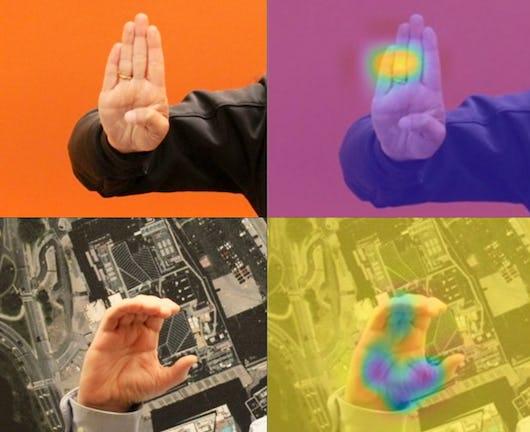
Through hands-on projects, you will train and evaluate models to classify street signs and identify the letters of American Sign Language. By completing this course, you will develop a strong foundation in deep learning for image analysis and will be equipped with the skills to tackle real-world computer vision challenges.
By the end of this course, you will be able to:
• Explain how deep learning networks find image features and make predictions
• Retrain common models like GoogLeNet and ResNet for specific applications
• Investigate model behavior to identify errors and determine potential fixes
• Improve model performance by tuning hyperparameters
• Complete the entire deep learning workflow in a final project
For the duration of the course, you will have free access to MATLAB, software used by top employers worldwide. The courses draw on the applications using MATLAB, so you spend less time coding and more time applying deep learning concepts.
This course is part of the Deep Learning for Computer Vision Specialization.

What you'll learn

  • Develop a strong foundation in deep learning for image analysis
  • Retrain common models like GoogLeNet and ResNet for specific applications
  • Investigate model behavior to identify errors, determine potential fixes, and improve model performance
  • Complete a real-world project to practice the entire deep learning workflow

Syllabus

Introduction to Deep Learning with Images
Learn the key components of convolutional neural networks and train a simple classification model

Transfer Learning
Retraining networks with new data is the most common way to apply deep learning in industry. In this module, you'll retrain common networks, set appropriate values for training options, and compare results from different models.

Investigating Network Behavior
Explaining how models make predictions is increasingly important. In this module, you'll use confidence scores and visualizations to determine what regions of an image the model is using to make predictions. You'll also identify common errors and adjust training options to improve performance.

Final Project: Classifying the ASL Alphabet
Apply your new skills to a final project.

Go to Class
MOOC List is learner-supported. When you buy through links on our site, we may earn an affiliate commission.

Related Courses

Sequence Models (Coursera) Coursera
DeepLearning.AI

Sequence Models (Coursera)

This course will teach you how to build models for natural language, audio, and other sequence data. Thanks to deep learning, sequence algorithms are working far better than just two years ago, and this is enabling numerous exciting applications in speech recognition, music synthesis, chatbots, machine translation, natural language understanding, and many others.

Jun 22nd 2026
3 Weeks
Generative AI Essentials: Overview and Impact (Coursera) Coursera
University of Michigan

Generative AI Essentials: Overview and Impact (Coursera)

With the rise of generative artificial intelligence, there has been a growing demand to explore how to use these powerful tools not only in our work but also in our day-to-day lives. Generative AI Essentials: Overview and Impact introduces learners to large language models and generative AI tools, like ChatGPT. In this course, you’ll explore generative AI essentials, how to ethically use artificial intelligence, its implications for authorship, and what regulations for generative AI could look like.

Jun 26th 2026
1 Week
Learn to code with AI (Coursera) Coursera
Scrimba

Learn to code with AI (Coursera)

Imagine waking up tomorrow as a web developer. What would you want to build? With AI tools like ChatGPT, you're already a developer, regardless of your experience, if you know how to work with them. So in this course, you'll build functional, interactive front-end projects while learning how to write effective prompts and debug and refine your code with the help of AI.

Jun 24th 2026
2 Weeks
Internet of Things: Multimedia Technologies (Coursera) Coursera
University of California, San Diego

Internet of Things: Multimedia Technologies (Coursera)

Content is an eminent example of the features that contributed to the success of wireless Internet. Mobile platforms such as the Snapdragon™ processor have special hardware and software capabilities to make acquisition, processing and rendering of multimedia content efficient and cost-effective.

Jun 22nd 2026
3 Weeks
Introduction to TensorFlow for Artificial Intelligence, Machine Learning, and Deep Learning (Coursera) Coursera
DeepLearning.AI

Introduction to TensorFlow for Artificial Intelligence, Machine Learning, and Deep Learning (Coursera)

If you are a software developer who wants to build scalable AI-powered algorithms, you need to understand how to use the tools to build them. This course is part of the upcoming Machine Learning in Tensorflow Specialization and will teach you best practices for using TensorFlow, a popular open-source framework for machine learning.

Jun 22nd 2026
4 Weeks
Navigating Generative AI: A CEO Playbook (Coursera) Coursera
Coursera Instructor Network

Navigating Generative AI: A CEO Playbook (Coursera)

Created by Coursera's CEO, this course is your key to unlocking the transformative power of GenAI. It features hands-on labs with access to Google Gemini Pro in a secure, private environment. These labs not only teach you how to use GenAI, but also how to apply it to design your GenAI strategy, identify specific opportunities to enhance customer value, increase productivity, and navigate risks and ethical considerations in order to move quickly but safely in adopting generative AI.

Jun 25th 2026
5-12 Weeks
Computational Neuroscience (Coursera) Coursera
University of Washington

Computational Neuroscience (Coursera)

This course provides an introduction to basic computational methods for understanding what nervous systems do and for determining how they function. We will explore the computational principles governing various aspects of vision, sensory-motor control, learning, and memory. Specific topics that will be covered include representation of information by spiking neurons, processing of information in neural networks, and algorithms for adaptation and learning.

Jun 22nd 2026
5-12 Weeks
The AI Ladder: A Framework for Deploying AI in your Enterprise (Coursera) Coursera
IBM

The AI Ladder: A Framework for Deploying AI in your Enterprise (Coursera)

This course is intended for business and technical professionals involved in strategic decision-making focused on bringing AI into their enterprises. Through the use of a conceptual model called “The AI Ladder”, participants in this course will learn the requirements, terms and concepts associated with successfully developing and deploying AI solutions in their enterprises.

Jun 22nd 2026
1 Week
AI Workflow: Feature Engineering and Bias Detection (Coursera) Coursera
IBM

AI Workflow: Feature Engineering and Bias Detection (Coursera)

This is the third course in the IBM AI Enterprise Workflow Certification specialization. You are STRONGLY encouraged to complete these courses in order as they are not individual independent courses, but part of a workflow where each course builds on the previous ones. Course 3 introduces you to the next stage of the workflow for our hypothetical media company. In this stage of work you will learn best practices for feature engineering, handling class imbalances and detecting bias in the data.

Jun 22nd 2026
2 Weeks
How Entrepreneurs in Emerging Markets can master the Blockchain Technology (Coursera) Coursera
University of Cape Town

How Entrepreneurs in Emerging Markets can master the Blockchain Technology (Coursera)

In this course, you will gain a thorough understanding of the blockchain and distributed ledger technologies, including an introduction to the necessary foundations in cryptography. The course will discuss blockchain as a distributed ledger and introduce distributed consensus as a mechanism to maintain the integrity of the blockchain. The other revolutionary technologies that are changing the world as we speak are artificial intelligence and machine learning. You will learn about the three major types of AI algorithms: supervised and unsupervised machine learning, as well as reinforcement learning.

Jun 22nd 2026
4 Weeks