Coding - il linguaggio nascosto delle cose (POK)

Offered by Politecnico di Milano,
Coding - il linguaggio nascosto delle cose (POK)

Il corso mostra, tramite alcuni esempi, una delle possibilità offerta dalla diffusione dei calcolatori nel mondo che ci circonda: comunicare con gli oggetti usando "il linguaggio", per programmarli e realizzare idee altrimenti impossibili.

Il corso si propone di presentare una delle più interessanti opportunità offerte dalla diffusione dei computer e dall’informatica nel mondo di oggi: poter interagire con gli oggetti e l’ambiente, sia fisici che virtuali, attraverso dei “linguaggi” analoghi a quelli che usiamo tutti i giorni per esprimerci, raccontare storie, coordinarci...

Il potere espressivo di questi linguaggi, unito alla capacità dei calcolatori e dei dispositivi automatici di eseguire comandi a velocità elevatissime, rende possibili cose neppure pensabili tramite l’interazione “abituale” con gli oggetti.
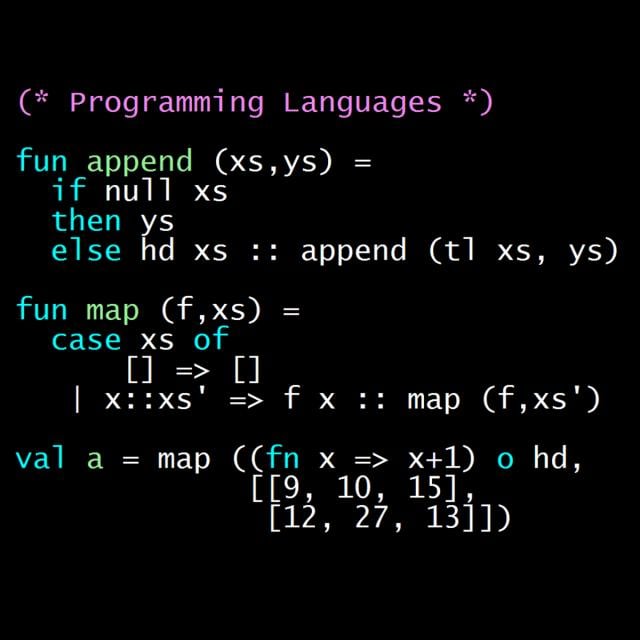
Nel corso sperimenteremo l’utilizzo di uno di questi "codici" e, attraverso pochi e semplici elementi di javascript, proveremo a modificare immagini digitali e capolavori puntinisti, e creare melodie utilizzando carillon virtuali.. per scoprire che tutta l’informazione sul mondo che ci circonda è descrivibile numericamente.
È stato scelto Javascript per diverse ragioni: può essere eseguito praticamente in qualsiasi browser, è molto diffuso ed è utilizzato per animare la quasi totalità dei siti web con i quali interagisci normalmente.
L’obiettivo del corso non è quello di portare i partecipanti a essere in grado di programmare o di scrivere un’applicazione completa, ma di farsi una prima idea, basata su alcuni esempi concreti (e speriamo interessanti!), di cosa sia e che cosa si possa fare con un linguaggio di programmazione.
Se gli esempi proposti ti avranno incuriosito, ti mancherà solo un po’ di approfondimento per arrivare a scrivere un semplice programma.
Al termine del corso verrà attivata una nuova edizione.
I video e i materiali didattici rimarranno disponibili anche dopo la conclusione dell’edizione.
Go to Class
MOOC List is learner-supported. When you buy through links on our site, we may earn an affiliate commission.

Related Courses

Big Data Analysis with Scala and Spark (Coursera) Coursera
École Polytechnique Fédérale de Lausanne

Big Data Analysis with Scala and Spark (Coursera)

Manipulating big data distributed over a cluster using functional concepts is rampant in industry, and is arguably one of the first widespread industrial uses of functional ideas. This is evidenced by the popularity of MapReduce and Hadoop, and most recently Apache Spark, a fast, in-memory distributed collections framework written in Scala. In this course, we'll see how the data parallel paradigm can be extended to the distributed case, using Spark throughout.

Jun 22nd 2026
4 Weeks
Fundamentos de Android (Coursera) Coursera
Universidad Nacional Autónoma de México

Fundamentos de Android (Coursera)

Por medio de ejercicios prácticos, serás capaz de manipular las herramientas que Android te ofrece para desarrollar aplicaciones móviles. En este curso, instalarás el entorno de desarrollo Android Studio y manipularás sus más sofisticadas particularidades. Por ejemplo, la composición de archivos de un proyecto Android y los patrones más comunes para el desarrollo de tus aplicaciones.

Jun 22nd 2026
5-12 Weeks
The Raspberry Pi Platform and Python Programming for the Raspberry Pi (Coursera) Coursera
University of California, Irvine

The Raspberry Pi Platform and Python Programming for the Raspberry Pi (Coursera)

The Raspberry Pi is a small, affordable single-board computer that you will use to design and develop fun and practical IoT devices while learning programming and computer hardware. In addition, you will learn how to set up up the Raspberry Pi environment, get a Linux operating system running, and write and execute some basic Python code on the Raspberry Pi. You will also learn how to use Python-based IDE (integrated development environments) for the Raspberry Pi and how to trace and debug Python code on the device.

Jun 22nd 2026
4 Weeks
Concurrent Programming in Java (Coursera) Coursera
Rice University

Concurrent Programming in Java (Coursera)

This course teaches learners (industry professionals and students) the fundamental concepts of concurrent programming in the context of Java 8. Concurrent programming enables developers to efficiently and correctly mediate the use of shared resources in parallel programs. By the end of this course, you will learn how to use basic concurrency constructs in Java such as threads, locks, critical sections, atomic variables, isolation, actors, optimistic concurrency and concurrent collections, as well as their theoretical foundations (e.g., progress guarantees, deadlock, livelock, starvation, linearizability).

Jun 22nd 2026
4 Weeks
TDD - Desenvolvimento de Software Guiado por Testes (Coursera) Coursera
Instituto Tecnológico de Aeronáutica

TDD - Desenvolvimento de Software Guiado por Testes (Coursera)

Neste curso, assumimos que você já sabe projetar e desenvolver programas mais complexos em Java, com método e organização graças às boas práticas e princípios exercitados no curso anterior; mas você talvez não se sinta ainda confortável em projetar programas usando técnicas ágeis, como o desenvolvimento guiado por testes (TDD).

Jun 22nd 2026
4 Weeks
Interprofessional Healthcare Informatics (Coursera) Coursera
University of Minnesota

Interprofessional Healthcare Informatics (Coursera)

Interprofessional Healthcare Informatics is a graduate-level, hands-on interactive exploration of real informatics tools and techniques offered by the University of Minnesota and the University of Minnesota's National Center for Interprofessional Practice and Education. We will be incorporating technology-enabled educational innovations to bring the subject matter to life. Over the 10 modules, we will create a vital online learning community and a working healthcare informatics network.

Jun 22nd 2026
5-12 Weeks
Introduction to HTML5 (Coursera) Coursera
University of Michigan

Introduction to HTML5 (Coursera)

Thanks to a growing number of software programs, it seems as if anyone can make a webpage. But what if you actually want to understand how the page was created? There are great textbooks and online resources for learning web design, but most of those resources require some background knowledge. This course is designed to help the novice who wants to gain confidence and knowledge. We will explore the theory (what actually happens when you click on a link on a webpage?), the practical (what do I need to know to make my own page?), and the overlooked (I have a page, what do I do now?).

Jun 22nd 2026
3 Weeks
Data Structures and Performance (Coursera) Coursera
University of California, San Diego

Data Structures and Performance (Coursera)

How do Java programs deal with vast quantities of data? Many of the data structures and algorithms that work with introductory toy examples break when applications process real, large data sets. Efficiency is critical, but how do we achieve it, and how do we even measure it? This is an intermediate Java course. We recommend this course to learners who have previous experience in software development or a background in computer science, and in particular, we recommend that you have taken the first course in this specialization (which also requires some previous experience with Java).

Jun 22nd 2026
5-12 Weeks
Learn to code with AI (Coursera) Coursera
Scrimba

Learn to code with AI (Coursera)

Imagine waking up tomorrow as a web developer. What would you want to build? With AI tools like ChatGPT, you're already a developer, regardless of your experience, if you know how to work with them. So in this course, you'll build functional, interactive front-end projects while learning how to write effective prompts and debug and refine your code with the help of AI.

Jun 24th 2026
2 Weeks
Interactivity with JavaScript (Coursera) Coursera
University of Michigan

Interactivity with JavaScript (Coursera)

If you want to take your website to the next level, the ability to incorporate interactivity is a must. But adding some of these types of capabilities requires a stronger programming language than HTML5 or CSS3, and JavaScript can provide just what you need. With just a basic understanding of the language, you can create a page that will react to common events such as page loads, mouse clicks & movements, and even keyboard input.

Jun 22nd 2026
4 Weeks