3D Reconstruction - Multiple Viewpoints (Coursera)

Offered by Columbia University,
3D Reconstruction - Multiple Viewpoints (Coursera)

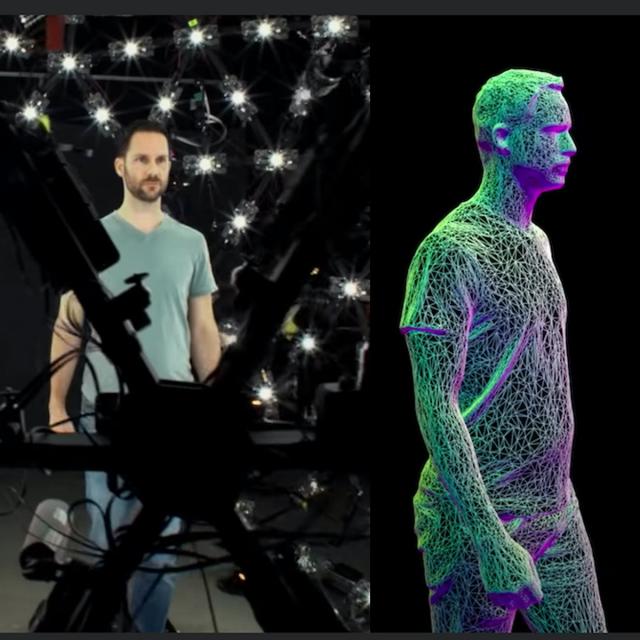
This course focuses on the recovery of the 3D structure of a scene from images taken from different viewpoints. We start by first building a comprehensive geometric model of a camera and then develop a method for finding (calibrating) the internal and external parameters of the camera model. Then, we show how two such calibrated cameras, whose relative positions and orientations are known, can be used to recover the 3D structure of the scene. This is what we refer to as simple binocular stereo.

Class Deals by MOOC List - Click here and see Coursera's Active Discounts, Deals, and Promo Codes.

Next, we tackle the problem of uncalibrated stereo where the relative positions and orientations of the two cameras are unknown. Interestingly, just from the two images taken by the cameras, we can both determine the relative positions and orientations of the cameras and then use this information to estimate the 3D structure of the scene.
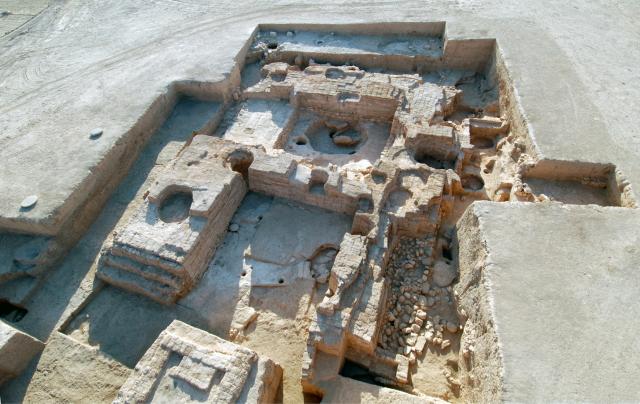
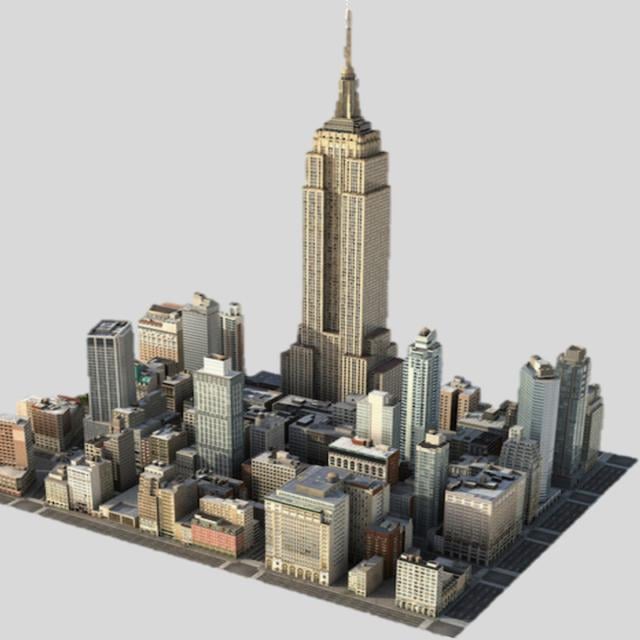
Next, we focus on the problem of dynamic scenes. Given two images of a scene that includes moving objects, we show how the motion of each point in the image can be computed. This apparent motion of points in the image is called optical flow. Optical flow estimation allows us to track scene points over a video sequence. Next, we consider the video of a scene shot using a moving camera, where the motion of the camera is unknown. We present structure from motion that takes as input tracked features in such a video and determines not only the 3D structure of the scene but also how the camera moves with respect to the scene. The methods we develop in the course are widely used in - - object modeling, 3D site modeling, robotics, autonomous navigation, virtual reality and augmented reality.

What You Will Learn

  • Develop a comprehensive model of a camera and learn how to calibrate a camera by estimating its parameters.
  • Develop a simple stereo system that uses two cameras of known configuration to estimate the 3D structure of a scene.
  • Design an algorithm for recovering both the structure of the scene and the motion of the camera from a video.
  • Develop optical flow algorithms for estimating the motion of points in a video sequence.

Course 4 of 5 in the First Principles of Computer Vision Specialization

Syllabus

WEEK 1: Getting Started: 3D Reconstruction - Multiple Viewpoints
WEEK 2: Camera Calibration
WEEK 3: Uncalibrated Stereo
WEEK 4: Optical Flow
WEEK 5: Structure from Motion

Go to Class
MOOC List is learner-supported. When you buy through links on our site, we may earn an affiliate commission.

Related Courses

Hands-on Machine Learning with AWS and NVIDIA (Coursera) Coursera
AWS,NVIDIA

Hands-on Machine Learning with AWS and NVIDIA (Coursera)

Machine learning (ML) projects can be complex, tedious, and time consuming. AWS and NVIDIA solve this challenge with fast, effective, and easy-to-use capabilities for your ML project. This course is designed for ML practitioners, including data scientists and developers, who have a working knowledge of machine learning workflows. In this course, you will gain hands-on experience on building, training, and deploying scalable machine learning models with Amazon SageMaker and Amazon EC2 instances powered by NVIDIA GPUs.

Jul 22nd 2024
4 Weeks
Foundations of AR (Coursera) Coursera
Meta

Foundations of AR (Coursera)

In this course, you will learn the basics of augmented reality (AR). You will focus on where AR fits in the XR spectrum, how AR is used, what AR can do today—and in the future—and the various technologies used for building such experiences. You will also learn about computer vision in AR, the software development lifecycle, and careers in AR development.

Nov 25th 2024
4 Weeks
Introduction to Computer Vision (Coursera) Coursera
University of Colorado Boulder

Introduction to Computer Vision (Coursera)

Introduction to Computer Vision guides learners through the essential algorithms and methods to help computers 'see' and interpret visual data. You will first learn the core concepts and techniques that have been traditionally used to analyze images. Then, you will learn modern deep learning methods, such as neural networks and specific models designed for image recognition, and how it can be used to perform more complex tasks like object detection and image segmentation. Additionally, you will learn the creation and impact of AI-generated images and videos, exploring the ethical considerations of such technology.

Jun 15th 2026
4 Weeks
Computer Vision in Microsoft Azure (Coursera) Coursera
Microsoft

Computer Vision in Microsoft Azure (Coursera)

In Microsoft Azure, the Computer Vision cognitive service uses pre-trained models to analyze images, enabling software developers to easily build applications"see" the world and make sense of it. This ability to process images is the key to creating software that can emulate human visual perception. In this course, you'll explore some of these capabilities as you learn how to use the Computer Vision service to analyze images.

Jun 15th 2026
3 Weeks
Interventions and Calibration (Coursera) Coursera
Imperial College London

Interventions and Calibration (Coursera)

This course covers approaches for modelling treatment of infectious disease, as well as for modelling vaccination. Building on the SIR model, you will learn how to incorporate additional compartments to represent the effects of interventions, such the effect of vaccination in reducing susceptibility. You will learn about ‘leaky’ vaccines and how to model them, as well as different types of vaccine and treatment effects.

Jun 15th 2026
4 Weeks
Computer Vision Basics (Coursera) Coursera
University at Buffalo,The State University of New York

Computer Vision Basics (Coursera)

By the end of this course, learners will understand what computer vision is, as well as its mission of making computers see and interpret the world as humans do, by learning core concepts of the field and receiving an introduction to human vision capabilities. They are equipped to identify some key application areas of computer vision and understand the digital imaging process. The course covers crucial elements that enable computer vision: digital signal processing, neuroscience and artificial intelligence.

Jun 15th 2026
4 Weeks
Interest Rate Models (Coursera) Coursera
École Polytechnique Fédérale de Lausanne

Interest Rate Models (Coursera)

This course gives you an easy introduction to interest rates and related contracts. These include the LIBOR, bonds, forward rate agreements, swaps, interest rate futures, caps, floors, and swaptions. We will learn how to apply the basic tools duration and convexity for managing the interest rate risk of a bond portfolio. We will gain practice in estimating the term structure from market data. We will learn the basic facts from stochastic calculus that will enable you to engineer a large variety of stochastic interest rate models. In this context, we will also review the arbitrage pricing theorem that provides the foundation for pricing financial derivatives.

Jun 1st 2026
5-12 Weeks
Introduction to Intel® Distribution of OpenVINO™ toolkit for Computer Vision Applications (Coursera) Coursera
Intel Corporation

Introduction to Intel® Distribution of OpenVINO™ toolkit for Computer Vision Applications (Coursera)

Welcome to the Introduction to Intel® Distribution of OpenVINO™ toolkit for Computer Vision Applications course! This course provides easy access to the fundamental concepts of the Intel Distribution of OpenVINO toolkit. Throughout this course, you will be introduced to demos, showcasing the capabilities of this toolkit.

Feb 5th 2024
1 Week
Visual Perception (Coursera) Coursera
Columbia University

Visual Perception (Coursera)

The ultimate goal of a computer vision system is to generate a detailed symbolic description of each image shown. This course focuses on the all-important problem of perception. We first describe the problem of tracking objects in complex scenes. We look at two key challenges in this context. The first is the separation of an image into object and background using a technique called change detection.

Jun 15th 2026
5-12 Weeks
Landing.AI for Beginners: Build Data Visualization AI Models (Coursera) Coursera
Coursera Project Network

Landing.AI for Beginners: Build Data Visualization AI Models (Coursera)

In this 1-hour long project-based course, you'll step into the exciting field of Computer Vision and Generative AI using the LandingLens platform. We'll start by exploring the concept of visual prompting, and initiating a visual prompting project. LandingLens simplifies the model creation, training, and deployment process, making it a user-friendly platform for this endeavor.

Jun 1st 2026
1 Week
Clasificación de imágenes: ¿cómo reconocer el contenido de una imagen? (Coursera) Coursera
Universitat Autònoma de Barcelona

Clasificación de imágenes: ¿cómo reconocer el contenido de una imagen? (Coursera)

¿Te interesa la visión por computador? ¿Te gustaría saber cómo se puede reconocer el contenido visual de las imágenes y clasificarlas a partir de su contenido? En este curso aprenderás diferentes métodos de representación y clasificación de imágenes. El temario del curso te permitirá conocer el esquema básico de clasificación de imágenes conocido como Bag of Visual Words.

May 25th 2026
5-12 Weeks