Calculus: Single Variable Part 1 - Functions (Coursera)

Calculus: Single Variable Part 1 - Functions (Coursera)

Calculus is one of the grandest achievements of human thought, explaining everything from planetary orbits to the optimal size of a city to the periodicity of a heartbeat. This brisk course covers the core ideas of single-variable Calculus with emphases on conceptual understanding and applications. The course is ideal for students beginning in the engineering, physical, and social sciences.

Class Deals by MOOC List - Click here and see Coursera's Active Discounts, Deals, and Promo Codes.

Distinguishing features of the course include: 1) the introduction and use of Taylor series and approximations from the beginning; 2) a novel synthesis of discrete and continuous forms of Calculus; 3) an emphasis on the conceptual over the computational; and 4) a clear, dynamic, unified approach.
In this first part--part one of five--you will extend your understanding of Taylor series, review limits, learn the why behind l'Hopital's rule, and, most importantly, learn a new language for describing growth and decay of functions: the BIG O.

Syllabus

WEEK 1
Introduction
Welcome to Calculus: Single Variable! below you will find the course's diagnostic exam. if you like, please take the exam. you don't need to score a minimal amount on the diagnostic in order to take the course. but if you do get a low score, you might want to readjust your expectations: this is a very hard class...

WEEK 2
A Review of Functions
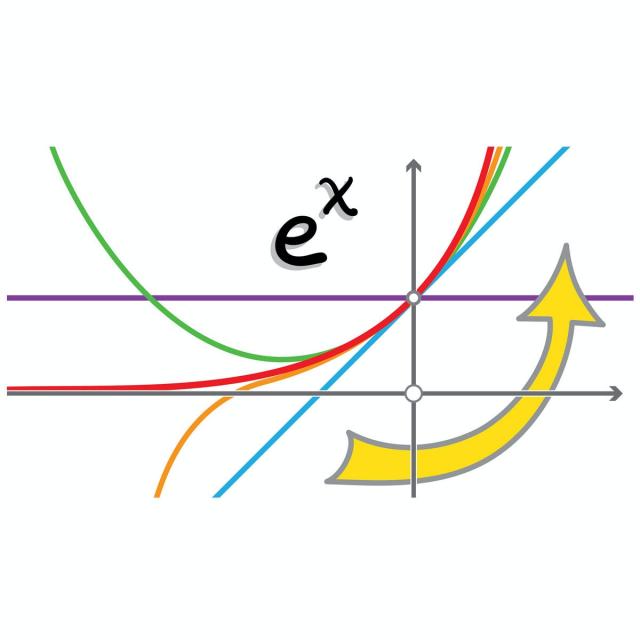
This module will review the basics of your (pre-)calculus background and set the stage for the rest of the course by considering the question: just what is the exponential function?

WEEK 3
Taylor Series
This module gets at the heart of the entire course: the Taylor series, which provides an approximation to a function as a series, or "long polynomial". You will learn what a Taylor series is and how to compute it. Don't worry! The notation may be unfamiliar, but it's all just working with polynomials....

WEEK 4
Limits and Asymptotics
A Taylor series may or may not converge, depending on its limiting (or "asymptotic") properties. Indeed, Taylor series are a perfect tool for understanding limits, both large and small, making sense of such methods as that of l'Hopital. To solidify these newfound skills, we introduce the language of "big-O" as a means of bounding the size of asymptotic terms. This language will be put to use in future Chapters on Calculus.
Go to Class
MOOC List is learner-supported. When you buy through links on our site, we may earn an affiliate commission.

Related Courses

Algebra: Elementary to Advanced - Functions & Applications (Coursera) Coursera
Johns Hopkins University

Algebra: Elementary to Advanced - Functions & Applications (Coursera)

After completing this course, students will learn how to successfully apply functions to model different data and real world occurrences. This course reviews the concept of a function and then provide multiple examples of common and uncommon types of functions used in a variety of disciplines. Formulas, domains, ranges, graphs, intercepts, and fundamental behavior are all analyzed using both algebraic and analytic techniques. From this core set of functions, new functions are created by arithmetic operations and function composition.

Jun 22nd 2026
3 Weeks
Mathematical Biostatistics Boot Camp 1 (Coursera) Coursera
Johns Hopkins University

Mathematical Biostatistics Boot Camp 1 (Coursera)

This class presents the fundamental probability and statistical concepts used in elementary data analysis. It will be taught at an introductory level for students with junior or senior college-level mathematical training including a working knowledge of calculus. A small amount of linear algebra and programming are useful for the class, but not required.

Jun 22nd 2026
4 Weeks
Algebra: Elementary to Advanced - Equations & Inequalities (Coursera) Coursera
Johns Hopkins University

Algebra: Elementary to Advanced - Equations & Inequalities (Coursera)

This course is intended for students looking to create a solid algebraic foundation of fundamental mathematical concepts from which to take more advanced courses that use concepts from precalculus, calculus, probability, and statistics. This course will help solidify your computational methods, review algebraic formulas and properties, and apply these concepts model real world situations.

Jun 22nd 2026
4 Weeks
Matrix Methods (Coursera) Coursera
University of Minnesota

Matrix Methods (Coursera)

Mathematical Matrix Methods lie at the root of most methods of machine learning and data analysis of tabular data. Learn the basics of Matrix Methods, including matrix-matrix multiplication, solving linear equations, orthogonality, and best least squares approximation. Discover the Singular Value Decomposition that plays a fundamental role in dimensionality reduction, Principal Component Analysis, and noise reduction.

Jun 22nd 2026
5-12 Weeks
Constructivism and Mathematics, Science, and Technology Education (Coursera) Coursera
University of Illinois at Urbana-Champaign

Constructivism and Mathematics, Science, and Technology Education (Coursera)

This course is designed to help participants examine the implications of constructivism for learning and teaching in science, mathematics, and technology focused areas. Course readings, discussions, and assignments will examine constructivist views of learning, research on students' ideas and idea-based interactions, research on instructional approaches taking student ideas into account, and challenges in implementing constructivist perspectives in instruction.

Jun 22nd 2026
5-12 Weeks
Deep Learning and Reinforcement Learning (Coursera) Coursera
IBM

Deep Learning and Reinforcement Learning (Coursera)

This course introduces you to two of the most sought-after disciplines in Machine Learning: Deep Learning and Reinforcement Learning. Deep Learning is a subset of Machine Learning that has applications in both Supervised and Unsupervised Learning, and is frequently used to power most of the AI applications that we use on a daily basis. First you will learn about the theory behind Neural Networks, which are the basis of Deep Learning, as well as several modern architectures of Deep Learning.

Jun 22nd 2026
5-12 Weeks
Discrete Mathematics (Coursera) Coursera
Shanghai Jiao Tong University

Discrete Mathematics (Coursera)

Discrete mathematics forms the mathematical foundation of computer and information science. It is also a fascinating subject in itself. Learners will become familiar with a broad range of mathematical objects like sets, functions, relations, graphs, that are omnipresent in computer science. Perhaps more importantly, they will reach a certain level of mathematical maturity - being able to understand formal statements and their proofs; coming up with rigorous proofs themselves; and coming up with interesting results.

Jun 22nd 2026
5-12 Weeks
Physics 101 - Rotational Motion and Gravitation (Coursera) Coursera
Rice University

Physics 101 - Rotational Motion and Gravitation (Coursera)

This course serves as an introduction to the physics of rotational motion and gravitation. Upon completion, learners will have an understanding of how mathematical laws and conservation principles describe the motions and interactions of objects all around us. They will gain experience in solving physics problems with tools such as graphical analysis, algebra, vector analysis, and calculus.

Jun 22nd 2026
4 Weeks
Enseñanza de las matemáticas de primaria (Coursera) Coursera
Universidad de los Andes

Enseñanza de las matemáticas de primaria (Coursera)

En este tercer curso de acceso gratuito* del programa especializado Educación Matemática para profesores de primaria, conocerás los conceptos y técnicas para planificar e implementar tus clases. El curso tiene una duración aproximada de seis semanas, con una dedicación promedio de 4 horas semanales. Todas las evaluaciones tienen retroalimentación y podrás descargar la mayoría de los recursos del curso.

Jun 22nd 2026
5-12 Weeks
Essential Linear Algebra for Data Science (Coursera) Coursera
University of Colorado Boulder

Essential Linear Algebra for Data Science (Coursera)

Are you interested in Data Science but lack the math background for it? Has math always been a tough subject that you tend to avoid? This course will teach you the most fundamental Linear Algebra that you will need for a career in Data Science without a ton of unnecessary proofs and concepts that you may never use. Consider this an expressway to Data Science with approachable methods and friendly concepts that will guide you to truly understanding the most important ideas in Linear Algebra.

Jun 22nd 2026
5-12 Weeks