EdX

Building Inclusive Cities: Tackling Urban Inequality and Segregation (edX)

Building Inclusive Cities: Tackling Urban Inequality and Segregation (edX)

Discover how urban design can help tackle inequality and socio-economic segregation in cities. Learn how to use analytical tools to measure these two phenomena and make urban design part of the solution. Urban design, inequality and segregation are strongly connected.

Class Deals by MOOC List - Click here and see EdX's Active Discounts, Deals, and Promo Codes.

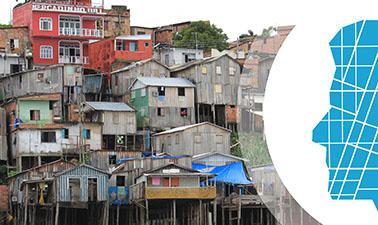
Cities around the world, from the Global South to the Global North, are facing a rise in inequality and socio-economic segregation. The wealthy are increasingly concentrating in the most attractive urban areas and poverty is spreading to the suburbs. Rising levels of segregation have major consequences for the social sustainability of cities and leads to unequal life opportunities depending on where in the city you live.
In this course, aimed at a broad range of professionals, from urban planners and architects to geographers, you will learn what the main drivers and indicators of urban inequality and segregation are, using examples from cities from all over the world. You will learn how segregation is measured, how to interpret the results of the analyses of segregation and how to relate these insights to urban design. With this knowledge, you will be able to analyze how these issues may be affecting your local environment.
Additionally, we will present some historical examples of how urban design has played a role shaping spatial inequality and segregation in a selection of case study cities. This will help you to get a better understanding of how urban design can reduce spatial inequality and segregation.
The course is taught by the editors of the new SpringerOpen book “Urban socio-economic segregation and income inequality. A global perspective” and senior experts from the Urban Design section of TU Delft, which is ranked number 2 in the QS World University Rankings in the field of Architecture.
This course is part of the Inclusive and Sustainable Cities Professional Certificate.

What you'll learn
After taking this course you will be able to:

  • Identify the main drivers of urban inequality and socio-economic segregation and the links between them
  • Understand how segregation can be measured
  • Examine the consequences of urban inequality and segregation based on the case studies presented
  • Evaluate the urban inequality and segregation aspects of your own urban context
  • Develop urban design and policy solutions to suit your own urban context

Syllabus

Week 1: Introduction
In the first week you will learn about the key concepts of this course – inequality, segregation, the inclusive city and urban design, as well as how these concepts relate to each other. Global segregation trends will be explained and illustrated through case studies. We will discuss how urban design can help to reduce spatial inequality in cities. By sharing the experiences of your peers, you will find out about differences in various parts of the world.

Week 2: The vicious circle of segregation
The second week focuses on the connectedness of segregation in different domains of daily life: places of residence, work, schools and during leisure time. The concept of a vicious circle of segregation helps us to understand these connections. We further discuss the role of inequality in producing and reproducing segregation, and how place-based, people-based and connectivity-based policy responses can help to break this circle. You will find out that there are many ways to measure segregation and learn how to interpret segregation indices.

Week 3-5: Regional, city and neighborhood scale
In the parallel modules in weeks 3-5, you will be introduced to the multiple relationships between the physical form of cities and the creation of an inclusive living environment on three different urban scales: regional, city and neighborhood. Inclusive cities must provide all citizens with equal access to public resources, including opportunities to participate in the planning and governance of space. Dutch case studies in which methods of analysis are demonstrated will enable you to assess an urban environment’s potential for inclusivity.
The regional scale
On the regional scale we will introduce design principles and show how these may influence concrete proposals at the local level. Even though the term ‘regional design’ may seem overly ambitious or even impossible, examples are given that explain the scope of the term and its importance in policy making and design practice. With the help of practical examples you will become acquainted with long term effects of regional planning, the importance of developing and evaluating scenarios and other aspects of regional design processes.
The city scale
On the city scale we focus on the interdependencies of the physical form of cities and their inclusive qualities. Ensuring access to necessary public resources or services, such as education and affordable housing, is an essential part of inclusive city design. You will learn how to analyze and assess the physical form of the city and its qualities, employing methods of urban spatial analysis. The module will emphasize urban borders and connectivity between neighborhoods, the distribution of local urban centers, and the diversity of housing types.
The neighborhood scale
On the neighborhood scale we focus on creating inclusive public spaces and neighborhoods. The way the city is designed and experienced from a perspective at eye level is strongly related to design decisions on other scale levels and vice versa. You will learn how to analyze movement patterns within neighborhoods as well as interventions in the public domain.

Week 6: Final assignment
Our shared goal is to build inclusive cities all over the world. In week 6 you will work on the final assignment with reference to your own urban context. You will bring together challenges and solutions to address inequality and segregation, using theories and tools presented during the course.

Week 7: Re-connect
In the last week we will re-connect and learn even more from each other. We will look back at the methods and design concepts offered in the course, at the solutions you developed for your own urban context, your vision of an inclusive city and your views on the role that urban design can play in breaking the vicious circle of inequality and segregation.

Go to Class
MOOC List is learner-supported. When you buy through links on our site, we may earn an affiliate commission.

Related Courses

Sustainable Urban Development (edX) EdX
Wageningen University,Delft University of Technology,DelftX,WageningenX

Sustainable Urban Development (edX)

Learn why cities are key in resolving global urbanization and sustainability challenges and how you can engineer tomorrow’s cities today. Did you know that cities take up less than 3% of the earth’s land surface, but more than 50% of the world’s population live in them? And, cities generate more than 70% of the global emissions? Large cities and their hinterlands (jointly called metropolitan regions) greatly contribute to global urbanization and sustainability challenges, yet are also key to resolving these same challenges.

Self Paced
Self-Paced
Economic Growth and Distributive Justice Part II - Maximize Social Wellbeing (Coursera) Coursera
Tel Aviv University

Economic Growth and Distributive Justice Part II - Maximize Social Wellbeing (Coursera)

If you really care about the big questions in the economies and societies of the 21st century, such as distributive justice - namely, inequality of income or wealth, and its correlation with economic growth - this course is meant for you. The knowledge you will gain can truly change your outlook on our world.

Jun 8th 2026
5-12 Weeks
Concepts in Sustainable Development: An Introduction to the Key Issues (FutureLearn) FutureLearn
University of Leicester

Concepts in Sustainable Development: An Introduction to the Key Issues (FutureLearn)

Explore some of the key issues in sustainability, tackling the big questions with examples from around the world. Get an introduction to the key issues in sustainability. In this course you will study the conceptual foundations of sustainable development, and discuss the issues around sustainability as a complex problem.

Jan 25th 2021
5-12 Weeks
Tackling Inequalities Through Health and Social Care Design (FutureLearn) FutureLearn
University of Dundee,University of the West of Scotland - UWS,Scottish Improvement Science Collaborating Centre - SISCC

Tackling Inequalities Through Health and Social Care Design (FutureLearn)

This course will explore what inequalities are and how they can be reduced through health and social care. This course explore the ways that health and social care service design can lead to, but also address, inequalities. Inequalities are caused by very similar factors everywhere, they just look a little different, depending on the setting.

No sessions available
4 Weeks
Human Rights, Human Wrongs: Challenging Poverty, Vulnerability and Social Exclusion (edX) EdX
SDGAcademyX,SDG Academy

Human Rights, Human Wrongs: Challenging Poverty, Vulnerability and Social Exclusion (edX)

With complex legal protections and varying societal norms, how do we ensure rights for all? From women to children to indigenous peoples, the rights of marginalized groups the world over are violated daily. These injustices affect not just these groups, but also the stability of our world – and our collective future.

Self Paced
Self-Paced
Action Learning for Inclusion (POK) Polimi OPEN KNOWLEDGE
Politecnico di Milano

Action Learning for Inclusion (POK)

Architecture and planning education with marginalised communities. The Course explains how to develop planning, urban and architectural design teaching or training initiatives with an action-oriented approach, by describing the meaning, and possible methods and tools of Action Learning. It focuses specifically on the engagement with vulnerable and marginalised populations.

Available
4 Weeks
Anti-Racism III (Coursera) Coursera
University of Colorado Boulder

Anti-Racism III (Coursera)

Anti-Racism III is the third course in CU Boulder's Anti-Racism specialization on Coursera. You will be asked to apply and deepen what you've learned about race, racism, identity, and inequality in the first and second courses to a more global context that understands systemic racism and white supremacy as a human rights issue. You will also be invited to consider how you might engage in anti-racist practices in your own life, and you will be challenged to design a community outreach project that leverages your own experience and skills as an anti-racism advocate. Anti-Racism III will be available in Fall 2021.

Jun 15th 2026
3 Weeks
Sustainable Development Goal 10: Reduced Inequalities (CanopyLAB) CanopyLAB
SDG LAB

Sustainable Development Goal 10: Reduced Inequalities (CanopyLAB)

What does "inequality" mean? Goal 10 takes a holistic approach to the concept of inequality, which means that it recognizes inequality not just in terms of income but also in many other aspects of life such as unequal access to decent healthcare, quality education, good infrastructure and fairly paid jobs. In this course, we will investigate the consequences of inequality in theories, and see how they play out in the real world by looking at the rich and poor gap in examples of countries around the world, from the United Kingdom and the United States to Brazil, Indonesia, and Nigeria.

Self Paced
Self-Paced
Improving Children's Lives: Reducing Child Poverty and Inequality Around the World (FutureLearn) FutureLearn
University of York

Improving Children's Lives: Reducing Child Poverty and Inequality Around the World (FutureLearn)

Why do children get a better start to life in some countries than in others? What can we learn from the best performing countries? This free online course explores these questions using a combination of articles, videos, animations, articles, interactive data visualisations, discussions, and research “bites”.

No sessions available
4 Weeks
Housing and Cities (edX) EdX
École Polytechnique Fédérale de Lausanne,EPFLx

Housing and Cities (edX)

Explore how housing defines urban identity. Housing and Cities is a design-oriented architecture course that focuses on key moments of European urban housing history. It looks into ordinary or replicated housing types of different social classes that contributed to the definition of urban identity across borders and time.

Self Paced
Self-Paced
Political Economy of Institutions and Development (Coursera) Coursera
Leiden University

Political Economy of Institutions and Development (Coursera)

This course is part of the SDG initiative addressing the UN Sustainable Development Goals, specifically for the following SDGs [1, 8, 10 and 16]. We hope you will join in our efforts to reach the SDG’s in small but measurable and actionable ways, cooperating with Development Done Differently. Expand your impact. You can create a better world. In today’s world, politics and economics are interconnected, but what is the nature of this connectivity?

May 18th 2026
5-12 Weeks