Big Ideas in Programming: Expressing Yourself with Python (FutureLearn)

Big Ideas in Programming: Expressing Yourself with Python (FutureLearn)

Harness the power of Python and its programming concepts to express yourself and automate the work you do. Learn the Python basics you need to create the content and projects you want. Coding and programming allow better work performance, across diverse professions. If you want to discuss ideas with programming professionals or develop the code yourself, you need to know the basics.

Class Deals by MOOC List - Click here and see FutureLearn's Active Discounts, Deals, and Promo Codes.

Python is a powerful programming language, and mastering Python basics is the ideal way to understand and use programming concepts. With this exceptional four-week course from the University of Michigan, you can get started on doing just that.
Harness Python programming’s big ideas
The big ideas in programming are the building blocks that allow you to create large, interesting, and useful programs. Mastering these programming concepts (variables, loops, strings, conditionals, and functions) and data structures (lists, tuples, and dictionaries) in Python will allow you to really express yourself in the digital space.
Develop a wide array of Python skills
The creative coding/programming skills that you acquire in this Python course will allow you to design and produce personalised stories, filter and transform data, use code visualisers, generate art, predict program output, and write better code that works smarter, not harder.
You can expect plenty of interactive practice, engaging assignments, and immediate feedback. This allows you to check your understanding at every step of the way, giving you the chance to really develop your confidence and skill.
The best way to learn Python
Convened by Barbara Ericson, Assistant Professor in the University of Michigan’s School of Information, this course is the ideal way to master Python basics. With her expertise and innovative ideas, you’ll enjoy the learning experience as much as you benefit from it.

Syllabus

Week 1: Functions and Strings
Week 2: Conditionals and Lists
Week 3: Loops with Lists, Strings, and Conditionals
Week 4: Lists, Tuples, and Dictionaries

Learning on this course
You can take this self-guided course and learn at your own pace. On every step of the course you can meet other learners, share your ideas and join in with active discussions in the comments.

What will you achieve?
By the end of the course, you‘ll be able to...

  • Apply programming concepts to be expressive, such as creating a choose your own adventure story
  • Filter and transform data using the basic data structures in Python, such as removing words with less than three characters from a list
  • Experiment with the power of Python to accomplish more work with less code, such as using list comprehensions to sum only the even values in a list
  • Explore using a code visualizer to help them understand exactly what happens when code executes

Who is the course for?
This course is designed for anyone interested in learning Python. Whether you want to discuss programming with other professionals, teaching others to code or use the language to do your own creative coding, this is the Python course for you!
Go to Class
MOOC List is learner-supported. When you buy through links on our site, we may earn an affiliate commission.

Related Courses

Building Web Applications in Django (FutureLearn) FutureLearn
University of Michigan

Building Web Applications in Django (FutureLearn)

Learn how to build and deploy web applications using the Django framework in the Python programming language. Discover the basics of the Django web framework. Django is a high-level Python web framework that encourages fast development and a clean, pragmatic design. This informative, four-week course from the University of Michigan will teach you all the basics of the Django web framework, and will show you how Django communicates with a database through model objects.

Dec 14th 2020
4 Weeks
Object-oriented Programming in Python: Create Your Own Adventure Game (FutureLearn) FutureLearn
Raspberry Pi Foundation,National Centre for Computing Education

Object-oriented Programming in Python: Create Your Own Adventure Game (FutureLearn)

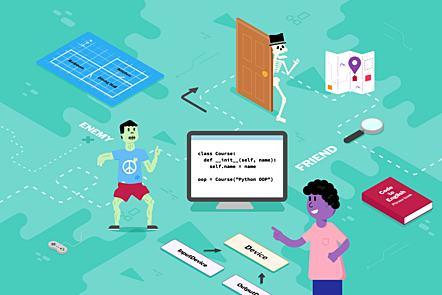
Learn object-oriented programming principles by creating your own text-based adventure game in Python. Object-oriented programming is a programming paradigm based on objects and data rather than actions and logic. This online course will introduce you to the principles of object-oriented programming in Python, showing you how to create objects, functions, methods, and classes.

Jan 2nd 2023
4 Weeks
Prepare for a Software Development Career (FutureLearn) FutureLearn
FutureLearn

Prepare for a Software Development Career (FutureLearn)

Review everything you need to know about Java and Python to start a career as a software developer. Cement your foundational knowledge of Python and Java and kickstart your career in software development. You’ll apply object-oriented programming principles to Java, and go deeper on methods, constructors, strings, inheritance, classes, and collection.

Self Paced
4 Weeks
Introduction to Web Development (FutureLearn) FutureLearn
Raspberry Pi Foundation,National Centre for Computing Education

Introduction to Web Development (FutureLearn)

Discover web development and learn to build your own interactive websites using HTML, CSS, and JavaScript. Supported by Google. Learn the basics of web development. On this course from the Raspberry Pi Foundation, you’ll first build a website using HTML, style it with CSS, and then make it interactive using JavaScript.

Jan 2nd 2023
3 Weeks
Programming Applications with Python: Libraries and Web Scraping (FutureLearn) FutureLearn
FutureLearn

Programming Applications with Python: Libraries and Web Scraping (FutureLearn)

Consider applications for APIs and Python, and explore the purpose of web scraping. Examine Python libraries for web development. This course will introduce you to the popular Requests library in Python. You’ll study how to install the Requests library and get to know how it works. Learning via videos, interactive exercises, and quizzes, you’ll also explore what HTTP requests are and what each of the status codes in HTTP mean.

May 23rd 2022
4 Weeks
Programming Essentials with Python: Matplotlib and Seaborn (FutureLearn) FutureLearn
FutureLearn

Programming Essentials with Python: Matplotlib and Seaborn (FutureLearn)

Explore the fundamentals of object-orientated programming languages and learn how to visualise data with Python. Discover Python libraries and the tools to improve your data presentation. On this course, you’ll examine the core principles of data-visualisation libraries. You’ll learn to define object-oriented programming, explore the key components of visualising with Python and the tools that can be leveraged. You’ll also explore other Python libraries and their uses, learning how to define and compare them.

May 23rd 2022
4 Weeks
Introduction to Programming with Scratch (FutureLearn) FutureLearn
Raspberry Pi Foundation,National Centre for Computing Education

Introduction to Programming with Scratch (FutureLearn)

Discover the fundamentals of programming using the block-based programming language Scratch. Learn how to program your own animations and games. Scratch is a powerful, visual programming language that provides a great introduction to the world of programming. By snapping blocks together, you can create amazing animations and games. Over this four-week course, you’ll learn how to navigate the Scratch programming environment, create your own programs, and share your creations.

Feb 14th 2022
4 Weeks
Teaching Physical Computing with Raspberry Pi and Python (FutureLearn) FutureLearn
Raspberry Pi Foundation

Teaching Physical Computing with Raspberry Pi and Python (FutureLearn)

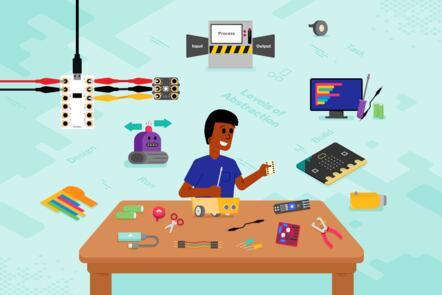
Explore the exciting world of physical computing and create electronic circuits that you can control with code. Learn the benefits of using physical computing with your students. On this course from the Raspberry Pi Foundation, you will be introduced to the world of physical computing. You will use input devices to capture data, process that data with the Python programming language, and then use output devices to get information back out from your computer.

Mar 6th 2023
3 Weeks
Get ready for a Masters in Data Science and AI (FutureLearn) FutureLearn
Coventry University

Get ready for a Masters in Data Science and AI (FutureLearn)

Identify whether you’re ready for Master’s study, improve your data science skills, and get to grips with the basics of Python. Get a taste of life as a Data Science and AI Master's student. On this course, you’ll have the opportunity to explore the disciplines involved in a Master’s degree in Data Science and Artificial Intelligence (AI).

Apr 17th 2023
2 Weeks
Video Game Design and Development: Introduction to Game Programming (FutureLearn) FutureLearn
Abertay University

Video Game Design and Development: Introduction to Game Programming (FutureLearn)

Discover the essentials of video game programming and learn how you can start your own programming career. Learn the basics of game development to understand how great games are designed. Video games have become a multi-billion-dollar industry, even recently overshadowing cinema as the globe’s go-to entertainment medium of choice.

Jun 28th 2021
2 Weeks
Programming Applications with Python: Graphics User Interface (GUI) (FutureLearn) FutureLearn
FutureLearn

Programming Applications with Python: Graphics User Interface (GUI) (FutureLearn)

Discover how to create a GUI using Python and start to explore creating APIs. Make a GUI application in Python. On this course, you’ll explore a common use for Python – how to create a successful GUI. GUIs are a crucial aspect of any web service, and knowing how to create one is a vital skill for furthering your career in programming.

May 23rd 2022
4 Weeks
Teaching Physical Computing to 5-11 year olds (FutureLearn) FutureLearn
Raspberry Pi Foundation,National Centre for Computing Education

Teaching Physical Computing to 5-11 year olds (FutureLearn)

Teach your young learners how to create electronic circuits, then learn to control them using block-based programming languages. Learn how to create physical computing projects using a Crumble or micro:bit. Physical computing is the process of designing, building, and programming systems that use physical components such as buttons, lights, and motors.

Mar 6th 2023
3 Weeks