Bacterial Genomes: Antimicrobial Resistance in Bacterial Pathogens (FutureLearn)

Bacterial Genomes: Antimicrobial Resistance in Bacterial Pathogens (FutureLearn)

What's antimicrobial resistance and how can we detect it? Explore the clinical relevance of AMR and the methods used to detect it. Explore the challenges of AMR and learn how experts work to address them. AMR is a public health emergency. Global projections predict the loss of nearly 10 million lives and up to $100 trillion lost in global production by 2050. According to the United Nations and the WHO, AMR requires immediate international action. On this course, you will explore the historical and epidemiological aspects of antibiotics and AMR, and recognise its clinical significance.

Class Deals by MOOC List - Click here and see FutureLearn's Active Discounts, Deals, and Promo Codes.

You will explore the role of genomics in tackling AMR from research, diagnostic and surveillance perspectives, as well as the principles and practice of AMR Quality Assurance.

What topics will you cover?

  • Significance and challenges of AMR and the need for control of antibiotic use
  • Mechanisms of antibiotic action, resistance and evolution
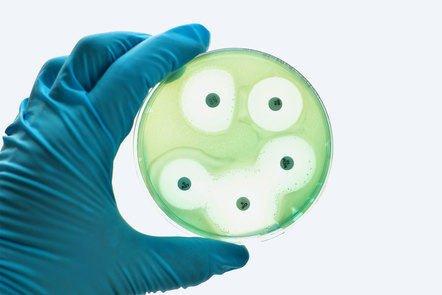
  • Antimicrobial susceptibility testing
  • Molecular detection and characterisation of AMR resistance genes
  • Recent developments in genomic technology for tackling AMR

What will you achieve?
By the end of the course, you‘ll be able to...

  • Describe the clinical significance and challenges of AMR
  • Describe molecular approaches and techniques for the detection and characterisation of AMR genes
  • Identify the resistance profile of bacterial pathogens
  • Explain the principles and practice of Quality Assurance and Quality Control in AMR surveillance techniques, antimicrobial susceptibility testing and reporting
  • Explore the role of genomics in tackling AMR from a research, diagnostics and surveillance point of view

Who is the course for?
This course is designed for researchers and healthcare professionals interested in infectious diseases, epidemics and the problem of microbial resistance. It will help those with backgrounds in microbiology or bioinformatics to work together.
No prior learning is required, but it is recommended learners with no previous knowledge of AMR take the introductory FutureLearn course, Bacterial Genomes: Disease Outbreaks and AMR.

Go to Class
MOOC List is learner-supported. When you buy through links on our site, we may earn an affiliate commission.

Related Courses

TARGET Antibiotics – Prescribing in Primary Care (FutureLearn) FutureLearn
British Society for Antimicrobial Chemotherapy - BSAC,TARGET

TARGET Antibiotics – Prescribing in Primary Care (FutureLearn)

Helping primary care professionals to target the use of antibiotics to reduce antimicrobial resistance. Discover ideas about how to optimise prescribing in Primary Care. Antimicrobial resistance is a growing problem and everyone can play a part in tackling this issue. This course will look at many aspects of antibiotic prescribing in Primary Care from prescribing for urinary tract infections through to managing patient expectations.

Apr 5th 2021
5-12 Weeks
Bacterial Genomes II: Accessing and Analysing Microbial Genome Data Using Artemis (FutureLearn) FutureLearn
Wellcome Genome Campus Advanced Courses and Scientific Conferences

Bacterial Genomes II: Accessing and Analysing Microbial Genome Data Using Artemis (FutureLearn)

Learn more about how genomic data and computational tools can help us understand and track disease-causing bacteria. Use computational tools to investigate microbial genomes. Applying increasingly powerful computation to genomics contributes to important medical breakthroughs. On this course, you will discover the basic principles of microbial bioinformatics analysis, and comparative genomics.

No sessions available
3 Weeks
Bacterial Bioinformatics (Coursera) Coursera
University of Virginia

Bacterial Bioinformatics (Coursera)

This course provides demonstrations and exercises for performing common genomics-based analysis tasks of bacterial sequence data. It uses PATRIC, the PathoSystems Resource Integration Center, as the platform for analysis. PATRIC is the NIH/NIAID-funded bacterial Bioinformatics Resource Center, providing comprehensive bacterial genomic data with integrated analysis tools and visualizations.

Jun 22nd 2026
5-12 Weeks
Internet of Things: Communication Technologies (Coursera) Coursera
University of California, San Diego

Internet of Things: Communication Technologies (Coursera)

Have you wondered how “Things” talk to each other and the cloud? Do you understand the alternatives for conveying latency-sensitive real time data versus reliable signaling data? Building on the skills from the Sensing and Actuation course, we will explore protocols to exchange information between processors.

Jun 15th 2026
4 Weeks
Antimicrobial Stewardship for the Gulf, Middle East and North Africa (FutureLearn) FutureLearn
British Society for Antimicrobial Chemotherapy - BSAC

Antimicrobial Stewardship for the Gulf, Middle East and North Africa (FutureLearn)

Improve your knowledge of the spread of antimicrobial resistance in the Gulf, Middle East and North Africa and how to reduce it. Learn about antimicrobial stewardship in the Gulf, Middle East and North Africa. On this course, you’ll examine the threat of antimicrobial resistance in the Middle East, Gulf and North Africa and learn how best to tackle it.

Available now
3 Weeks
Genome Sequencing (Bioinformatics II) (Coursera) Coursera
University of California, San Diego

Genome Sequencing (Bioinformatics II) (Coursera)

You may have heard a lot about genome sequencing and its potential to usher in an era of personalized medicine, but what does it mean to sequence a genome? Biologists still cannot read the nucleotides of an entire genome as you would read a book from beginning to end. However, they can read short pieces of DNA. In this course, we will see how graph theory can be used to assemble genomes from these short pieces. We will further learn about brute force algorithms and apply them to sequencing mini-proteins called antibiotics.

Jun 22nd 2026
5-12 Weeks
The Social Dimensions of Antimicrobial Resistance (Coursera) Coursera
University of Amsterdam

The Social Dimensions of Antimicrobial Resistance (Coursera)

Sonar-Global is a collaborative work to mobilize social sciences against infectious threats. It is a sustainable international network to strengthen the active participation of the social sciences in the prevention and response to infectious threats, including those posed by antimicrobial resistance (AMR) and vaccine hesitancy.

Jun 1st 2026
4 Weeks
Preventing and Managing Infections in Childcare and Pre-school (FutureLearn) FutureLearn
British Society for Antimicrobial Chemotherapy - BSAC,Public Health England

Preventing and Managing Infections in Childcare and Pre-school (FutureLearn)

Understand how infectious diseases spread and how to protect children from infections. Identify how to prevent the spread of infectious diseases in children. Microbes live everywhere, especially in childcare settings where children play together at close quarters. They come in all shapes and sizes – and not all are harmful. On this course, you’ll discover what germs are and how they spread, looking at simple ways of stopping infections spreading. You’ll learn practical tips on keeping early years settings safe.

Apr 5th 2021
2 Weeks
e-Bug Health Educator Training (FutureLearn) FutureLearn
British Society for Antimicrobial Chemotherapy - BSAC,Public Health England

e-Bug Health Educator Training (FutureLearn)

Improve your ability to teach children and young people how to prevent the spread of infection and to use antibiotics responsibly. Learn how to use the e-Bug teaching resource. e-Bug is operated by Public Health England (PHE) as a free educational resource for teaching young people aged 4-18 about the spread, prevention, and treatment of infections and antibiotic use.

Feb 15th 2021
3 Weeks
Introducción a la microbiología práctica (FutureLearn) FutureLearn
British Society for Antimicrobial Chemotherapy - BSAC

Introducción a la microbiología práctica (FutureLearn)

Conoce lo básico de la microbiología y los principios para optimizar el uso de antimicrobianos desde un punto de vista práctico. Asienta las bases de las prácticas en la microbiología. Este curso te enseña todos los conceptos básicos de la microbiología. Desarrolla una base sólida para futuros estudios y prácticas en el campo de la microbiología aprendiendo a definir los microbios, los antimicrobianos y los antibióticos. Adéntrate con confianza en todos los temas, nombres, principios y procesos básicos de la microbiología.

Available now
4 Weeks