AutoLayout (Udacity)

Offered by Udacity,
AutoLayout (Udacity)

Using Constraint-Based Design. With this course, you will learn about AutoLayout and how to use stack views and constraints to create pixel-perfect UIs. Also, you will take a deep dive and learn about some of the most commonly misunderstood properties affecting layout like distribution, alignment, content hugging, and compression resistance.

Class Deals by MOOC List - Click here and see Udacity's Active Discounts, Deals, and Promo Codes.

Then, you will put all of this knowledge to use and start creating functional interfaces with multiple stack views and UI elements. In fact, you will recreate an interface from a very well known app. And, by the end of this course, you will be ready to create beautiful interfaces from scratch.
For many developers, AutoLayout can be a curse: a complex system with unpredictable behavior that you can't run away from.
This course will remove the veil of mystery that shrouds AutoLayout.
You will be able to create any UI for any device.
Even better, you will actually understand what's going on!

What you will learn

Welcome to AutoLayout!
Learn all the possible ways of laying out a view.
Determine how views should adapt when the available screen size changes.
Explore AutoLayout and constraints — the premiere tools for building adaptive views.

Using AutoLayout
Survey various methods for implementing AutoLayout.
Use stack views to intuitively construct interfaces without getting muddled in the details.

View Properties
Investigate the properties which control how elements are sized using AutoLayout.
Examine the nuances of compression resistance and content hugging.

StackViews 101
Build and tweak layouts while exploring all the properties of stack views.
Modify axes, spacing, alignments, and distributions to arrange contained subviews.

Positioning StackViews
Generate and configure constraints using Interface Builder and storyboards.
Analyze the interplay between stack views and different UI elements and devices.

Horizontal Layouts
Troubleshoot common problems affecting horizontal stack views and elements with similar view properties.
Compose interfaces that embed stack views within stack views.

Vertical Layouts
Use stack views to experiment with vertical layouts.
Recreate an interface from a very well known app!

Prerequisites and requirements
You will need to be familiar with UIKit and Storyboards.

Go to Class
MOOC List is learner-supported. When you buy through links on our site, we may earn an affiliate commission.

Related Courses

Human-Computer Interaction III: Ethics, Needfinding & Prototyping (edX) EdX
Georgia Institute of Technology,GTx

Human-Computer Interaction III: Ethics, Needfinding & Prototyping (edX)

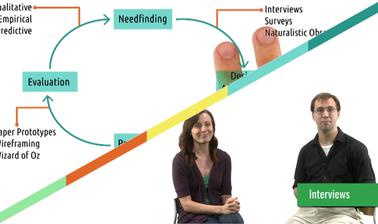
Build on your knowledge of HCI’s core principles by learning to design interfaces in the real world. Begin with the ethics of human subjects research, then learn critical methods for requirements gathering and brainstorming design alternatives. In this course, you’ll begin by learning the design life cycle. This is the process by which we investigate user needs, brainstorm potential designs, create prototypes, and evaluate those prototypes. This life cycle provides the structure for the third and fourth courses in this professional certificate.

Self Paced
Self-Paced
Human-Computer Interaction IV: Evaluation, Agile Methods & Beyond (edX) EdX
Georgia Institute of Technology,GTx

Human-Computer Interaction IV: Evaluation, Agile Methods & Beyond (edX)

Complete your understand of the design life cycle by learning to take interface ideas, prototype them quickly, and evaluate them with real users. Finally, tie principles and methods together and learn the next steps you could take in HCI. This course takes you through the last nine lessons of CS6750: Human-Computer Interaction as taught in the Georgia Tech Online Master of Science in Computer Science program.

Self Paced
Self-Paced
Healthy Urban Systems - Part 3 : Design and policies (Coursera) Coursera
University of Lausanne

Healthy Urban Systems - Part 3 : Design and policies (Coursera)

This MOOC is the third part (out of three parts) of the whole MOOC on Healthy Urban Systems. This PART III is very recommended (but not obliged) to take after the PART I and PART II. Once you understood the main concepts and visions of Urban Health, and the best practices of observation in PART I, the theories and models in PART II, you are better prepared to take this PART III on Design and policies.

Aug 31st 2026
5-12 Weeks
Enabling Community-Based Leadership in Design: Sustainable Development of Historic Faith Buildings (FutureLearn) FutureLearn
The Open University,UNESCO UNITWIN Complex Systems Digital Campus,The Glass-house

Enabling Community-Based Leadership in Design: Sustainable Development of Historic Faith Buildings (FutureLearn)

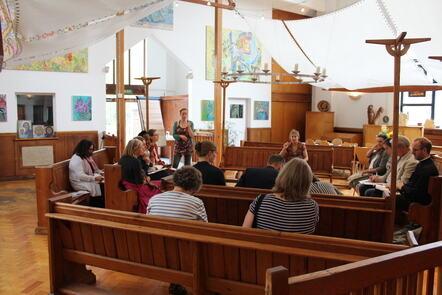
Mobilise the power of communities to re-imagine and shape their place. Learn how to enable communities to lead design initiatives in places of worship. Apart from being special places where people practise their faith, places of worship play an important role for the wider community by providing pastoral care and much-needed local services. Community-based design initiatives can enhance the value of these places as a sustainable resource for multiple communities.

Self Paced
5-12 Weeks
Knowledge-Based AI: Cognitive Systems (Udacity) Udacity
Georgia Institute of Technology,Udacity

Knowledge-Based AI: Cognitive Systems (Udacity)

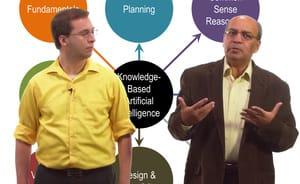
The Core of Artificial Intelligence. This is a core course in artificial intelligence. It is designed to be a challenging course, involving significant independent work, readings, assignments, and projects. It covers structured knowledge representations, as well as knowledge-based methods of problem solving, planning, decision-making, and learning.

Self Paced
Self-Paced
Data Visualization in Tableau (Udacity) Udacity
Udacity

Data Visualization in Tableau (Udacity)

Learn the fundamentals of data visualization and practice communicating with data. This course covers how to apply design principles, human perception, color theory, and effective storytelling with data. If you present data to others, aspire to be a business analyst or data scientist, or if you’d like to become more effective with visualization tools, then you can grow your skills with this course.

Self Paced
Self-Paced
Cree Increíbles Diseños de Mercadeo usando Canva (Coursera) Coursera
Coursera Project Network

Cree Increíbles Diseños de Mercadeo usando Canva (Coursera)

Al final del Proyecto usted podrá crear un gráfico/diseño de ejemplo/muestra de redes sociales para empresas. El gráfico se puede compartir en las plataformas de redes sociales de su empresa. Podrá incorporar la paleta de colores de su guía de estilo empresarial para crear el reconocimiento de la marca como parte de su estrategia de mercadeo en redes sociales.

Aug 24th 2026
Self-Paced
Create video, audio and infographics for online learning (Coursera) Coursera
Macquarie University

Create video, audio and infographics for online learning (Coursera)

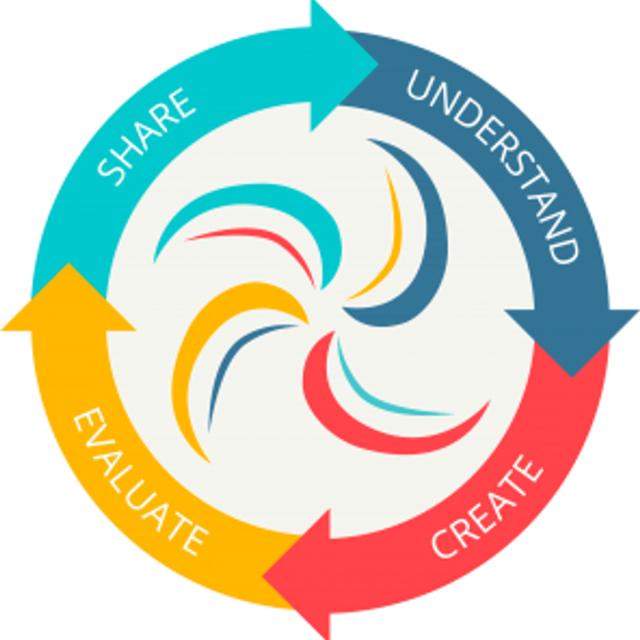
Multimodal texts make learning interesting. Video, podcasts and infographics not only have the capability to excite and engage, but to reach a broader demography of learners who don’t thrive on verbal language knowledge acquisition and exchange alone. Multimodal texts provide a variety of ways in which to communicate and provide information to learners, as well as meet the needs of different learners’ preferences.

Aug 24th 2026
5-12 Weeks
Introdução ao Desenvolvimento de Aplicativos Android (Coursera) Coursera
Universidade Estadual de Campinas - UNICAMP

Introdução ao Desenvolvimento de Aplicativos Android (Coursera)

Este curso tem como objetivo propiciar um primeiro contato com a Programação para Dispositivos Móveis que operam na plataforma Android. O Android Studio será utilizado como ambiente de desenvolvimento desde o início do curso e você receberá dicas de como obter ajuda quando alguma tarefa estiver consumindo mais tempo do que o necessário. Ao solucionar problemas por conta própria, você irá adquirir a autonomia necessária para concluir projetos de programação.

Sep 7th 2026
5-12 Weeks
Design Basics of Steel Buildings (Coursera) Coursera
L&T EduTech

Design Basics of Steel Buildings (Coursera)

"Design Basics of Steel Buildings" is a comprehensive course that covers all fundamental aspects of designing steel structures. Participants delve into the foundational elements essential for successful building design, including understanding the basis for design through comprehensive reports and considering site location in conjunction with building functionality. Geometric parameters of the building are explored to ensure structural integrity and aesthetic appeal.

Aug 31st 2026
5-12 Weeks