Open Design (Coursera)

Offered by Duke University,
Open Design (Coursera)

What is design? How is it a deeply human endeavor? How can we design better products, services, and experiences in our communities? If you’re interested in helping create a more equitable and accessible world, this Center for Computational Thinking module on Open Design is for you.

Class Deals by MOOC List - Click here and see Coursera's Active Discounts, Deals, and Promo Codes.

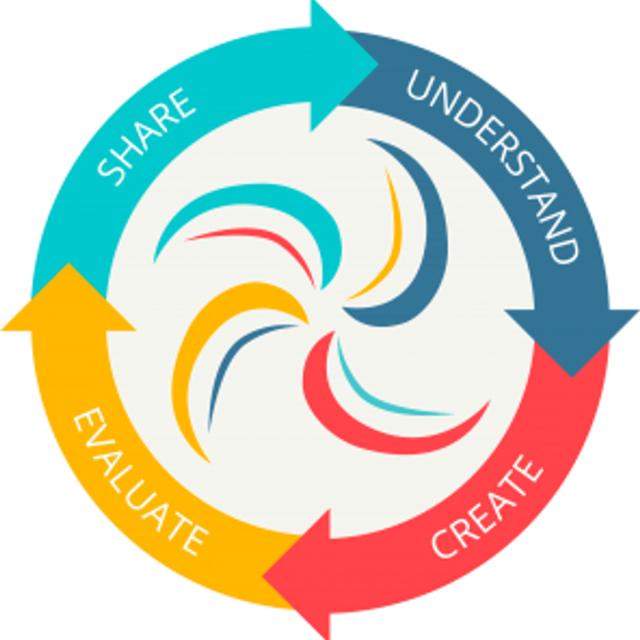
In this introductory module to Open Design, you’ll learn how you can center equity in your design processes. You’ll learn how the iterative four mindsets of Open Design — understand, create, evaluate, and share — will guide you to meaningfully impact your community. The principles at the heart of Open Design — active inclusivity, transparency, and collaboration — are applicable to work in all fields, providing you with a reflective framework as you make important decisions.
This module provides the background on Open Design and its relationship to similar methodologies. After completing this introductory module, you should have the knowledge necessary to explain Open Design to others — and continue your Open Design journey with other learning opportunities.

Syllabus

WEEK 1
Getting Started with Open Design
What is design? How is it a deeply human endeavor? How can we design better products, services, and experiences in our communities? If you’re interested in helping create a more equitable and accessible world, this Center for Computational Thinking module on Open Design is for you.
In this introductory module to Open Design, you’ll learn how you can center equity in your design processes. You’ll learn how the iterative four mindsets of Open Design — understand, create, evaluate, and share — will guide you to meaningfully impact your community. The principles at the heart of Open Design — active inclusivity, transparency, and collaboration — are applicable to work in all fields, providing you with a reflective framework as you make important decisions. This module provides the background on Open Design and its relationship to similar methodologies. After completing this introductory module, you should have the knowledge necessary to explain Open Design to others — and continue your Open Design journey with other learning opportunities.

Go to Class
MOOC List is learner-supported. When you buy through links on our site, we may earn an affiliate commission.

Related Courses

Assessing Cultural Climate (Coursera) Coursera
Rice University

Assessing Cultural Climate (Coursera)

Assessment is an integral part of any strategic effort. This course provides a familiarization of assessment practices and provides learners with various traditional and nontraditional methods of measurement to assist in making informed improvements to their DE&I initiatives. You will also expand your knowledge in creating bias-free and inclusive evaluation tools with special emphasis placed on assessing organizational climate and culture.

Jun 22nd 2026
5-12 Weeks
Our World and How to Accept It (Coursera) Coursera
University of Colorado Boulder

Our World and How to Accept It (Coursera)

Thriving organizations strive for equity at all levels. Dynamic global DEI initiatives strengthen connectivity within individual teams and foster cross-cultural collaboration and mutual understanding while encouraging the inclusion of employees from all regions. Broader global relations aside, there also exist country-specific ethnic dynamics that make DEI a critical conversation. Global dynamics present a possible risk (and opportunity) for organizations. In this course, we will focus on how successful DEI initiatives advance business goals, the historical context for DEI work, and definitions of several key terms and concepts.

Jun 22nd 2026
5-12 Weeks
People Analytics (Coursera) Coursera
University of Pennsylvania

People Analytics (Coursera)

People analytics is a data-driven approach to managing people at work. For the first time in history, business leaders can make decisions about their people based on deep analysis of data rather than the traditional methods of personal relationships, decision making based on experience, and risk avoidance. In this brand new course, three of Wharton’s top professors, all pioneers in the field of people analytics, will explore the state-of-the-art techniques used to recruit and retain great people, and demonstrate how these techniques are used at cutting-edge companies. They’ll explain how data and sophisticated analysis is brought to bear on people-related issues, such as recruiting, performance evaluation, leadership, hiring and promotion, job design, compensation, and collaboration.

Jun 22nd 2026
4 Weeks
Practicing Collaborative, Continuous Improvement (Coursera) Coursera
University of Michigan

Practicing Collaborative, Continuous Improvement (Coursera)

Practicing Collaborative, Continuous Improvement supports local change agents in developing foundational capabilities for iterative analysis, design, implementation, and evaluation. Learn to address local needs, opportunities, and problems, with a focus on improvement science as a specific approach to collaborative, continuous improvement that is useful in classrooms, communities, schools, and systems.

Jun 22nd 2026
5-12 Weeks
Best Practices in Planning DE&I Interventions (Coursera) Coursera
Rice University

Best Practices in Planning DE&I Interventions (Coursera)

Best practices in Planning DE&I Interventions presents a “how-to,” step-by-step approach to planning around and executing diversity initiatives. From recruitment, retention, and training, this module addresses issues such as what do you do when your organization is not ready for DE&I, to how to turn principle concepts of DE&I into practical application and desired deliverables.

Jun 22nd 2026
5-12 Weeks
Leadership for an Increasingly Diverse World (Coursera) Coursera
University of Notre Dame

Leadership for an Increasingly Diverse World (Coursera)

Geared toward working professionals in both the corporate and nonprofit sectors, Leadership for an Increasingly Diverse World, takes leaders from being passively engaged to being actively engaged in the fight for diversity, inclusion, equity, and justice. To lead effectively in the 21st century workplace and beyond requires cultivating a more connected, more diverse, more inclusive, and more globally reflective organizational culture. This course will help leaders embody a diversity, inclusion, equity, and justice mindset so that they can adapt and respond to a rapidly changing, increasingly diverse, and globally connected world.

Jun 22nd 2026
4 Weeks
Influencing, Collaboration and Decision Making (Coursera) Coursera
Starweaver

Influencing, Collaboration and Decision Making (Coursera)

This course explores strategies for influencing others, collaborating effectively, and making informed decisions. Students will learn how to build credibility, negotiate effectively, and analyze information to make sound judgments and decisions. The course covers techniques to foster a culture of trust and cooperation, resolve conflicts, and make consensus-based decisions. Through interactive exercises and case studies, students will develop their influencing and collaboration skills, enabling them to work effectively with stakeholders at different levels.

Jun 22nd 2026
1 Week
Operations Systems Excellence (Coursera) Coursera
University of London

Operations Systems Excellence (Coursera)

The sole task of organisations is to either deliver customers the services that they require, or design, manufacture, and deliver products that customers are after. How do firms and organisations manage the very tasks that they carry out? How can operations themselves give excellence to organisations to enable them to be competitive? Operations management is concerned with the design, planning and control of operating systems for the provision of goods and services. This course will provide an introduction not only into the development of operational systems but more importantly into the how operating methods can help achieve corporate excellence.

Jun 22nd 2026
3 Weeks
Design Basics of Steel Buildings (Coursera) Coursera
L&T EduTech

Design Basics of Steel Buildings (Coursera)

"Design Basics of Steel Buildings" is a comprehensive course that covers all fundamental aspects of designing steel structures. Participants delve into the foundational elements essential for successful building design, including understanding the basis for design through comprehensive reports and considering site location in conjunction with building functionality. Geometric parameters of the building are explored to ensure structural integrity and aesthetic appeal.

Jun 22nd 2026
5-12 Weeks
Product Management: Foundations & Stakeholder Collaboration (Coursera) Coursera
SkillUp EdTech

Product Management: Foundations & Stakeholder Collaboration (Coursera)

Product managers play a crucial role in driving the development and success of a product, serving as a critical link between customers, stakeholders, and the development team. They are responsible for understanding market requirements, defining product objectives and features, and overseeing the entire product lifecycle from conception to its release. This course will provide you with valuable skills in fostering productive collaborations, engaging stakeholders effectively, and enhancing communication abilities.

Jun 22nd 2026
5-12 Weeks
Designing an SAP Solution (Coursera) Coursera
SAP

Designing an SAP Solution (Coursera)

Designing an SAP Solution is the fourth course in the SAP Technology Consultant Professional Certificate program. The course dives into the SAP Implementation lifecycle so you can immerse yourself in the key phases, including design, pitch, and re-design. You’ll work with SAP Activate methodology and look at how to identify business requirements to determine system and data requirements. You’ll learn how to interrogate the gaps between SAP technical capabilities within Business Technology Platform and the customer’s existing environment.

Jun 22nd 2026
5-12 Weeks