EdX

Atomic and Optical Physics I - Part 4: Atom-Light Interactions 2: Line Broadening and Two-Photon Transitions (edX)

Offered by MIT, MITx,
Atomic and Optical Physics I - Part 4: Atom-Light Interactions 2: Line Broadening and Two-Photon Transitions (edX)

Fourth part of a course in modern atomic and optical physics: the physics of line shapes and two-photon transitions.

Class Deals by MOOC List - Click here and see EdX's Active Discounts, Deals, and Promo Codes.

This is the fourth of five modules to introduce concepts and current frontiers of atomic physics and to prepare you for cutting-edge research:
8.421.1x: Resonance
8.421.2x: Atomic structure and atoms in external field
8.421.3x: Atom-Light Interactions 1 -- Matrix elements and quantized field
8.421.4x: Atom-Light interactions 2 -- Line broadening and two-photon transitions
8.421.5x: Coherence
The fourth module, 8.421.4x, includes a comprehensive discussion of line broadening effects, including Doppler effect, sidebands for trapped particles, power broadening, and effects of interactions and collisions. The concept of two-photon transitions is relevant for Raman processes and light scattering.
At MIT, the content of the five modules makes the first of a two-semester sequence (8.421 and 8.422) for graduate students interested in Atomic, Molecular, and Optical Physics. This sequence is required for Ph.D. students doing research in this field.
In these modules you will learn about the interaction of radiation with atoms: resonance; absorption, stimulated and spontaneous emission; methods of resonance, dressed atom formalism, masers and lasers, cavity quantum electrodynamics; structure of simple atoms, behavior in very strong fields; fundamental tests: time reversal, parity violations, Bell's inequalities; and experimental methods.
Completing the two-course sequence allows you to pursue advanced study and research in cold atoms, as well as specialized topics in condensed matter physics.

What you'll learn:
Physics of lineshapes and two-photon transitions, including:

  • The method of separated oscillatory fields
  • Doppler and recoil shifts
  • Spectral broadening
  • Doppler and pressure broadening
  • Stimulated and spontaneous Raman scattering
Go to Class
MOOC List is learner-supported. When you buy through links on our site, we may earn an affiliate commission.

Related Courses

Quantum Mechanics (edX) EdX
Georgetown University,GeorgetownX

Quantum Mechanics (edX)

Learn the quantum mechanics needed to prepare you for the second quantum revolution (focused on quantum sensing). We use a new way to teach quantum for undergraduates by focusing on conceptual ideas and operator manipulations. This allows us to discuss more applications to experiment usually done. You need a background in the full calculus sequence and in math methods. Freshman physics and modern physics is recommended. This course is appropriate for physicists, chemists and engineers.

Aug 21st 2023
13-24 Weeks
AP® Physics 2 - Part 1: Fluids and Thermodynamics (edX) EdX
Rice University,RiceX

AP® Physics 2 - Part 1: Fluids and Thermodynamics (edX)

The first course in a comprehensive series designed to prepare you for the AP Physics 2 exam, focusing on thermodynamics and fluids. Preparing for the AP Physics 2 exam requires a deep understanding of many different topics in physics as well as an understanding of the AP exam and the types of questions it asks. This course is Part 1 of our X-Series: AP Physics 2 and it is designed to prepare you for the AP exam.

No sessions available
4 Weeks
Quantum Mechanics of Molecular Structures (edX) EdX
The University of Tokyo,UTokyoX

Quantum Mechanics of Molecular Structures (edX)

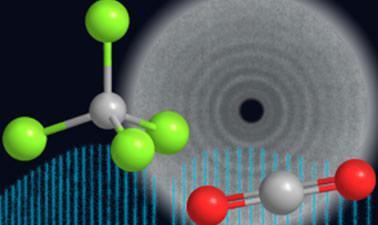
Learn two methods used to determine molecular structures and their properties in this introduction to Quantum Mechanics. Knowing the geometrical structure of the molecules around us is one of the most important and fundamental issues in the field of chemistry. This course introduces the two primary methods used to determine the geometrical structure of molecules: molecular spectroscopy and gas electron diffraction.

Self Paced
Self-Paced
How Stuff Moves, Part 3: Wave Motion (edX) EdX
Harvey Mudd College,HarveyMuddX

How Stuff Moves, Part 3: Wave Motion (edX)

WHAT IS “HOW STUFF MOVES”? Mechanics is the study of how things move. It was the first quantitative science to achieve wide power to predict behavior, including things never before directly observed. Newton, Leibniz, and others invented calculus to describe motion and we will find both differential and integral calculus extremely useful throughout this course.

No sessions available
4 Weeks
Fundamentos de Mecánica para Ingeniería (edX) EdX
Universitat Politècnica de València,UPValenciaX

Fundamentos de Mecánica para Ingeniería (edX)

Estudiaremos la cinemática y la dinámica del punto, los conceptos de trabajo y potencia y la energía mecánica. Se aborda el estudio del universo físico analizando objetos en movimiento. Se definen y analizan todas las magnitudes y leyes físicas que permiten describir geométrica y causalmente el movimiento de cuerpos representados por un punto.

Self Paced
Self-Paced
Formulación y nomenclatura de compuestos químicos (edX) EdX
Universitat Politècnica de València,UPValenciaX

Formulación y nomenclatura de compuestos químicos (edX)

Aprenderemos cómo establecer las fórmulas de los compuestos químicos inorgánicos y orgánicos más usuales y las reglas para nombrarlos. Toda la materia está formada por elementos o compuestos químicos que son resultado de la combinación de átomos. Cada compuesto presenta una determinada composición que se corresponde con una fórmula y se identifica con un nombre.

Self Paced
Self-Paced
Solid State Devices 1 (edX) EdX
Purdue University,PurdueX

Solid State Devices 1 (edX)

Semiconductor are everywhere in human activities, from your credit card to space exploration. This graduate-level introduction brings aspects of physics, chemistry, and engineering together to understand, analyze, and design transistors and solar cells. This course provides the graduate-level introduction to understand, analyze, characterize and design the operation of semiconductor devices such as transistors, diodes, solar cells, light-emitting devices, and more.

Jan 9th 2023
13-24 Weeks
Mastering Quantum Mechanics (edX) EdX
MIT,MITx

Mastering Quantum Mechanics (edX)

Learn the foundations of quantum mechanics – wave mechanics, spin one-half, vector spaces and linear operators, the Heisenberg uncertainty principle, quantum dynamics, two-state systems, entanglement, and angular momentum. This course offers a sophisticated view of quantum mechanics and its proper mathematical foundation. Completing the course will give you the tools needed to do research in quantum mechanics and to understand many current developments.

No sessions available
13-24 Weeks