Assessment for Learning (Coursera)

Assessment for Learning (Coursera)

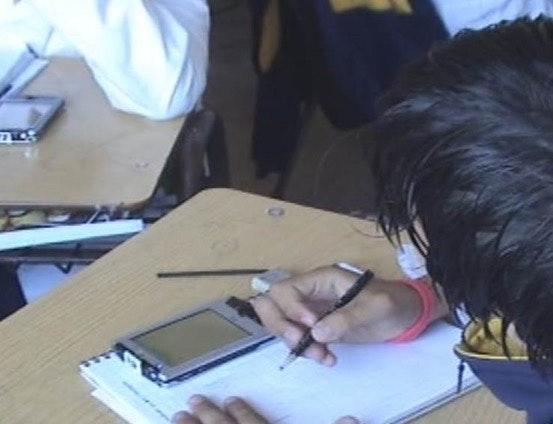
For several decades now, assessment has become an increasingly pressing educational priority. Teacher and school accountability systems have come to be based on analysis of large-scale, standardized summative assessments. As a consequence, assessment now dominates most conversations about reform, particularly as a measure of teacher and school accountability for learner performance. This course is an overview of current debates about testing, and analyses the strengths and weaknesses of a variety of approaches to assessment.

Class Deals by MOOC List - Click here and see Coursera's Active Discounts, Deals, and Promo Codes.

Behind the often heated and at times ideologically gridlocked debate is a genuine challenge to address gaps in achievement between different demographically identifiable groups of students. There is an urgent need to lift whole communities and cohorts of students out of cycles of underachievement. For better or for worse, testing and public reporting of achievement is seen to be one of the few tools capable of clearly informing public policy makers and communities alike about how their resources are being used to expand the life opportunities for their children.
The course also focuses on the use of assessment technologies in learning. It will explore recent advances in computer adaptive and diagnostic testing, the use of natural language processing technologies in assessments, and embedded formative assessments in digital and online curricula. Other topics include the use of data mining and learning analytics systems in learning management systems and educational technology platforms. Participants will be required to consider issues of data access, privacy and the challenges raised by ‘big data’ including data persistency and student profiling.
This course is one of a series of eight MOOCs created by Bill Cope and Mary Kalantzis for the Learning Design and Leadership program at the University of Illinois. If you find this MOOC helpful, please join us in others!

Syllabus

Week 1
Course Orientation + Intelligence Tests
This course is an overview of current debates about testing, and analyses of the strengths and weaknesses of a variety of approaches to assessment. The module also focuses on the use of assessment technologies in learning. It will explore recent advances in computer adaptive and diagnostic testing, the use of natural language processing technologies in assessments, and embedded formative assessments in digital and online curricula. Other topics include the use of data mining and learning analytics in learning management systems and educational technology platforms. The module also considers issues of data access, privacy, and the challenges raised by ‘big data’ including data persistency and student profiling. A final section addresses the processes of educational evaluation. Video presenters include Mary Kalantzis, Bill Cope, Luc Paquette, and Jennifer Greene.

Week 2
Kinds of Assessments
The word "standard" is used in two quite different ways in testing theory and practice: to create a common measure of learning in "standardized assessments"; and the generalized and measurable objectives of learning. Sometimes standardized assessments are used to determine the outcomes of standards-based education, but often not. Standards-based assessment can also be criterion-referenced, and self-referenced.

Week 3
New Assessments in the Digital Age
Computer-mediated assessments can be used to mechanize, and so make more efficient, traditional select-and-supply response assessments. However, new opportunities also present themselves in the form of technologies and assessment processes called "learning analytics."

Week 4
Educational Data Mining + Evaluation
In this module, Luc Paquette discusses educational data mining – a new generation of techniques with which to analyze student learning for the purposes of assessment, evaluation, and research. Finally, Jennifer Greene explores theories and practices of evaluation. Assessment data may be used to support evaluations, however evaluation is a considerably broader process.


Go to Class
MOOC List is learner-supported. When you buy through links on our site, we may earn an affiliate commission.

Related Courses

Mindshift: Break Through Obstacles to Learning and Discover Your Hidden Potential (Coursera) Coursera
McMaster University

Mindshift: Break Through Obstacles to Learning and Discover Your Hidden Potential (Coursera)

Mindshift is designed to help boost your career and life in today’s fast-paced learning environment. Whatever your age or stage, Mindshift teaches you essentials such as how to get the most out of online learning and MOOCs, how to seek out and work with mentors, the secrets to avoiding career ruts (and catastrophes) and general ruts in life, and insights such as the value of selective ignorance over general competence.

Jun 22nd 2026
4 Weeks
Critical Issues in Urban Education (Coursera) Coursera
University of Chicago

Critical Issues in Urban Education (Coursera)

Urban school reform in the United States is characterized by contentious, politicized debate. This course explores a set of critical issues in the education and educational reform space, with a focus on aspects of the field that have sparked controversy and polarized views. We will dig into these debates, situating them within the larger history of public education and school reform, and considering the viewpoints, the evidence, and translation of issues into educational policy.

Jun 22nd 2026
5-12 Weeks
Expanding SEL (Coursera) Coursera
University of Colorado Boulder

Expanding SEL (Coursera)

Social and emotional learning, or SEL, programs have flourished in schools during the last decade. In this course the instructors (Emily Price and Ben Kirshner) introduce and help you examine community based and youth-empowerment approaches to social and emotional learning. Some of these approaches address the impact of social and political systems, such as immigration and structural racism, on children’s social and emotional experiences.

Jun 22nd 2026
5-12 Weeks
Information & Digital Literacy for University Success (Coursera) Coursera
The University of Sydney

Information & Digital Literacy for University Success (Coursera)

This Specilaization is aimed at preparing students for undergraduate study in an English-speaking university. The course equips you for full participation and engagement with your studies by building awareness and understanding of the core values and expectations of academic culture, and providing you with practical strategies to apply to your studies. In this course, you will learn how to develop your Information & Digital Literacy Skills to help you achieve success in your university studies.

Jun 22nd 2026
5-12 Weeks
Communication Skills for University Success (Coursera) Coursera
The University of Sydney

Communication Skills for University Success (Coursera)

This Specialization is aimed at preparing students for undergraduate study in an English-speaking university. The course equips you for full participation and engagement with your studies by building awareness and understanding of the core values and expectations of academic culture, and providing you with practical strategies to apply to your studies. In this course, you will learn how to develop your Communication Skills to help you achieve success in your university studies.

Jun 22nd 2026
5-12 Weeks
Multimodal Literacies: Communication and Learning in the Era of Digital Media (Coursera) Coursera
University of Illinois at Urbana-Champaign

Multimodal Literacies: Communication and Learning in the Era of Digital Media (Coursera)

Whereas the focus of traditional literacy pedagogy has been the written word in its standard and literary forms, this courser expands the scope of literacy learning to encompass contemporary multimodal texts and the wide range of ways of making meaning that occur in different social and cultural contexts. Another course, "Literacy Teaching and Learning: Aims, Approaches and Pedagogies" addresses pedagogical aspects of literacies. This "Multimodal Literacies" learning module does not require or expect that participants will have already completed the "Literacy Teaching and Learning" module.

Jun 22nd 2026
4 Weeks
How to Write and Publish a Scientific Paper (Project-Centered Course) (Coursera) Coursera
École Polytechnique

How to Write and Publish a Scientific Paper (Project-Centered Course) (Coursera)

In this project-based course, you will outline a complete scientific paper, choose an appropriate journal to which you'll submit the finished paper for publication, and prepare a checklist that will allow you to independently judge whether your paper is ready to submit. What you'll need to get started: This course is designed for students who have previous experience with academic research - you should be eager to adapt our writing and publishing advice to an existing personal project.

Jun 22nd 2026
4 Weeks
SEL Capstone (Coursera) Coursera
University of Colorado Boulder

SEL Capstone (Coursera)

In this course the instructors (Randy Testa, Ben Kirshner, Emily Price, and Dan Liston) have designed two culminating projects for the Coursera Specialization entitled – “The Teacher and SEL”. The two options include: “A Teacher Implementation Plan”, and “The Cinema, SEL, and the Classroom”.

Jun 22nd 2026
4 Weeks
Teach English Now! Foundational Principles (Coursera) Coursera
Arizona State University

Teach English Now! Foundational Principles (Coursera)

Through a series of engaging metaphors and stories, prospective and current EFL/ESL teachers will identify, summarize, and evaluate 7 basic language learning paradigms. Learners will be presented information on such foundational principles as motivation, risk taking, two different modes of learning, and balancing the teacher profession. Learners are also given an understanding of basic techniques founded on those principles, such as teacher talk, looking “ridiculous” in order to lower the affective filter, and networking. With these foundational principles in mind, ESL/EFL teachers will scrutinize common assumptions about language learning by comparing how they stack up to research-based core principles.

Jun 22nd 2026
5-12 Weeks
Comunicación, experimentación y aprendizaje en liderazgo (Coursera) Coursera
Universidad de los Andes

Comunicación, experimentación y aprendizaje en liderazgo (Coursera)

Este es un curso práctico, enfocado en planear experimentos, ensayos y errores para intervenir en sistemas humanos y movilizarlos a trabajar en desafíos complejos. El Liderazgo para problemas complejos es un deporte de contacto, es muy útil entrenar, tener planes y luego ser capaz de improvisar efectivamente durante la acción.

Jun 23rd 2026
4 Weeks