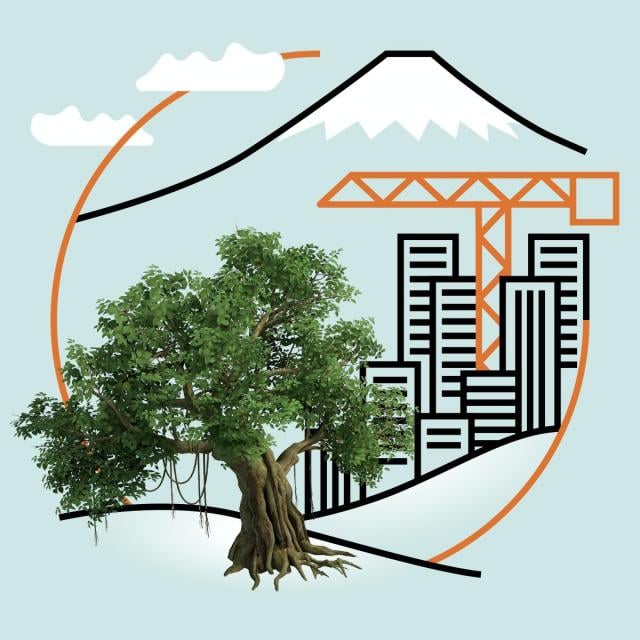
In this course, featuring many researchers from the University of Zurich and international institutions, we will introduce you to some of the most vibrant cultural trends addressing landscape appreciation, degradation, protection, and rehabilitation that currently circulate in the Asian hemisphere.
Class Deals by MOOC List - Click here and see Coursera's Active Discounts, Deals, and Promo Codes.
You will learn about concepts of landscape in Asian religions, philosophy, social sciences, history and the arts and their reverberation in selected environmental projects in China, India and Japan. Furthermore, we will discuss how they are critically reflected upon in the context of the environmental humanities, and observe how an interdisciplinary approach towards regional ecosystems past and present reaches out beyond pragmatic technological solutions to mitigate environmental damage. Following us on our different paths and trajectories through the five modules of the course, you will encounter many of the reasons why environmental humanities study projects which strive to change people’s prevalent attitudes, values and behavioural patterns in order to redeem the rapidly globalizing crisis, and how they go about it.
Having acquainted yourself with the stories Asia’s landscapes – and landscape representations – tell about actual and possible human-nature relationships, you can compare and evaluate their potential to bring about the desired change and define your own range of actions as an informed stakeholder for creating a sustainable future. What is arguably no less intriguing: you will learn how to appreciate a broad range of eco-aesthetic forms that re-enchant our lives by creatively interacting with the more-than-human world.
You can follow the five modules of the course consecutively or just study the modules that interest you the most. If you want to earn a certificate, you need to complete all of the modules including the quizzes at the end of each module.
These are the topics of the 5 Modules of this course:
Module 1: Concepts of landscape past and present and their cosmological underpinnings.
Module 2: Entangled landscapes comprising cultural flows of concepts and forms, contemporary gardens on the move, nostalgic elegies of demolished sites and rural reconstruction projects.
Module 3: Discussion of two religious communities in India (the Parsi-Zoroastrians and the Auroville community) and their relationship with the environment.
Module 4: Environmental debates tackling religious concepts and social practices and the problem of waste disposal in India.
Module 5: Environmental movements and the impact of Fukushima on attitudes towards nuclear energy in Japan, creative activism including arts projects and documentaries to protest against pollution and landscape degradation and raise environmental awareness in the Sinosphere, and emergent concepts for sustainable community life on the planet.
Syllabus
WEEK 1
The Roots and Routes of Asian Environmental Thought
We will begin this course by tracing historical ways of thinking about the environment in China. Through a range of examples, traditional notions of “nature” and “landscape“ will be introduced. These will be compared with modern transcultural and Western concepts. After studying a selection of key concepts pertaining to the construction of landscape (shanshui) as an aesthetic category, we will visit two sites in Switzerland where ancient and modern landscape art works from China are collected and made accessible to a wider public. Finally, we will look more closely into one historically and culturally formative theme in Chinese eco-aesthetic practice, namely the representation of human bodies as landscapes and vice versa. We will argue that the tradition of imagining, and mapping, bodies as structurally and materially embedded in the cosmic body has inspired ancient and modern artists to reflect critically upon the place and role of human beings in the world at large.
WEEK 2
Entangled Landscapes - Chinese Garden Concepts and Global Environments
Having assessed China’s ancient and modern conceptions of landscapes, and how they moved between cultures, social groups and societies, we will turn to the concept of entangled landscapes in the second module. Here, we will evaluate representations and narratives that explore the agency, conundrums and possibilities of applied transcultural aesthetic (and functional) paradigms in national politics of garden and park design. In a first step, the traveling concept of the Chinese garden will help us to evaluate the cultural and geopolitical affordances of gardens between Asia and Europe that are very often intimately connected to utopian visions of the ideal community. Next, we will encounter two different examples of a Chinese garden that bespeak their original sociopolitical functionality and conceptual underpinnings as much as the changes of these same when travelling across time and space. Our third theme of hometown nostalgia will study the turn of artists and intellectuals towards imaginary gardens of the past in view of large-scale heritage demolition in China. Finally, we will probe into the history of rural reconstruction and encounter two successful approaches towards the re-/creation of sustainable landscapes.
WEEK 3
Indian Religious Approaches: Two Communities
When actually implemented in experimental contexts, utopian ideas and projects draw on alternative visions of human interaction with (existing or imaginary) landscapes. Auroville, for example, is a project based on the foundations of Sri Aurobindo's philosophy of religion. The community was established in 1968 next to the Aurobindo Ashram in Pondicherry (Tamil Nadu, India) by Mira Alfassa, one of the closest disciples of Sri Aurobindo. In that same year, Auroville was declared a project in congruence with the targets and ideals of UNESCO, who aims “to bring together in close juxtaposition the values and ideals of different civilizations and cultures …”. Both UNESCO and the Indian State officially support Auroville. Moreover, architects across the globe participated in the construction of, and were inspired by the social and ecological visions that characterize Auroville. When exploring this community's approach to landscape and ecology, we will tackle the underlying historical legacies and connectivities between India and Europe and listen to cultural voices engaging with the experiment. In a similar vein, religious practice is intimately connected with the particular features of regional topographies, landscapes and ecologies. For example, Zoroastric rituals in Mumbai were linked to the local population of vultures. The practical consequences of the extinction of the latter will be analysed in a next step, thematizing death and the spiritual/ritual processes that accompany the “natural“ transformation of living bodies into matter. While studying the Zoroastrian community in Mumbai, we will take a close look at the question of how their rituals are adapted to changing environmental conditions.
WEEK 4
Environment in India: Concepts and Socio-Economic Conditions
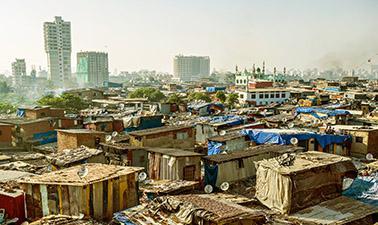
Waste and its disposal is another important issue heavily impacting on landscapes and their local inhabitants. It challenges conventional political approaches, mobilises the public/private spheres, and can inspire pathbreaking scientific and social experiments as well as innovative literary, arts and design projects. High rates of economic growth are radically transforming Indian society and the Indian environment. The winners in this process have attained middle class status, and live increasingly consumerist lifestyles. However, growth has also produced losers: millions have lost their land and livelihoods to expanding mining concerns in the forests of central India, and to sprawling real estate developments in and around urban centres. Moreover, domestic and industrial waste, input intensive agriculture, and growing traffic have all radically undermined the quality of both urban and rural environments. We will examine the contradictions and the limitations inherent in contemporary forms of ‘bourgeois environmentalism’, but also critically assess the suggestion that civil society and environmental concerns are indeed the preserve of ‘bourgeois’ elites.
WEEK 5
East Asian Environmentalism
In the last module of this course, we will look at how, in the age of the Anthropocene, the role of humans came to be conceptualized in opposition to nature, and assert the validity of certain traditional Asian ideas suggesting that we are not at the centre, nor in control of the environment. Furthermore, we will examine some of the ways in which the natural world has been “remade” within the planetary scope both discursively and materially - for instance, by way of a largely materialistic concept of historical progress encouraging industrialized resource extraction, colonial patterns of wealth accumulation, and unsustainable models of economic growth - which led to the transformation of entire ecosystems. We will moreover explore how political and economic stakeholders, activists and intellectuals in Asia get productively involved with these processes.