Modern Middle East and Southwest Asia (saylor.org)

Offered by Saylor.org,
Modern Middle East and Southwest Asia (saylor.org)

This course will introduce you to the history of the nations and peoples of the Middle East and Southwest Asia from 1919 to the present.

This course will introduce you to the history of the nations and peoples of the Middle East and Southwest Asia from 1919 to the present.You will learn about the major political, economic, and social changes that took place throughout the region during this 100-year period.This course will have a chronological structure.Each unit will include representative primary source documents that illustrate important overarching political, economic, and social themes, such as the emergence of nationalist movements following World War I, European political and economic imperialism during the first half of the 20th century, the creation of the nation of Israel, regional economic development, and the impact of secular and religious trends on Middle Eastern society and culture during the second half of the 20th century.By the end of this course, you will understand how the countries of the region have overcome significant social, economic, and political problems as they have grown from weak former colonies into modern nation-states, and you will recognize the challenges that these nations currently face as they struggle with issues of economic development as well as social and political unrest.

Upon successful completion of this course, the student will be able to:

Identify and explain major political, social and economic trends, events, and people in history of the Middle East and Southwest Asia from the beginning of the 20th century to the present.
Explain how the countries of the region have overcome significant social, economic, and political problems as they have grown from weak former colonies into modern nation-states.
Identify and explain the emergence of nationalist movements following World War I, European political and economic imperialism during the first half of the 20th century, the creation of the nation of Israel, regional economic development, and the impact of secular and religious trends on Middle Eastern society and culture during the second half of the 20th century.
Identify and explain the important economic, political, and social developments in the Middle East and Southwest Asia during the twentieth and twenty-first centuries.
Analyze and interpret primary source documents from the 20th and 21st centuries that illustrate important overarching political, economic, and social themes.
Go to Class
MOOC List is learner-supported. When you buy through links on our site, we may earn an affiliate commission.

Related Courses

Soul Beliefs: Causes and Consequences - Unit 2: Belief Systems (Coursera) Coursera
Rutgers University

Soul Beliefs: Causes and Consequences - Unit 2: Belief Systems (Coursera)

Throughout history, the vast majority of people around the globe have believed they have, however defined, a “soul.” While the question of whether the soul exists cannot be answered by science, what we can study are the causes and consequences of various beliefs about the soul and its prospects of surviving the death of the body. Why are soul and afterlife beliefs so common in human history? Are there adaptive advantages to assuming souls exist?

Oct 26th 2026
5-12 Weeks
Understanding China, 1700-2000: A Data Analytic Approach, Part 1 (Coursera) Coursera
The Hong Kong University of Science and Technology - HKUST

Understanding China, 1700-2000: A Data Analytic Approach, Part 1 (Coursera)

The purpose of this course is to summarize new directions in Chinese history and social science produced by the creation and analysis of big historical datasets based on newly opened Chinese archival holdings, and to organize this knowledge in a framework that encourages learning about China in comparative perspective. Our course demonstrates how a new scholarship of discovery is redefining what is singular about modern China and modern Chinese history.

Oct 26th 2026
5-12 Weeks
Modern Revolutions (saylor.org) Saylor Academy
Saylor.org

Modern Revolutions (saylor.org)

In this course, you will gain a better understanding of the modern world by studying some of the most important political revolutions that took place between the 17th century and today. You will seek to understand the causes of each revolution, analyze the ideologies that inspired the revolutionaries, examine revolutionary uses of violence, and consider how historical revolutions still shape contemporary politics.

Self Paced
Self-Paced
Modern Northeast Asia (saylor.org) Saylor Academy
Saylor.org

Modern Northeast Asia (saylor.org)

In this course, we will study how and why the ‘modern’ transformation of Northeast Asia came about, examining both the indigenous and foreign ideas and institutions on which the transformations were based, and comparing how change manifested in different times and places.

Legacy Course
Self-Paced
Arch of Titus: Rome and the Menorah (Coursera) Coursera
Yeshiva University

Arch of Titus: Rome and the Menorah (Coursera)

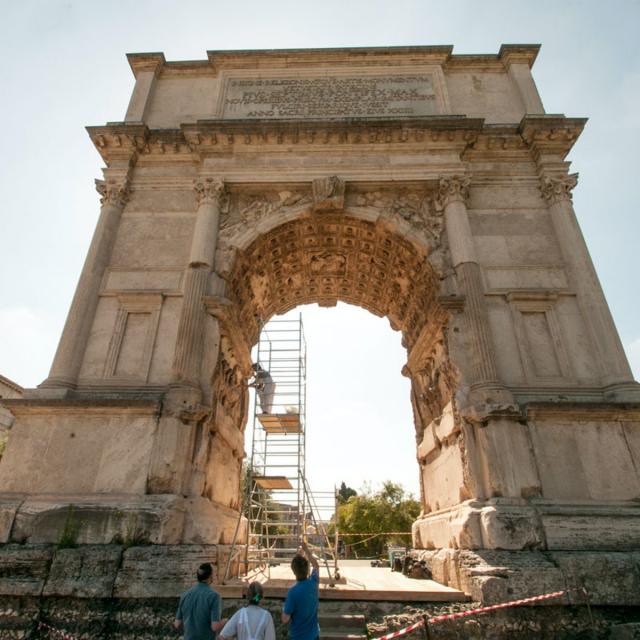
The Arch of Titus: Rome and the Menorah explores one of the most significant Roman monuments to survive from antiquity, from the perspectives of Roman, Jewish and later Christian history and art. The Arch of Titus commemorates the destruction of Jerusalem by the emperor Titus in 70 CE, an event of pivotal importance for the history of the Roman Empire, of Judaism, of Christianity and of modern nationalism. Together with your guide, Professor Steven Fine, you will examine ancient texts and artifacts, gaining skills as a historian as you explore the continuing significance of the Arch of Titus from antiquity to the very present.

Oct 26th 2026
5-12 Weeks