EdX

Vernacular Architecture of Asia: Tradition, Modernity and Cultural Sustainability (edX)

Vernacular Architecture of Asia: Tradition, Modernity and Cultural Sustainability (edX)

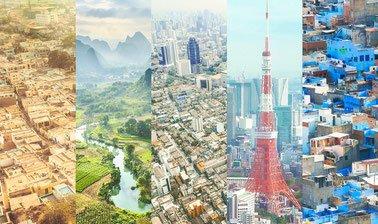
Learn about built environments in Asia and how we can better conserve and sustain vernacular architecture in the future. How do we deal with the challenges and threats to vernacular architecture and make sure that it is sustained in this modern urbanized world? This is the key question we will try to answer in this course.

Class Deals by MOOC List - Click here and see EdX's Active Discounts, Deals, and Promo Codes.

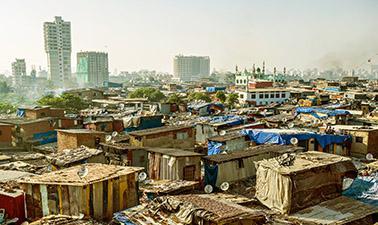
This architecture course takes you on a journey of understanding and appreciating the value of our everyday built environment. In the first two modules, we will explore the deeper socio-cultural meaning of rural vernacular architecture and look at the urban vernacular and challenges of people migrating from villages to live in cities; in module 3, we will focus on what we call ‘informal settlements’ in Asian cities; and in the final two modules, we will explore answers to a few questions that are very relevant to the current status and future development of vernacular architecture, such as:

  • How can we conserve and sustain our vernacular cultural heritage?
  • How can we reconcile tradition with modernity and originality?

We will also cast our eyes into the future, and discuss how the field of vernacular architecture might evolve and develop in the years to come.
Ultimately, the goal of this 5-week course is to help you establish your own viewpoints about the more complex or even contradictory issues in vernacular architecture, so you can make informed decisions regarding the protection and conservation of your local vernacular environments.
Special note: This course can be taken independently from The Search of Vernacular Architecture of Asia, Part 1.

What you'll learn:

  • Deepen your appreciation of the values and meanings of vernacular architecture in your local environments
  • Establish your personal perspectives on the more complex issues in vernacular architecture, such as self-conscious or un-self-conscious way of building, informal settlements, and cultural sustainability
  • Generate your own ideas of how to protect and preserve your local vernacular built environment
Go to Class
MOOC List is learner-supported. When you buy through links on our site, we may earn an affiliate commission.

Related Courses

Circular Economy for a Sustainable Built Environment (edX) EdX
Delft University of Technology,DelftX

Circular Economy for a Sustainable Built Environment (edX)

Learn how the principles of the Circular Economy can be applied to the built environment ranging from products and buildings to metropolitan and regional development strategies. In this course you will become familiar with circularity as a systemic, multi-disciplinary approach, concerned with the different scale, from material to product, building, city, and region.

Self Paced
Self-Paced
Climate Change: Carbon Capture and Storage (edX) EdX
University of Edinburgh,EdinburghX

Climate Change: Carbon Capture and Storage (edX)

Explore the technology that can provide a long-term solution to protect our atmosphere from an excess of carbon dioxide, in the context of global energy, our use of fossil fuels, and climate change. The atmosphere is a shared resource and the amount of greenhouse gases it can absorb is a finite resource. This introductory course to the technology of Carbon Capture and Storage is designed for a wider audience with an interest in energy, sustainability and climate change.

Self Paced
Self-Paced
Sustainable Aviation: The Route to Climate-Neutral Aviation (edX) EdX
Delft University of Technology,DelftX

Sustainable Aviation: The Route to Climate-Neutral Aviation (edX)

To reduce the environmental footprint of the aviation sector we need to start a clean sky revolution. Discover the latest developments in this field – from airplane design, energy carriers, operations – and learn how you can play a role. Sustainable aviation is a key area for climate action. In this course, we will introduce you to various aircraft technologies, and recent innovations and promising future developments in the field of aviation. All necessary mathematical and engineering concepts will explained.

Self Paced
Self-Paced
Sustainable Food Systems: A Mediterranean Perspective (edX) EdX
SDGAcademyX,SDG Academy

Sustainable Food Systems: A Mediterranean Perspective (edX)

How do we produce more, better quality, and safer food while simultaneously achieving social and environmental goals? The Mediterranean region is one of the most biodiverse in the world, home to a complex and intricate patchwork of cultures, climates, and cuisines. Food systems in the region -- represented worldwide by the "Mediterranean diet" -- are equally complex, demanding analysis across the political, social, cultural, economic and nutritional spectrums from landscape to table.

Self Paced
Self-Paced
SDG: Moving Towards Sustainable Work (edX) EdX
Universidad Carlos III de Madrid - UC3M,UC3Mx

SDG: Moving Towards Sustainable Work (edX)

Decent work is thecritical engine of sustainable development. This course explores the United Nations' Sustainable Development Goals and mechanisms for developing decent and sustainable work. The United Nations' Sustainable Development 2030 Agenda gives us the opportunity to change and improve the lives of millions of people. These widespread efforts won't juststem from organizations in the formal public or private sectors (governments, corporations, trade unions, etc.) but will also require participation from ordinary people and civil society as a whole.

Self Paced
Self-Paced
Sustainable Urban Development (edX) EdX
Wageningen University,Delft University of Technology,DelftX,WageningenX

Sustainable Urban Development (edX)

Learn why cities are key in resolving global urbanization and sustainability challenges and how you can engineer tomorrow’s cities today. Did you know that cities take up less than 3% of the earth’s land surface, but more than 50% of the world’s population live in them? And, cities generate more than 70% of the global emissions? Large cities and their hinterlands (jointly called metropolitan regions) greatly contribute to global urbanization and sustainability challenges, yet are also key to resolving these same challenges.

Self Paced
Self-Paced
Circular Economy: An Introduction (edX) EdX
Delft University of Technology,DelftX

Circular Economy: An Introduction (edX)

Ready to make a difference? Learn how to contribute to a sustainable economic system by implementing novel business and design approaches! Our global society is not sustainable. We all know about the challenges we’re facing: waste, climate change, resource scarcity, loss of biodiversity. At the same time, we want to sustain our economies and offer opportunities for a growing world population. This course is about providing solutions we really believe in: a Circular Economy.

Self Paced
Self-Paced
Water Works: Activating Heritage for Sustainable Development (edX) EdX
Delft University of Technology,DelftX

Water Works: Activating Heritage for Sustainable Development (edX)

Address contemporary challenges from a socio-spatial and cultural perspective, and activate water heritage for decision-making in water management. Water has served and sustained societies throughout history. Understanding the complex and diverse water systems of the past is key to devising sustainable development for the future with regard to socioeconomic structures, policies, and cultures. Today, past systems form the framework for preservation and reuse as well as for new proposals.

Self Paced
Self-Paced
Sustainability & Major Sport Events: Principles (edX) EdX
Hamad Bin Khalifa University - HBKU,HBKUx

Sustainability & Major Sport Events: Principles (edX)

Learn the five pillars of sustainability and how to apply these when planning and hosting a major sport event. While any major sport event can pose great opportunities for the host city or region, there are also challenges associated with hosting these events. The environmental impact on the country's natural resources, the workforce, and infrastructure are just some of the considerations. It is essential to ensure that your major sport event is sustainable for your city throughout the event, but also after the event has been completed.

Self Paced
Self-Paced