Current and future leaders: North American, Asian economies (Coursera)

Current and future leaders: North American, Asian economies (Coursera)

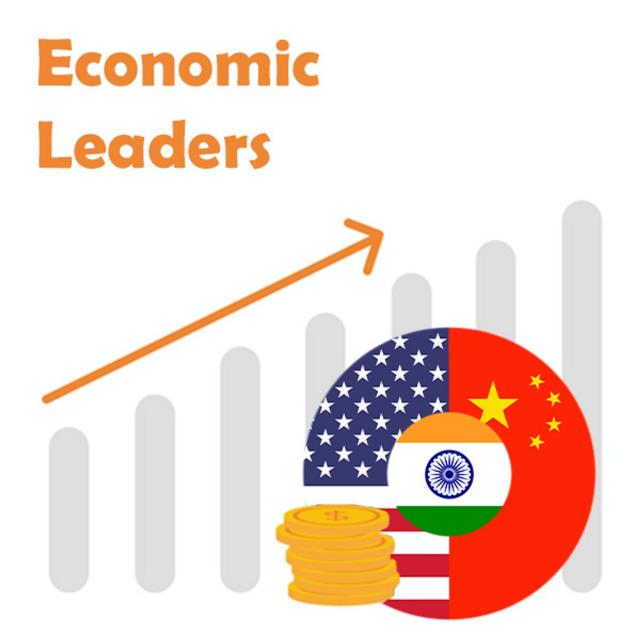
The course current and future leaders is actually divided into two parts. The first one concerns the North American countries, the second concerns Asian and the third one concerns the new leaders of the world.

Class Deals by MOOC List - Click here and see Coursera's Active Discounts, Deals, and Promo Codes.

The first module is devoted to northern American economies, those are of course United States and Canada. When we speak about Mexico, for example, we're going to speak about Latin American countries, and you will understand why a little further. I will try to explain to you why the principal proof of the United States power is its human capital. And I will point out the Canadian basic economic benefits. Moreover, of course, we will speak about the USMCA integration. The second module is devoted to Asian countries, and we will speak about china and India in particular. They are the most populated countries not only in the Asian region but in the whole world. That is why we need to understand them properly. And the third module is devoted to Asian tigers and Asian tiger cubs, which are actually the most promising economies in the whole world. And who will win in that battle we will understand after studying of this course.
Course 2 of 3 in the Economic systems in different countries of the world Specialization.

What You Will Learn

  • Compare the economic indicators of developed and developing economies.
  • Interpret the pros and cons of doing business with partners fron developed and developing economies.
  • Choose the most promising industries for doing business and trade in different economies.

Syllabus

WEEK 1
General Information
Welcome to the second course of the specialty «Economic systems and doing business in different countries of the world». The course current and future leaders is actually divided into two parts. The first one concerns the North American countries, the second concerns Asian and the third one concerns the new leaders of the world.
This course includes three modules, where you will be able to study in detail developed economies of North American. In the first part of the course, we will consider geoeconomically drivers, will speak about of human capital and foreign trade and capital flows of US economy. Of course, we will also consider peculiarities of the Canadian economy and conclude with a look at the USMCA integration. The second module is devoted to Asian countries, and we will speak about China and India in particular. They are the most populated countries not only in the Asian region but in the whole world. And the last part of the course we will study of flying geese paradigm or pattern of development and find out what the economic miracle of «Asian Tigers» and «Tiger cubs». At the end of each module topic, you will have the opportunity to test your knowledge by answering test questions. And after each module your knowledge will be assessed by a test on all materials of the studied module. You will also need to complete practical assignments, which will allow you to apply in practice all that you have learned in our course. So join of the course!

WEEK 2
Module 1. North American developed economies
This module focuses on the economies of North America, that is, of course, the United States and Canada. You will understand why the main proof of the power of the United States it is human capital. You will have an in-depth look at Canada's main economic strengths. At the end of the module, we will talk about the integration of the USMCA: intra-regional trade of Northern America.

WEEK 3
Module 2. Most promising E7 economies – China and India
This module focuses on the most promising E7 economies – China and India. And since these countries are the most populous in the world, you need to understand them correctly. At the beginning, we look at economic definitions of Chinese economy and consider the Belt and Road Initiative by China. In the second part of the module, you will be able to find out what has become drivers of economic boom in India. In conclusion, we will review the demographic peculiarities of most populated countries in the world.

WEEK 4
Module 3. Asian geese, tigers and tiger cubs
In the first part of this module, we will focus on flying geese paradigm, originally developed by Kaname Akamatsu, the Japanese economist, a contemporary of Nikolay Kondratieff, the author of long cycles theory. In this module you will also learn about «Asian tigers» and «Asian tiger cubs», which are actually the most promising economies in the whole world. And who will win in that battle we will understand after studying of this module.

WEEK 5
Final control of the course 2 of specialization

Go to Class
MOOC List is learner-supported. When you buy through links on our site, we may earn an affiliate commission.

Related Courses

How to Validate your Startup Idea (Coursera) Coursera
UNSW Sydney - University of New South Wales

How to Validate your Startup Idea (Coursera)

Starting a new business begins with an idea that needs to evolve through experimentation, iteration and interactions with people. This course is for existing and potential entrepreneurs who are looking for guidance and support to make their ‘great idea’ a reality. In addition to reviewing the basic principles of entrepreneurship, this course guides you through the process of actively validating your idea in the market.

Sep 14th 2026
5-12 Weeks
Customer-Centric IT Strategy (Coursera) Coursera
University of Virginia

Customer-Centric IT Strategy (Coursera)

Now more than ever, corporations are investing heavily in IT. The quality of these investments affect the daily work of millions, yet it’s not uncommon to see industry surveys where the failure rates for IT projects is over 50%. It’s possible to do better and it’s possible to do so consistently. In this two-week course, we’ll step through major challenges within corporate IT and how to address them with the disciplined use of design thinking, Lean Startup, and agile as a team framework.

Sep 14th 2026
2 Weeks
Strategy and Sustainability (Coursera) Coursera
IESE Business School

Strategy and Sustainability (Coursera)

Business and environmental sustainability are not natural bedfellows. Business is about making money. Sustainability is about protecting the planet. Business is measured in months and quarters. Sustainability often requires significant short term costs to secure a sometimes uncertain long-term benefit. To some activists, all executives are exploitative, selfish one percenters. To some executives, all activists are irresponsible, unyielding extremists.

Sep 14th 2026
5-12 Weeks
Fundamentals of Social Media Advertising (Coursera) Coursera
Facebook

Fundamentals of Social Media Advertising (Coursera)

This course takes a deep dive into paid advertising on social media. Learn how to start advertising on platforms like Facebook and Instagram by developing effective ads. Learn how to work with design teams by capturing the essence of your ad campaign in a creative brief, and understand how privacy policies may affect your ads. Complete the course with a project where you will produce a creative brief with assets you would deliver to a design team for your ad campaign. You’ll also create your first social media ad.

Sep 14th 2026
5-12 Weeks
3D Printing Hardware (Coursera) Coursera
University of Illinois at Urbana-Champaign

3D Printing Hardware (Coursera)

This course will provide an in-depth exploration of desktop 3D printing hardware. It will examine the history of desktop 3D printing and demonstrate how 3D printers are made and how they work. This course will also provide step-by-step instructions for how to use and repair a 3D printer. It will also explore the different types of materials that can be 3D printed and will demonstrate how you can create various objects using these tools and materials.

Sep 14th 2026
5-12 Weeks
Managing the Company of the Future (Coursera) Coursera
University of London,London Business School

Managing the Company of the Future (Coursera)

The aim of the course is to provide you with a comprehensive framework for understanding both the traditional principles of management inside companies today as well as the alternative principles that are becoming increasingly important. It provides both theoretical and practical perspectives on the nature of management in today’s organisations.

Sep 14th 2026
5-12 Weeks
Infonomics I: Business Information Economics and Data Monetization (Coursera) Coursera
University of Illinois at Urbana-Champaign

Infonomics I: Business Information Economics and Data Monetization (Coursera)

Thriving in the Information Age compels organizations to deploy information as an actual business asset, not as an IT asset or merely as a business byproduct. This demands creativity in conceiving and implementing new ways to generate economic benefits from the wide array of information assets available to an organization. Unfortunately, information too frequently is underappreciated and therefore underutilized.

Sep 14th 2026
4 Weeks
Multistate Taxation (Coursera) Coursera
University of Illinois at Urbana-Champaign

Multistate Taxation (Coursera)

This course will examine state and local tax laws prevalent in the United States today. The course will consider the historical progression of state and local taxation, the power of states to tax (and the limitations on that power), and planning strategies for minimizing the impact of state and local taxation. Discussions will focus on income taxes, sales taxes, and property taxes.

Sep 14th 2026
5-12 Weeks
Sustainable Vikings: Sustainability & Corporate Social Responsibility in Scandinavia (Coursera) Coursera
Copenhagen Business School

Sustainable Vikings: Sustainability & Corporate Social Responsibility in Scandinavia (Coursera)

This course gives you immediate access to the world leading sustainability and corporate social responsibility (CSR) practices. Scandinavian firms dominate the major sustainability and CSR performance indicators including the Dow Jones Sustainability Index (DJSI). In this course we explore the concepts of sustainability and CSR and focus attention on how Scandinavian firms, like Novo Nordisk, have achieved superior sustainability and CSR performances.

Sep 14th 2026
5-12 Weeks