Architecture 101 - Part I (iversity)

Architecture 101 - Part I (iversity)

From nothingness to place: To learn to stare, observe and see places like architects do. To transform a place into a state of mind.

Architecture to convert a place into a state of mind.
Apparently a simple task, actually a fairly tricky operation.
To (try to) understand, we split our journey into three parts.
This course is about part 1: from nothingness to place (part 2 is from place to space, part 3 is from space to architecture).

What is a place?
What is space?
How do we make space?
How do we prepare our mind to make space?
Without a concept, we can’t have a place.
Without a place, we can’t have space.
Without a space, we can’t have architecture...
If we want to create space, in the first instance, it has to happen in our mind. When a conceptual vision takes form in our minds, a place (with its own spatial features) is born.
Architecture 101 is an introduction to space and architecture through 101 exercises. A six-month journey divided into 3 courses “online” on iversity (part 1, part 2 and part 3), one final exhibition / graduation party. If you are still alive after all of this daunting process, there will be a one-week workshop “offline”, where we will go one step beyond.

Architecture 101 (part 1: from nothingness to place)
To start our journey, we will deal with the absence of space and place.
Something that could be defined as “nothingness”.
As Ang Lee or Paul Valery would respectively say :
“The source of all the material comes from nothingness.”
“God made everything out of nothing, but the nothingness shows through.”
In a different way, Ludwig Wittgenstein taught us that when things have no name, they don’t exist. Hence in order to understand things, we have to start with worlds in which things have no name. Pieces of music without sound. Televisions without signal.
We will go through the process of shaping meaning. Articulate and complex meanings, defining relationships between mind and bodies, bodies and places. Little by little, we will encounter places and see the world taking shape.
All of this, using a “hands-on” system (you will by doing).
Go to Class
MOOC List is learner-supported. When you buy through links on our site, we may earn an affiliate commission.

Related Courses

Sustainability in Architecture: An Interdisciplinary Introduction (edX) EdX
Universitat Politècnica de València,UPValenciaX

Sustainability in Architecture: An Interdisciplinary Introduction (edX)

This course introduces the basic elements and trends that define sustainability practices in Architecture today. It follows an interdisciplinary approach that includes performance assessment and urban policies. This course offers an interdisciplinary approach to sustainability in Architecture. Learners will be introduced to the basic elements of sustainability assessments (first model layer), as well as trends informing the space today.

Self Paced
Self-Paced
The History of Rocket Science (Coursera) Coursera
University of Michigan

The History of Rocket Science (Coursera)

Modern rocket design started amidst World War II, pushing the boundaries of what rocketry was capable of. In The History of Rocket Science, you’ll gain a deeper understanding of this complicated history and discuss key advancements, like the creation of the V2 rocket. Examine the ramifications of the advancements of rocket science from a historical and societal perspective, going beyond the technological advancements during the war. This course also explores the Cold War, culminating in the United States’ creation of the Apollo 11 — the pivotal creation that landed the U.S. on the moon.

Sep 7th 2026
4 Weeks
Space is Everywhere (Coursera) Coursera
University of Colorado Boulder

Space is Everywhere (Coursera)

You are here! Welcome to Course 4 - Space is Everywhere and the last course of this specialization. You are on the final stretch of this journey to finding your Pathway to Space. The topics of Course 4 span four weeks and nine lessons with 36 learning objectives. This course contains some of my most favorite aha moments in the the entire specialization. I hope that you find them and that they impact you in a positive way. We will discuss how space is communicated through news, art, movies, books, music and more. Space is everywhere in our lives and therefore everyone can be involved in it. So keep up the pace. You can do this. Your reward awaits you, finding your pathway to space.

Sep 14th 2026
4 Weeks
Interpreting Vernacular Architecture in Asia (edX) EdX
University of Hong Kong,HKUx

Interpreting Vernacular Architecture in Asia (edX)

Discover the value of local peoples' traditional built environments in Asia, find inspiration in these buildings, and learn how to conserve them for future generations. This course is about architecture. But it’s not about grand structures such as monuments or royal palaces. Rather, it is about the built environment that the ordinary people live in. Instead of the architectural techniques, we use stories to understand the processes through which people make their building decisions.

Self Paced
Self-Paced
Railway History: The Rise of the Railway Station (FutureLearn) FutureLearn
University of Strathclyde

Railway History: The Rise of the Railway Station (FutureLearn)

Gain a unique insight into British history as you explore the heritage and uses of railway stations from the 19th century to now. Go behind the scenes of York Railway Museum with the University of Strathclyde. Railway stations are an integral part of British history, helping to shape the economy and Britain’s built environment. On this four-week course, you’ll discover the heritage of railway stations and their significance in British history and culture.

Self Paced
4 Weeks
Sensing Planet Earth – From Core to Outer Space (edX) EdX
Chalmers University of Technology,ChalmersX

Sensing Planet Earth – From Core to Outer Space (edX)

Will this year be the hottest year ever? What is the current rate of global sea level rise? How fast is the rain forest disappearing? … Learn about the essential tools for measuring and monitoring our planet. In this course, we will take you on a virtual journey covering different Earth observation tools. In the course modules, we cover the most essential measurement tools for solid Earth, the atmosphere, and the biosphere. Our experts will give you first-hand insights why, where, and how those techniques are applied and they will show you how sensors work in space, on aircrafts, and on the ground.

Self Paced
5-12 Weeks
The Business, Politics, Policy, & Players of Space Programs (Coursera) Coursera
University of Colorado Boulder

The Business, Politics, Policy, & Players of Space Programs (Coursera)

Welcome Course 3 - The Business, Politics, Policy, & Players of Space Programs. If you are here, you have successfully completed both Course 1 and 2 of this specialization. Course 3 has nine lessons spread out over 4 weeks with 31 Learning Objectives. In this course, we will discover who and what funds the exploration that we have enjoyed learning about in Course 1 and 2. We will also focus on a few specific applications of some of the concepts we have learned about so far with two companies, the Global Positioning System, and the an academic program that could be implemented at your institution of higher learning.

Sep 14th 2026
4 Weeks
Software Architecture (Coursera) Coursera
University of Alberta

Software Architecture (Coursera)

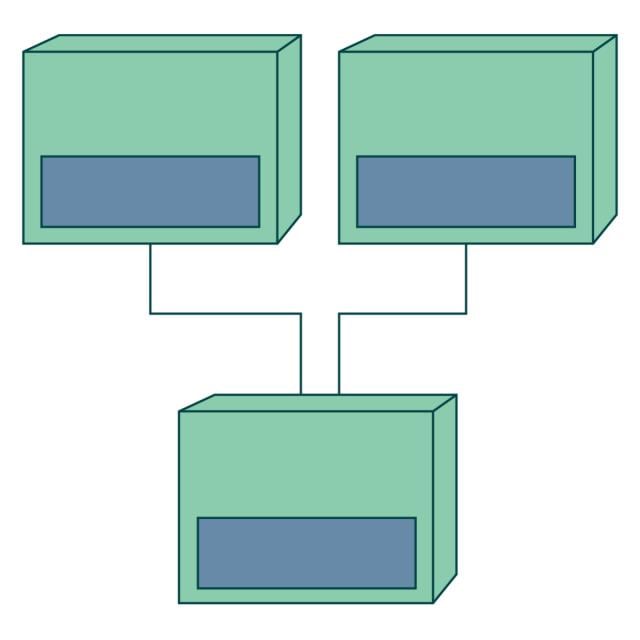
The way that software components — subroutines, classes, functions, etc. — are arranged, and the interactions between them, is called architecture. In this course you will study the ways these architectures are represented, both in UML and other visual tools. We will introduce the most common architectures, their qualities, and tradeoffs. We will talk about how architectures are evaluated, what makes a good architecture, and an architecture can be improved. We'll also talk about how the architecture touches on the process of software development.

Sep 7th 2026
4 Weeks