EdX

Application of ISO 14001 for Waste Prevention (edX)

Offered by ITMO University, ITMOx,
Application of ISO 14001 for Waste Prevention (edX)

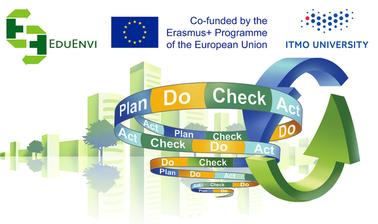
In this course you become acquainted with the requirements of the international standard ISO 14001 and explore how to develop and implement an environmental management system in company and how you can contribute to making waste prevention a reality.

Class Deals by MOOC List - Click here and see EdX's Active Discounts, Deals, and Promo Codes.

Within the duration of the lectures, you will gain an insightful understanding of the standardized requirements for an environmental management system that an organization can use to enhance its environmental performance. The aim of the course is to provide basic knowledge about application of ISO 14001 for waste prevention in order to provide value for the environment, the organization itself and its interested parties. The practical examples and cases of the course are focused at the industrial waste prevention at companies’ level.
Competences which you will obtain:

  • Development of waste management system in accordance with ISO 14001 (environmental policy development, significant aspects' identification, stakeholder analysis, environmental program creation, audit conducting, etc.).
  • Enhance quality and effectiveness of environmental management system of organizations related to waste prevention.
  • Achieving outcomes of an environmental (waste) management system: enhancement of environmental performance; fulfillment of compliance obligations; achievement of environmental objectives and waste prevention.

What you'll learn

  • Voluntary international environmental standards.
  • An applied ISO 14001 for waste management system development and waste prevention.
  • Risk assessment of waste management programs.
  • Basic principles of the environmental audit and corrective action plan development.

Syllabus

Week 1: Introduction in the international environmental standards
Welcome and introduction to voluntary international environmental standards, the ISO 14000 family and a brief history of development of system requirements to environmental management.

Week 2: ISO 14001 - Basic principles and methodology
Learning of basic principles and methodology of ISO 14001 including system approach and risk oriented thinking.

Week 3: Leadership and commitment. Planning of environmental management system
Discussion about the role of top management in the waste management and waste prevention. Suggestion of the approach to planning of the environmental management system.

Week 4: Middle Test

Week 5: Support and operation for waste prevention
Focusing on resources which need to be provided to support the management system, including providing competent people, appropriately maintained infrastructure and environment, as well as monitoring and measuring equipment and its calibration.

Week 6: Performance evaluation
Explanation of performance evaluation which takes over from evaluation, data analysis, and monitoring and measurement. Introduction in internal audit and management review.

Week 7: Improvement
Summarizing the obtained knowledge to improve the suitability, adequacy, and effectiveness of the management system.

Week 8: Final Test
Go to Class
MOOC List is learner-supported. When you buy through links on our site, we may earn an affiliate commission.

Related Courses

Innovative Environmental Management Models: Case Studies and Applications (edX) EdX
University System of Maryland - USM,USMx,University of Maryland Center for Environmental Science - UMCES,UMCES

Innovative Environmental Management Models: Case Studies and Applications (edX)

Utilizing extensive case studies of various ecosystems, you will learn how to effectively utilize science-based management to mitigate anthropogenic impacts and ensure resiliency and sustainability in your community. Case studies are the best means to analyze real world problems and assess viability of proposed solutions. We will explore a variety of ecosystems and determine how effectively they are managed given the specific challenges of each locale.

Self Paced
Self-Paced
The Effect of Fires on People, Property and the Environment (Coursera) Coursera
University of Maryland, College Park

The Effect of Fires on People, Property and the Environment (Coursera)

Fires impact people, property and the environment in all countries around the world. In some cases, the resulting losses are extraordinary, causing hundreds of deaths, widespread damage to property and contents and significant impacts on the environment. More often, fires may cause a single casualty or affect a single home, though the effects are still highly significant to those affected and collectively are substantial. This course will provide an overview of the challenges posed by fire as well as the fire safety solutions that are available to meet those challenges.

Sep 14th 2026
5-12 Weeks
Drones for Environmental Science (Coursera) Coursera
Duke University

Drones for Environmental Science (Coursera)

Duke Environment+ will be hosting a virtual informational session on Drones for Environmental Science on July 25 at 7 p.m. ET. For more details and to register for the Zoom webinar, see the related FAQ at the bottom of this page. How can drones be used for good in environmental science? What types of data can scientists collect, and how should they go about collecting it using drones? Why should someone integrate drones into their existing career or pursue this field?

Sep 14th 2026
4 Weeks
Urban Rewilding: Restore Your Local Ecosystem (edX) EdX
Wageningen University,WageningenX

Urban Rewilding: Restore Your Local Ecosystem (edX)

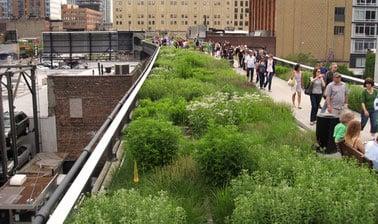
Would you like to see your neighbourhood become more liveable and sustainable? To alleviate city-specific challenges – from urban heat islands to mental health issues – we need to first change our minds. From wanting to control nature to leveraging its power, we need to allow nature to do what it does best: grow. Join Wageningen University & Research and rewild your city. With gardens, parks and ponds, with indigenous plants and animals, we will see both ecosystems and our living environment restored.

Self Paced
Self-Paced
Air pollution: causes and impacts (edX) EdX
Institut Mines-Telecom,IMTx

Air pollution: causes and impacts (edX)

This MOOC focuses on issues related to air quality. Learn the basics of air pollution and its environmental, health, social and economical effects to better understand and address this problem. Air pollution is a major and global concern, arising for the most part from human activities. Air pollutants can be emitted by a variety of sources or formed directly in the atmosphere. They alter the air we breathe and have clear negative effects on our health.

Self Paced
Self-Paced
Introduction to Environmental Science (edX) EdX
DartmouthX,Dartmouth College

Introduction to Environmental Science (edX)

A scientific study of the natural world and how it is influenced by people. Major topics include: food, energy, human population, biodiversity and global change. Environmental science is the study of patterns and processes in the natural world and their modification by human activity. To understand current environmental problems, we need to consider physical, biological and chemical processes that are often the basis of those problems.

Self Paced
4 Weeks
Nature Based Metropolitan Solutions (edX) EdX
Wageningen University,Delft University of Technology,DelftX,WageningenX

Nature Based Metropolitan Solutions (edX)

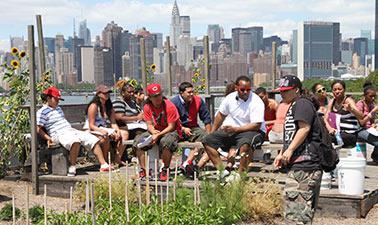
Discover the potential benefits of nature-based solutions (NBS) in metropolitan areas and develop strategies for their implementation. How can ecosystems contribute to quality of life and a more livable, healthier and more resilient urban environment? This course establishes the priorities and highlights the direct values of including principles based on natural processes in urban planning and design.

Oct 27th 2021
5-12 Weeks
Waste Management and Critical Raw Materials (edX) EdX
Delft University of Technology,DelftX

Waste Management and Critical Raw Materials (edX)

Learn about waste management and its key role in saving critical raw materials. Gain practical knowledge of the circular economy, recycling, refurbishment, and remanufacturing as a means of identifying new business opportunities. How can we ensure the continuous supply of the increasingly scarce raw materials that are needed to make the products we use every day? In this course, we will look at the potential benefits of circular procurement and how recycling technologies and more efficient ways of collecting and recycling critical raw materials (CRMs) can make your business and production more resource resilient.

Self Paced
Self-Paced
A Resilient Future: Science and Technology for Disaster Risk Reduction (edX) EdX
École Polytechnique Fédérale de Lausanne

A Resilient Future: Science and Technology for Disaster Risk Reduction (edX)

Discover how science and technology help us reduce disaster risk and increase resilience. This course aims to introduce participants to existing and emerging technologies suitable for disaster risk reduction while promoting the overall aim of sustainable development. The course focuses on three main natural hazards- floods, landslides and earthquakes. It also discusses the challenges and limits of adapting and adopting technologies depending on context (Global North and Global South) with examples from Switzerland, Nepal, Colombia, Philippines and other countries.

Self Paced
Self-Paced
Climate Change Education (edX) EdX
Inter-American Development Bank - IDB,IDBx

Climate Change Education (edX)

Learn how to work with your students to help them explore climate change through the use of interactive and engaging activities. These activities are designed for students at the primary and secondary levels. Our climate is changing rapidly, and now more than ever we need to be ready to act and prepare the next generation to take care of our planet. This course explores the basic science behind climate change and presents the tools to teach it in a positive, engaging and participatory way. The course also introduces some of the ethical and social issues around climate change.

Self Paced
Self-Paced
Understanding and Communicating Risk (edX) EdX
National University of Singapore,NUS

Understanding and Communicating Risk (edX)

Learn how individuals perceive and understand risks and master the tools to communicate risk information effectively to help people make better decisions in the face of risks. This course provides an introduction to how people perceive and understand risks in their everyday lives and how to communicate risk information to help people make better decisions.

Self Paced
Self-Paced