Advanced Neurobiology I (Coursera)

Offered by Peking University,
Advanced Neurobiology I (Coursera)

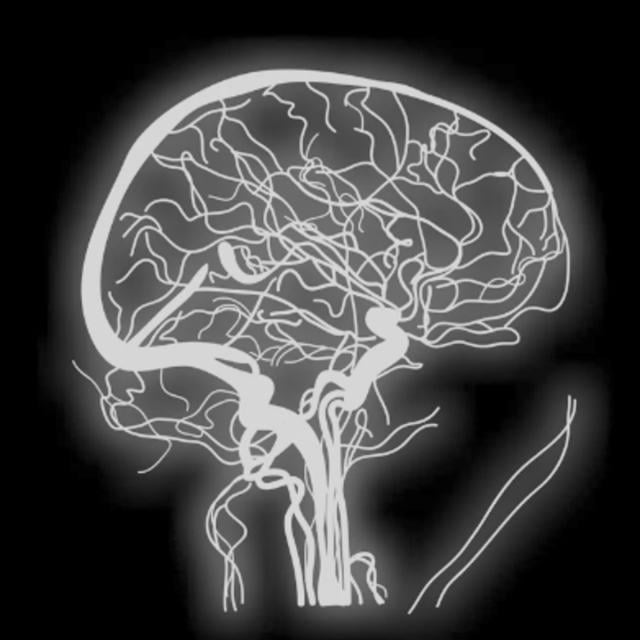
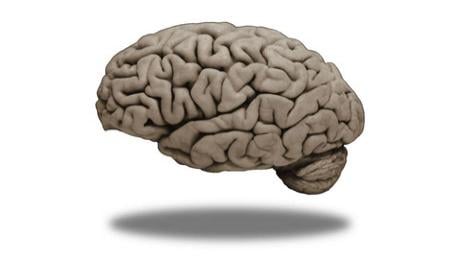
Hello everyone! Welcome to advanced neurobiology! Neuroscience is a wonderful branch of science on how our brain perceives the external world, how our brain thinks, how our brain responds to the outside of the world, and how during disease or aging the neuronal connections deteriorate. We’re trying to understand the molecular, cellular nature and the circuitry arrangement of how nervous system works.

Class Deals by MOOC List - Click here and see Coursera's Active Discounts, Deals, and Promo Codes.

Through this course, you'll have a comprehensive understanding of basic neuroanatomy, electral signal transduction, movement and several diseases in the nervous system.
This advanced neurobiology course is composed of 2 parts (Advanced neurobiology I and Advanced neurobiology II, and the latter will be online in late April or May). They are related to each other on the content but separate on scoring and certification, so you can choose either or both. It’s recommended that you take them sequentially and it’s great if you’ve already acquired a basic understanding of biology.

Syllabus

Anatomy of the Nervous System
Let's start with a basic introduction of neuroanatomy.

Morphology of the neuronal cell & Cellular and Molecular Biology of the Neuron
Let's learn more about the basic unit of the nervous system: the neuron.

Cellular and Molecular Biology of the Neuron
Let‘s continue with the neuron.

Signaling within neurons & Ion channels and membrane potentials
Let's switch to the electrical properties of the neuron.

Ion channels, membrane potential and synaptic transmission
Let's continue with the ion channels, membrane potential and synaptic transmission.

Neurotransmitter release
Let's learn more about the neurotransmitter release.

Synaptic transmission & Synapitic plasticity
Let's continue with synaptic transmission and synapitic plasticity.

Techniques in neuroscience
Let's learn some prevalent techniques in neuroscience.
Go to Class
MOOC List is learner-supported. When you buy through links on our site, we may earn an affiliate commission.

Related Courses

Medical Neuroscience (Coursera) Coursera
Duke University

Medical Neuroscience (Coursera)

Medical Neuroscience explores the functional organization and neurophysiology of the human central nervous system, while providing a neurobiological framework for understanding human behavior. In this course, you will discover the organization of the neural systems in the brain and spinal cord that mediate sensation, motivate bodily action, and integrate sensorimotor signals with memory, emotion and related faculties of cognition. The overall goal of this course is to provide the foundation for understanding the impairments of sensation, action and cognition that accompany injury, disease or dysfunction in the central nervous system. The course will build upon knowledge acquired through prior studies of cell and molecular biology, general physiology and human anatomy, as we focus primarily on the central nervous system.

Jun 22nd 2026
13-24 Weeks
Intellectual Humility: Science (Coursera) Coursera
University of Edinburgh

Intellectual Humility: Science (Coursera)

It’s clear that the world needs more intellectual humility. But how do we develop this virtue? And why do so many people still end up so arrogant? Do our own biases hold us back from becoming as intellectually humble as we could be—and are there some biases that actually make us more likely to be humble? Which cognitive dispositions and personality traits give people an edge at being more intellectually humble - and are they stable from birth, learned habits, or something in between? And what can contemporary research on the emotions tell us about encouraging intellectual humility in ourselves and others?

Jun 22nd 2026
4 Weeks
Emergent Phenomena in Science and Everyday Life (Coursera) Coursera
University of California, Irvine

Emergent Phenomena in Science and Everyday Life (Coursera)

Before the advent of quantum mechanics in the early 20th century, most scientists believed that it should be possible to predict the behavior of any object in the universe simply by understanding the behavior of its constituent parts. For instance, if one could write down the equations of motion for every atom in a system, it should be possible to solve those equations (with the aid of a sufficiently large computing device) and make accurate predictions about that system’s future.

Jun 22nd 2026
5-12 Weeks
Introducción a la Psicología (Coursera) Coursera
Universidad Austral

Introducción a la Psicología (Coursera)

¿Qué es el inconsciente? ¿Qué es la autoestima? ¿Qué es el apego y cómo incide en los vínculos adultos ? ¿Cómo funciona nuestro cerebro y cómo se modifica a lo largo de la vida? En este curso se abordarán estos interrogantes y diversos temas vinculados con la Psicología desde una mirada académica y mediante el estudio de los principales autores que han realizado significativos aportes a esta ciencia.

Jun 22nd 2026
5-12 Weeks
Constructivism and Mathematics, Science, and Technology Education (Coursera) Coursera
University of Illinois at Urbana-Champaign

Constructivism and Mathematics, Science, and Technology Education (Coursera)

This course is designed to help participants examine the implications of constructivism for learning and teaching in science, mathematics, and technology focused areas. Course readings, discussions, and assignments will examine constructivist views of learning, research on students' ideas and idea-based interactions, research on instructional approaches taking student ideas into account, and challenges in implementing constructivist perspectives in instruction.

Jun 22nd 2026
5-12 Weeks
Epidemics - the Dynamics of Infectious Diseases (Coursera) Coursera
Pennsylvania State University

Epidemics - the Dynamics of Infectious Diseases (Coursera)

Not so long ago, it was almost guaranteed that you would die of an infectious disease. In fact, had you been born just 150 years ago, your chances of dying of an infectious disease before you've reached the tender age of 5 would have been extremely high. Since then, science has come a long way in understanding infectious diseases - what they are, how they spread, and how they can be prevented. But diseases like HIV/AIDS, Malaria, Tuberculosis, or the flu are still major killers worldwide, and novel emerging diseases are a constant threat to public health. In addition, the bugs are evolving. Antibiotics, our most potent weapon against bacterial infections, are losing their power because the bacteria are becoming resistant. In this course, we'll explore the major themes of infectious diseases dynamics.

Jun 22nd 2026
5-12 Weeks
The Psychology of Thrill Seekers (Coursera) Coursera
Emory University

The Psychology of Thrill Seekers (Coursera)

Sensation seeking is a trait we all have and includes the search for complex and new experiences. Thrill Seekers, people with high-sensation seeking personalities, crave exotic and intense experiences even when physical or social risks are involved. This course helps learners examine the remarkable world of the high-sensation seeking personality and explores the lifestyle, psychology, and neuroscience behind thrill seekers.

Jun 22nd 2026
5-12 Weeks
Introduction to Genomic Technologies (Coursera) Coursera
Johns Hopkins University

Introduction to Genomic Technologies (Coursera)

This course introduces you to the basic biology of modern genomics and the experimental tools that we use to measure it. We'll introduce the Central Dogma of Molecular Biology and cover how next-generation sequencing can be used to measure DNA, RNA, and epigenetic patterns. You'll also get an introduction to the key concepts in computing and data science that you'll need to understand how data from next-generation sequencing experiments are generated and analyzed.

Jun 22nd 2026
4 Weeks
Bioinformatics: Introduction and Methods 生物信息学: 导论与方法 (Coursera) Coursera
Peking University

Bioinformatics: Introduction and Methods 生物信息学: 导论与方法 (Coursera)

A big welcome to “Bioinformatics: Introduction and Methods” from Peking University! In this MOOC you will become familiar with the concepts and computational methods in the exciting interdisciplinary field of bioinformatics and their applications in biology, the knowledge and skills in bioinformatics you acquired will help you in your future study and research.

Jun 22nd 2026
13-24 Weeks